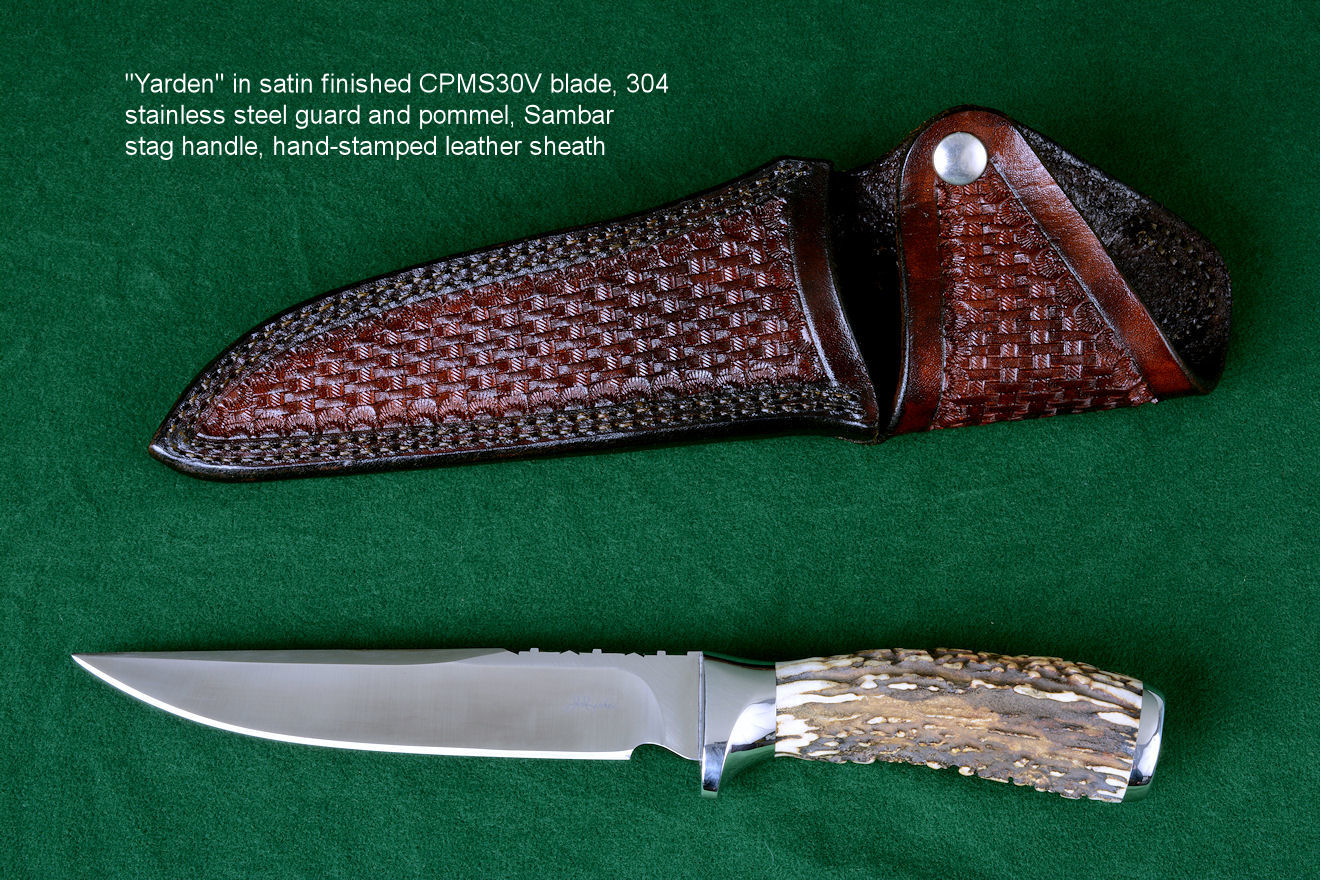
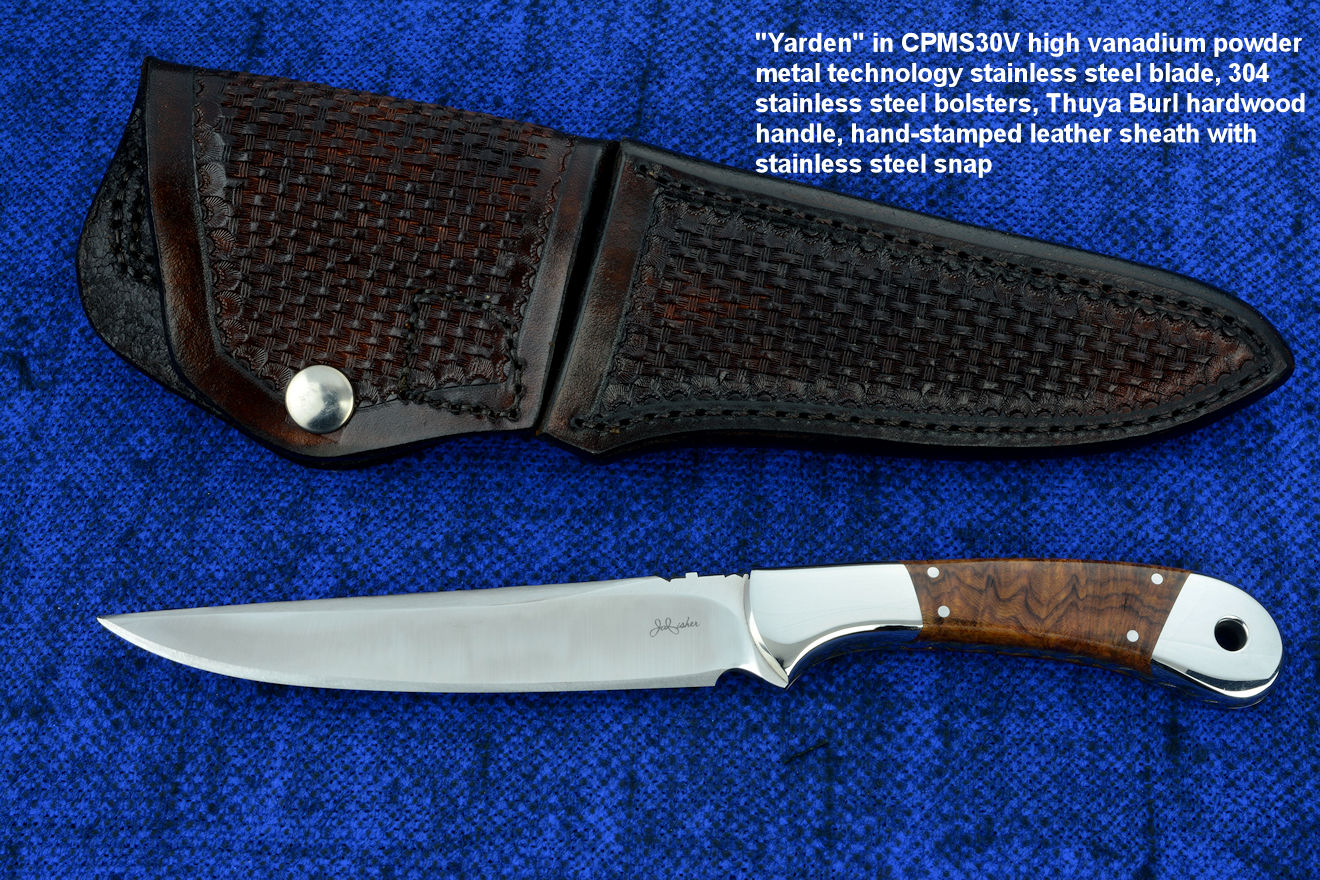
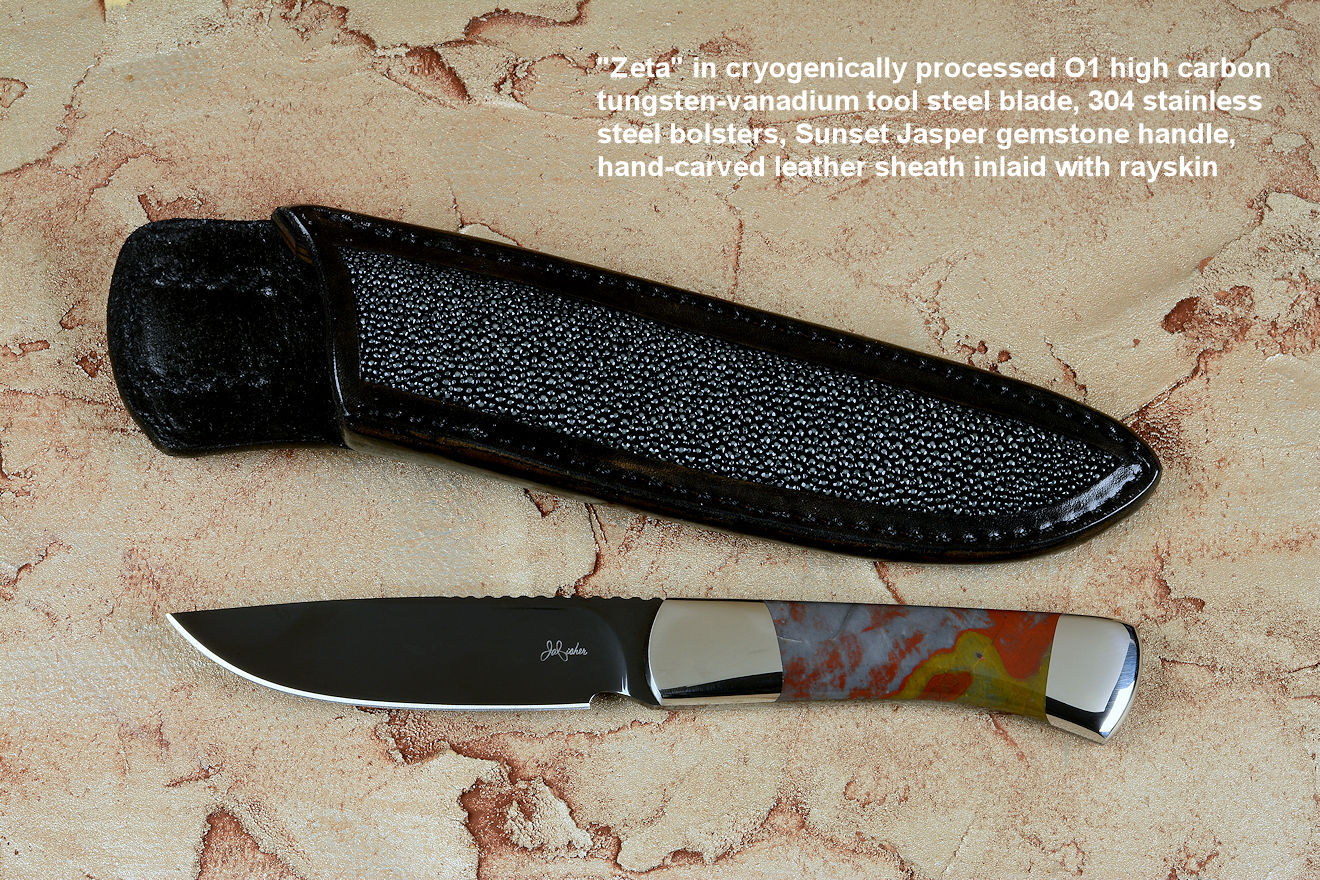
Hunting, Fishing, Game, and Field Knives
This page is dedicated to knives used for
hunting and fishing. Hunting knives are used to cut,
slice, gut, pierce, skin game, field dress, dress out, cape,
trim, quarter, manage, clean game, de-bone, and process game
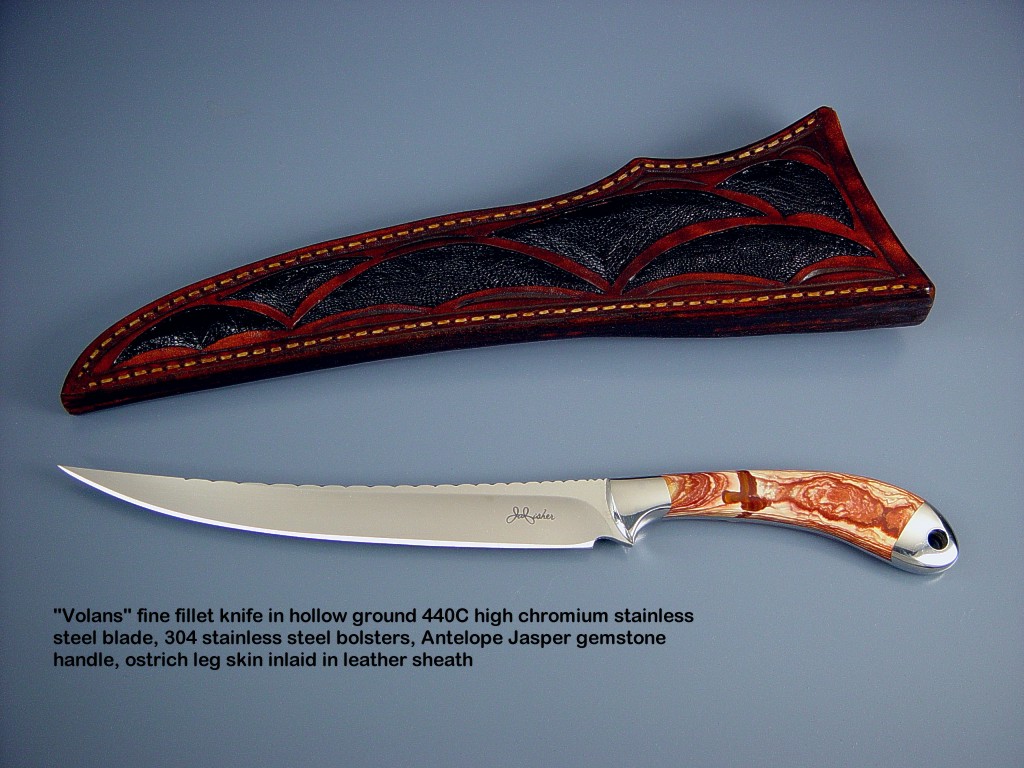
animals. Fishing knives are used to dress, gut, fillet, trim,
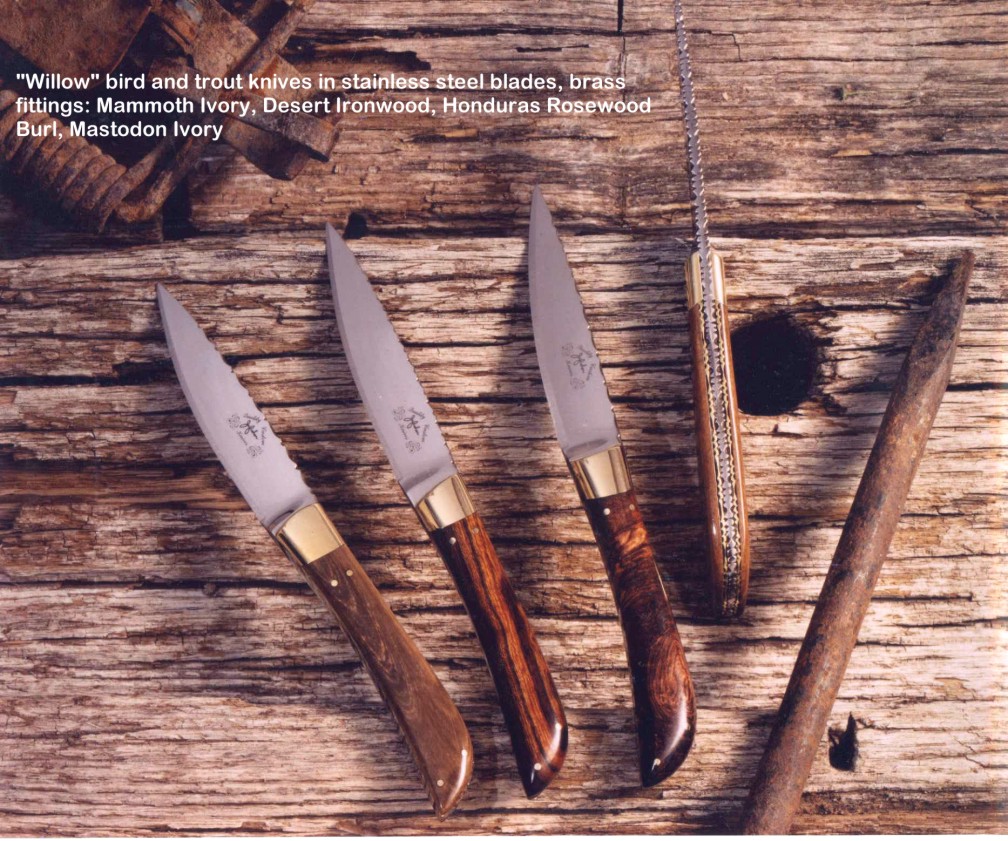
chop, skin, scale, and process fish. This page also features bird
and trout knives, multi-function knives, and utility knives that may be
used in survival, expedition, and outdoor tasks and chores. Every knife
you see on this page was made by me, and I've included some of my early
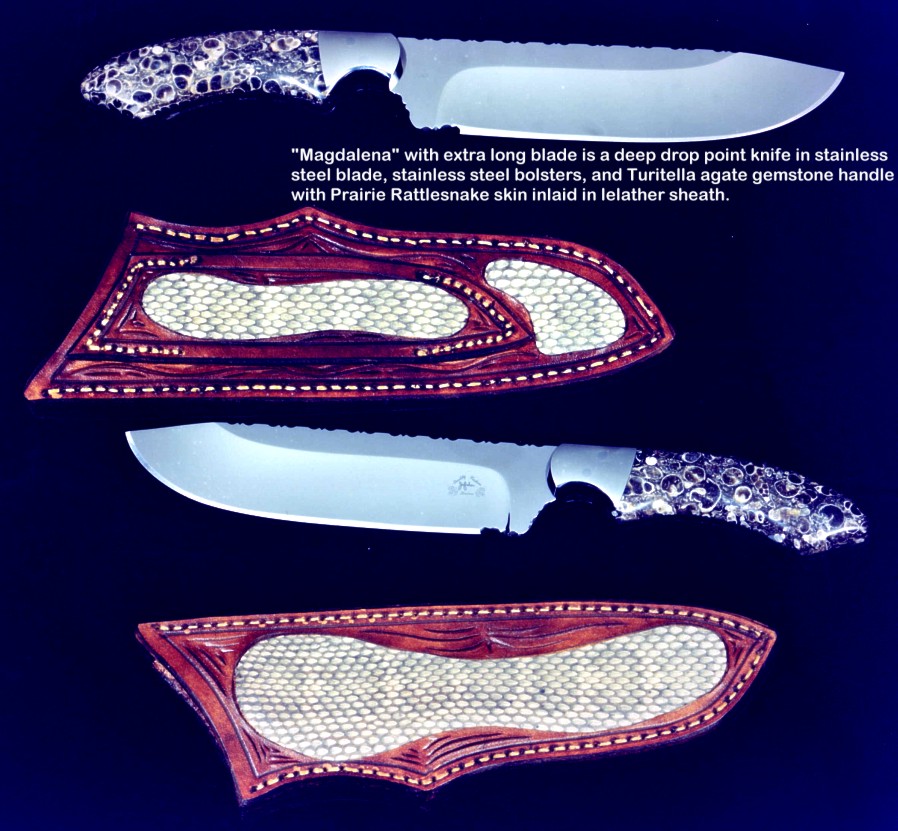
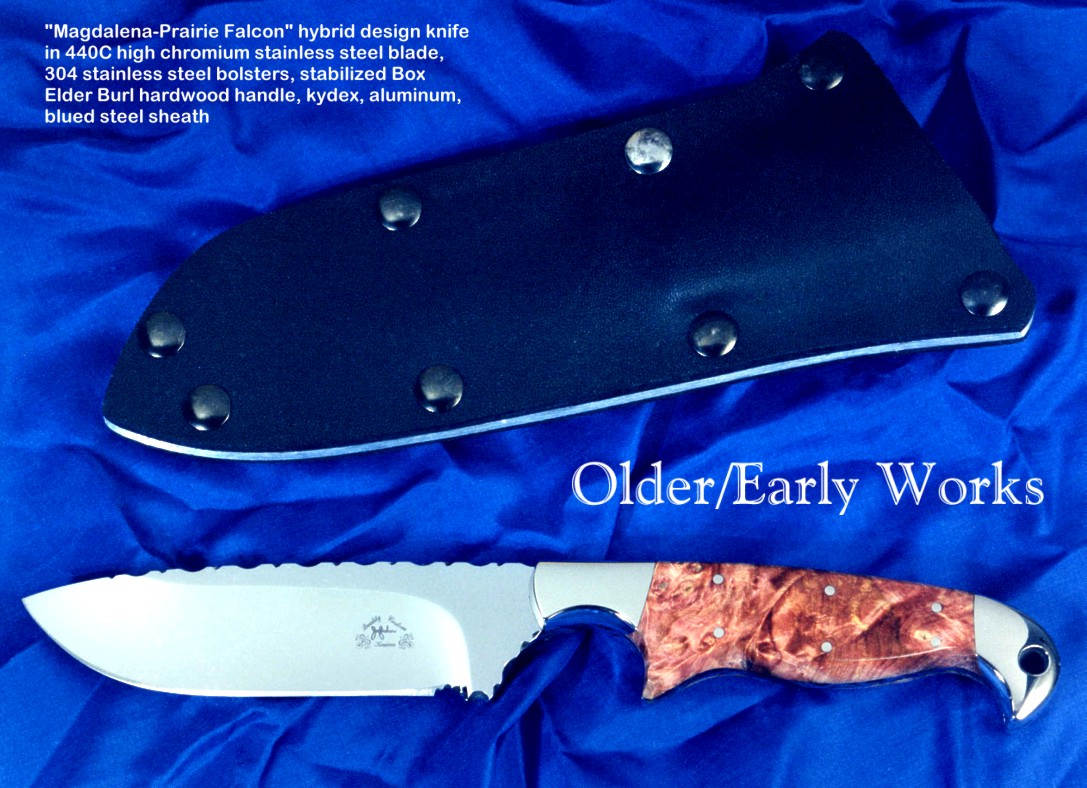
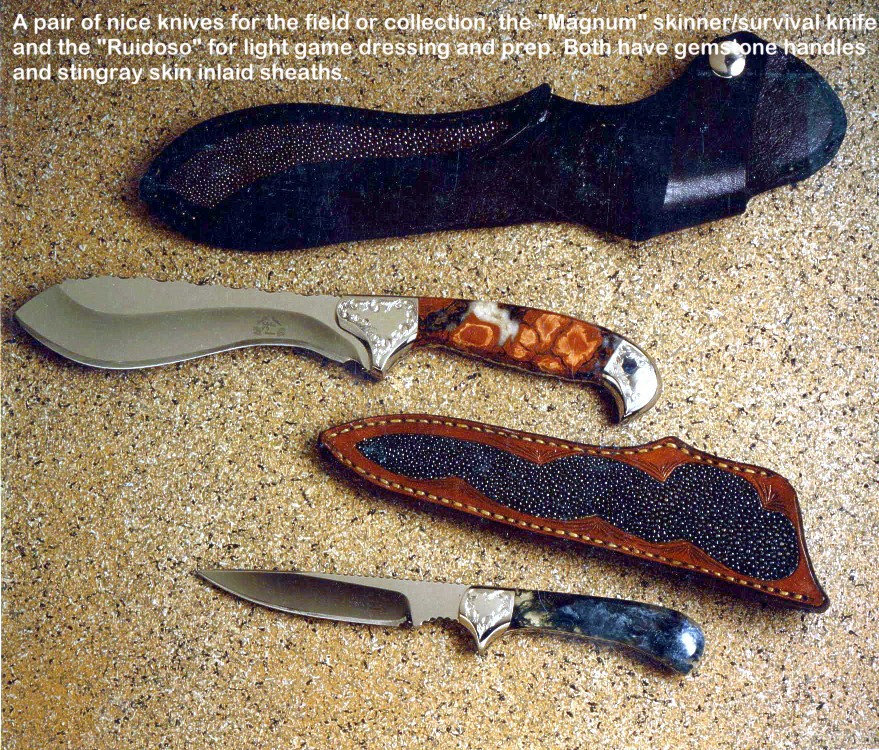
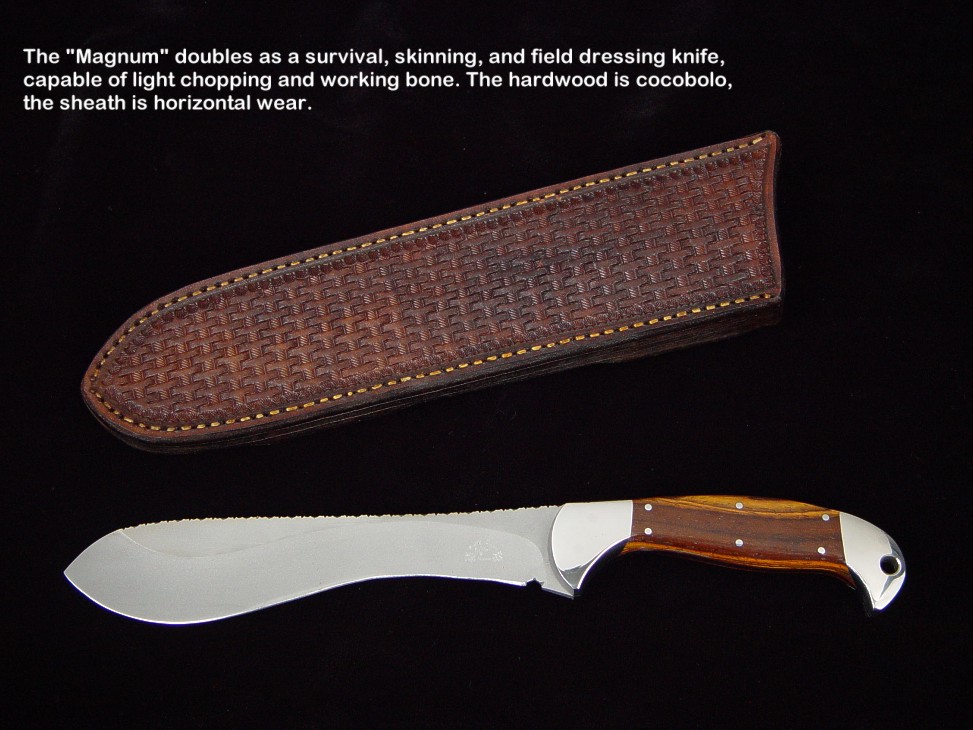
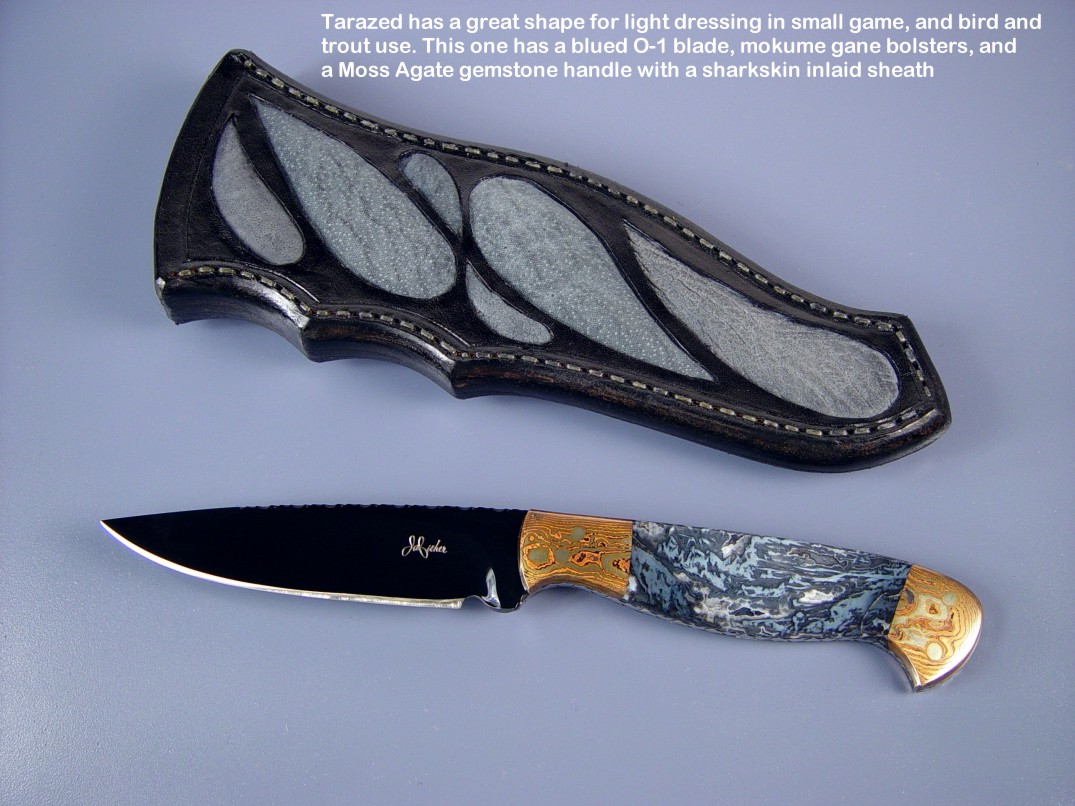
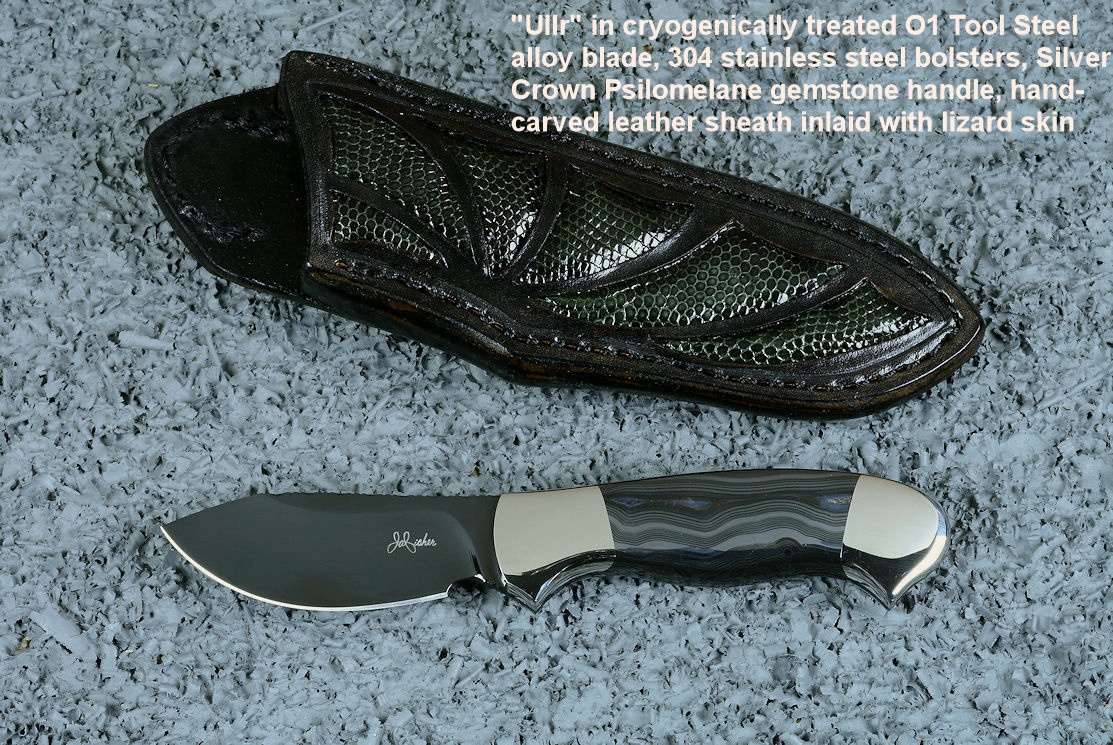
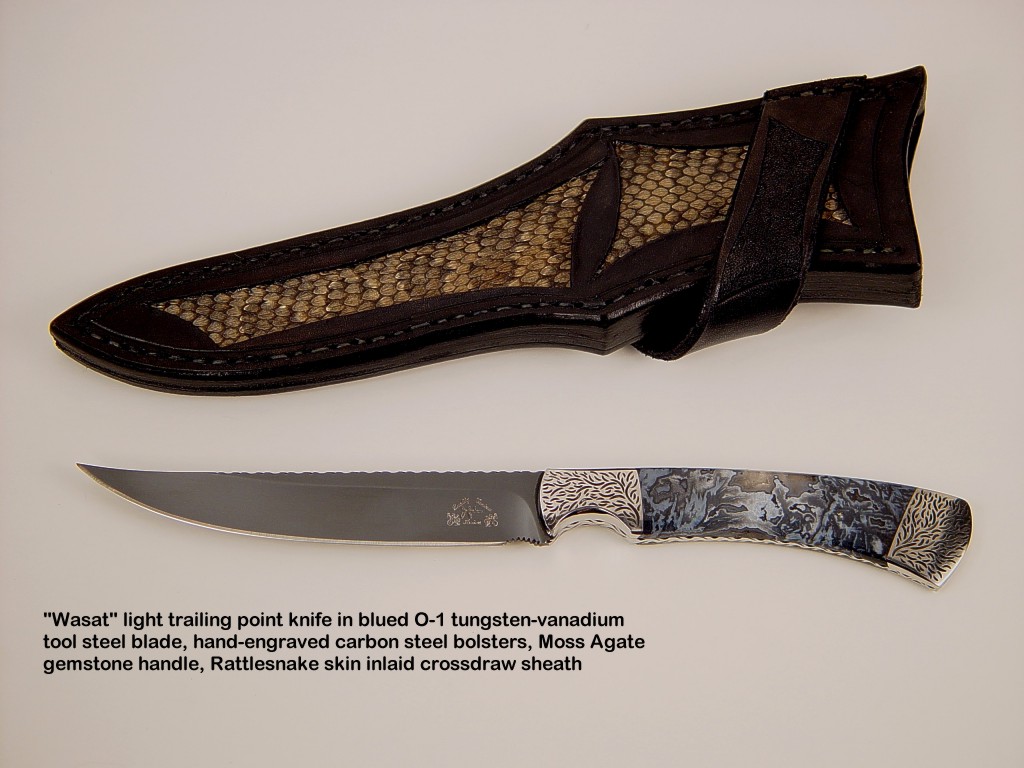
knives for illustration. There are 117 pictures of hunting,
fishing, and related field knives on this page.
Hunting knives have probably the most
recognizable shapes in the cutlery industry. The blades are
usually curved, and often feature fine and accurately ground thin points. This is because
they are used for specific chores like skinning and piercing
skin with a high degree of control. Any hunter knows the cost of bad knife
work when field dressing game or caping a trophy buck. After
what a good hunt may cost, a poor knife or bad job here can leave a
sad memory. On this page are some of the uses, descriptions, and details
about hunting knives specifically, their limitations and uses,
methods of carry, storage, and sharpening. You'll also see quite a
few thumbnail images of hunting knives I've made over the decades.
Though some of them are not only for hunting and can be applied to other
uses, such as survival and typical work that a knife blade may see, I've
inlcuded them here if they have a design that is applicable for hunting,
fishing, or game handling tasks.
A fine knife is a pleasure to use.
Unsheathing your fine custom knife after a successful kill is
more than history, it honors the entire hunting process. It
isn't hard to imagine the men of the past, all feeling the same kind
of thrill as we do today: planning for the hunt, embarking to
territories unknown, enduring the hardships and fascination of
the land, detecting and stalking the prey, and the satisfaction
of supplying the family or tribe with fresh game. The moment
continues as the game is then gutted, cooled, dressed, and
quartered for the trip home. True, the tool of the kill is
essential. But so is a fine hunting knife, or the kill is just
target practice.
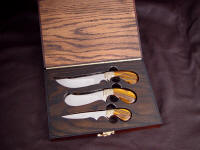
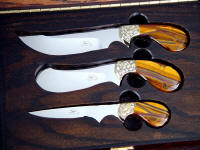
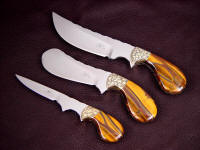
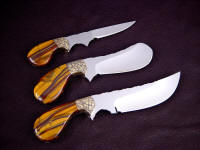
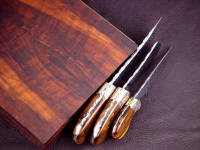
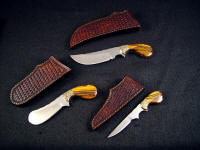
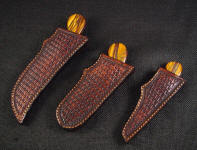
In my life, I've seen many styles and
grades of knife used for hunting. I grew up using a fairly
straight, simple light trailing point my father gave me (as many
fathers do). It was a decent piece of steel, and I still have it
around in a box somewhere. Why do I keep this old plain knife?
It's not because it has any monetary value, it's because my
father gave it to me, and I carried it on our hunts together, and on
camping trips, and in the Boy Scouts. It
evokes special memories of our times together, unique to only a
father and son. So there is more than just the good use of a
fine tool for the hunting sport or game. If you have children,
your hunting knife may well be destined to become an heirloom.
I've seen a lot of bad knives in my time;
all of us have. We've heard stories about having to carry a
sharpening stone to the field. We've heard of knife blades
bending, rolling over, dulling, or chipping. We've heard about
knives unsuited to the task, with the wrong shape or profile,
with a blade too thick, too dull, too soft, or too uncomfortable to
use. It's my desire to try to clarify some points from a
professional knifemaker about hunting and fishing knives on this
page.
Hunting Knife Considerations
Hunting Knife Blade Steels
Modern
tool steels are a wonder. They can be hard, wear resisting,
and tough at the same time. They can also be stainless and
corrosion resistant. There is no super steel (see these topics on my
FAQ page and
Blades page for
details about steel hype), and your fine hunting, fishing or
field knife must be selected carefully. Let's look at the
steels from a hunter's and fisher's standpoint individually.
- Plain Carbon Steels: These are the traditional
long-time hunting steel types and are classified in the Machinists'
Guide as Standard Carbon Steels. Before stainless steels, these high carbon
steels had achieved a reputation for edge holding, sharpness, and
wear resistance. Steels like 5160, 1095, and 1025 are low in alloys,
easy to work with,
and cheap. They are used because they can be hand-forged and have a
relatively low critical temperature and are easy and forgiving to
work with. I rarely use them because there are so much better alloy
steels on the market that will offer increased wear resistance,
increased corrosion resistance, and higher toughness at a higher
hardness than plain carbon standard steels. While in the past these were worthwhile steels, they can
not hold a candle to modern, high alloy tool steels, chromium
steels, tool steels, and high technology steels available today. In
the hunting realm, most knives made of plain carbon steels today are
used in plain, simple, hand-forged, inexpensive, and primitive knives. While
there is still a following for this type of knife, this is not a
type I make.
- High alloy cold work tool steels:
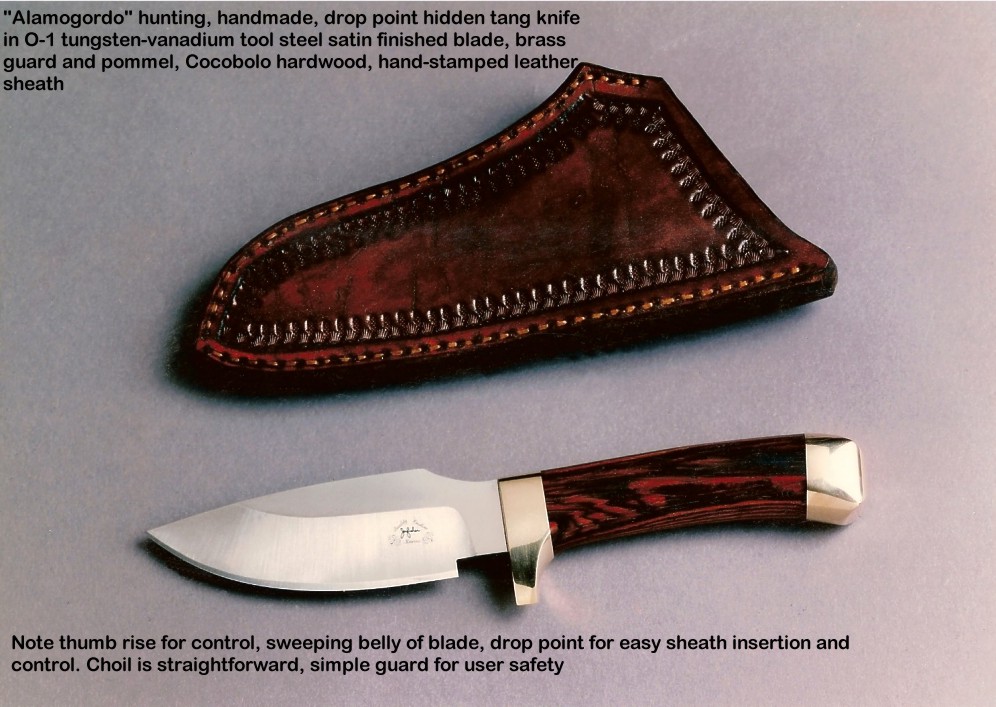
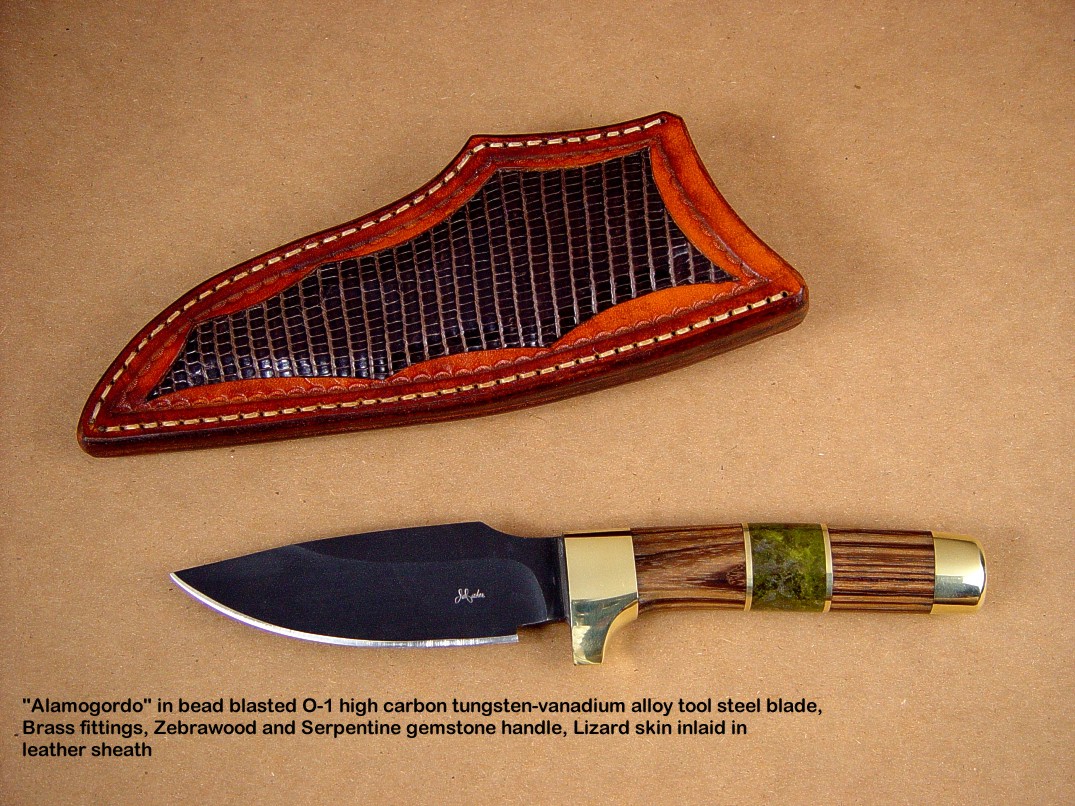
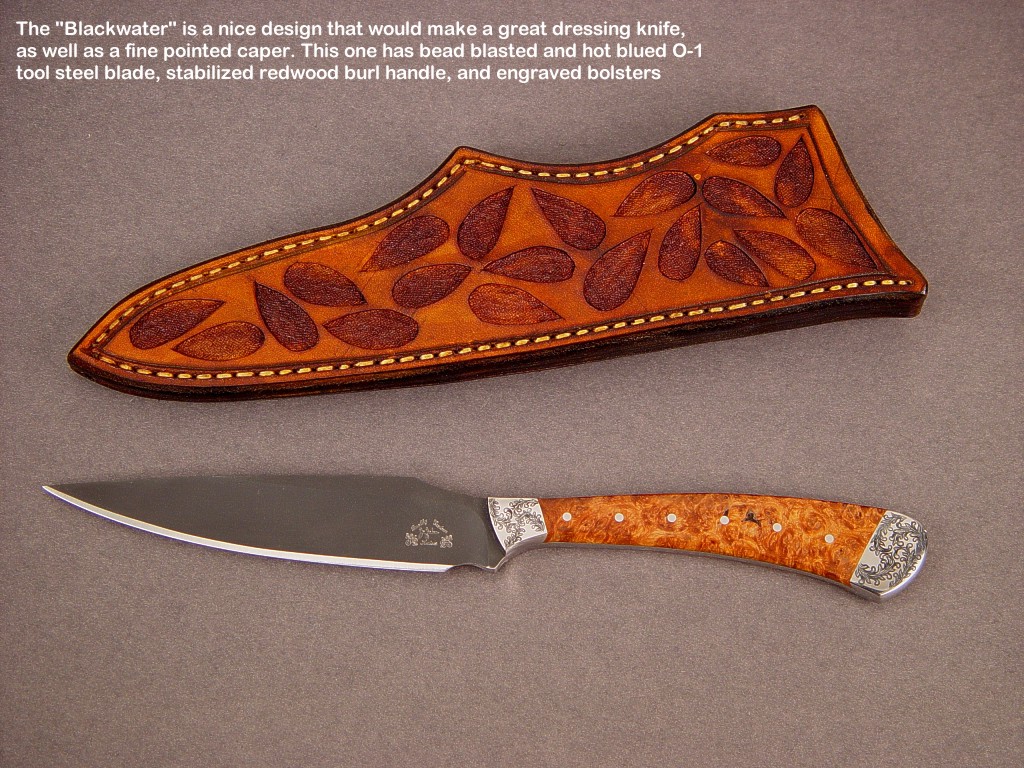
In this steel type, I mostly use O-1, an oil hardening
high tungsten-vanadium alloy tool steel which is
classified as a "cold work" tool steel. Please
remember that not all O-1 is the same; some versions from some suppliers
contain little tungsten and no vanadium at all. The O-1 I use can be made both hard and
tough, ground very thin, is
tough, and yet can be sharpened in the field with ease.
It is able to achieve and hold an incredibly sharp edge
with very little stonework, and you don't have to be an
expert to sharpen it. It's drawbacks are that it is not
stainless and will rust if not cared for, and is not as
wear resistant as the high chromium stainless tool
steels. It's the least expensive of the tool steels I
use, though it is not cheap. It blues well for a subdued
look, and some hunters prefer the mottled, dark,
seasoned patina it achieves after several years of use.
Because it is moderately easy to sharpen, bringing up
the fine edge in the field is no big deal. O-1 is NOT a
plain carbon or high carbon steel, it is a true high
alloy tool steel, with significant amounts of alloying
elements like tungsten and vanadium, so this strong
steel holds a very good edge, much better than plain
carbon or high carbon steels.
- High chromium martensitic stainless tool steels:
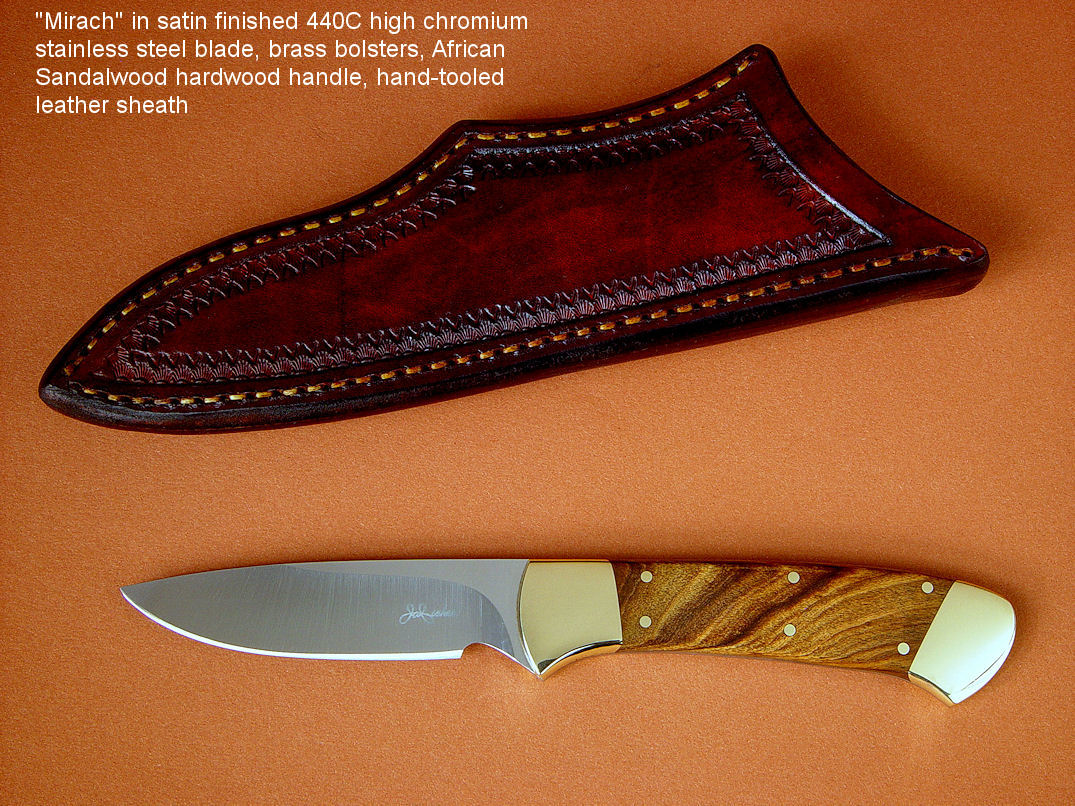
Predominately, I use 440C. Actually classified
as SAE 51440C, This
is a great steel, and I use it for most of my knives. It
is often used in industry for corrosion resistant ball
bearings, wear, and valve parts. It
has universal appeal, being capable of both hardness and
toughness, has the highest corrosion and stain resistance at the
highest level of finish, and is very
wear resistant. It is tougher than O-1, so can be
ground in a thinner cross-section and thus
is capable of a stronger edge when ground thinner. It is more wear resistant,
consequentially, it is not easy to field sharpen. The
idea here is that your knife is sharp and wear resistant
for several hunts, and should not need sharpening in the
field. The high chromium content of this steel allows a
very fine mirror finish, which is easy to clean, and is
highly corrosion resistant. Of course, even stainless
tool steels can rust if not cared for, or if stored with
blood, tissue, or wetness in a leather sheath. Read more
about corrosion and stainless steels on my knife care
pages here
and here. Care is minimal though, since 440C has up to 18%
chromium. This is the only way to go for a fishing
knife, as it has the highest corrosion resistance of any
of the custom knife tool steels when mirror finished.
- High molybdenum martensitic stainless tool steels:
What I'm talking about here is
ATS-34 (or 154CM). It's essentially the same as 440C,
but three percentage points of chromium have been
replaced by molybdenum. This makes this a very
tough tool steel, that is, resistant to breakage at
higher hardness and thinner cross sectional dimensions. It's still stainless, though not as
stain resisting as 440C, but it can be made a lot
tougher. I emphasize can be made, because it's up to the
knifemaker to set the final hardness and temper
depending upon the blade geometry and intended use. See
my "Blades" page for more details. ATS-34 is hard to field
sharpen, so your ATS-34 knife must be thin and sharp
enough for your field use and hunt. It can be used for
fishing knives, and perform quite well, as the cross
section of the knife blade can be made thinner than
440C and still be more fracture-resistant. But the trade-off
here is stain resistance, as blood, orange juice, tomato
juice, or other acidic fluids can corrode it over time.
ATS-34 takes a beautiful polish, which makes for a fine looking knife that
is easy to clean.
- Crucible Powder Technology high molybdenum martensitic stainless tool steel:
This is a newcomer on the market, specifically CPM154CM.
This is a powder metal version, made by sintering
together at high heat and pressure powdered components
of the alloy for a more even distribution of alloy
components. This is a great steel, with the same
properties of ATS-34 above, but with greater uniformity
and capable of a better finish, higher corrosion
resistance, and improved performance. This steel is
capable of a breathtaking mirror finish with no visible
grain structure. The drawbacks to this steel are the
higher cost and the limited sizes for projects.
- Cold work high carbon, high chromium die steel:
The steel here is D2. D2 is an older steel, originally
used for dies to press and stamp and cut out other
metals, and is also used in ball bearings as the load
surface. It can be made to be one of the hardest,
toughest, most wear-resistant tool steel blades. It has
so much carbon and enough chromium that in the
crystalline structure of the steel, in addition to iron
carbides forming, forms chromium carbides, creating a
structure of extremely hard particles, leading to very
high wear resistance. This wear resistance is so hard
that the knife cannot usually be field sharpened, which
may be a drawback. The steel is also not a true
stainless, only stain resistant as it has only 12%
chromium. So blood, tissue, acidic fluids will corrode
and stain this metal. The crystalline structure is also
apparent in a high polish, and the surface displays an
"orange peel" type of pattern. It is also expensive and
limited in available sizes of stock. It's more expensive
to cut, grind, mill, and finish also.
- Crucible Powder Technology high vanadium tool steels:
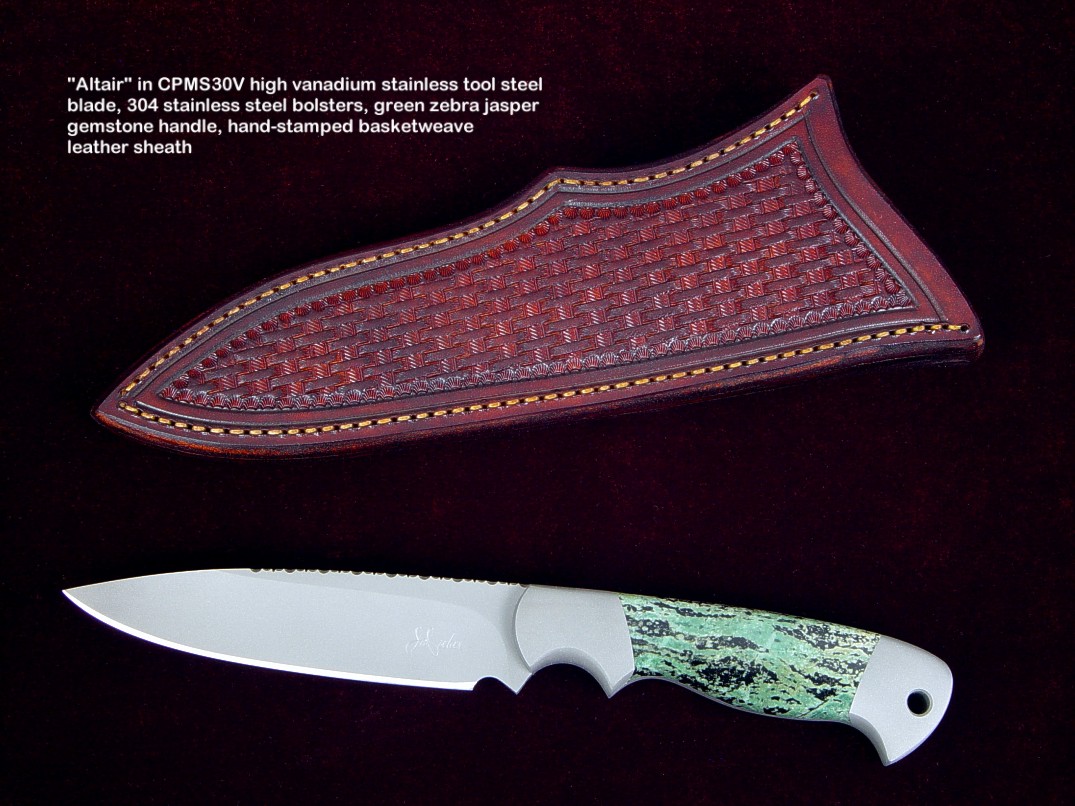
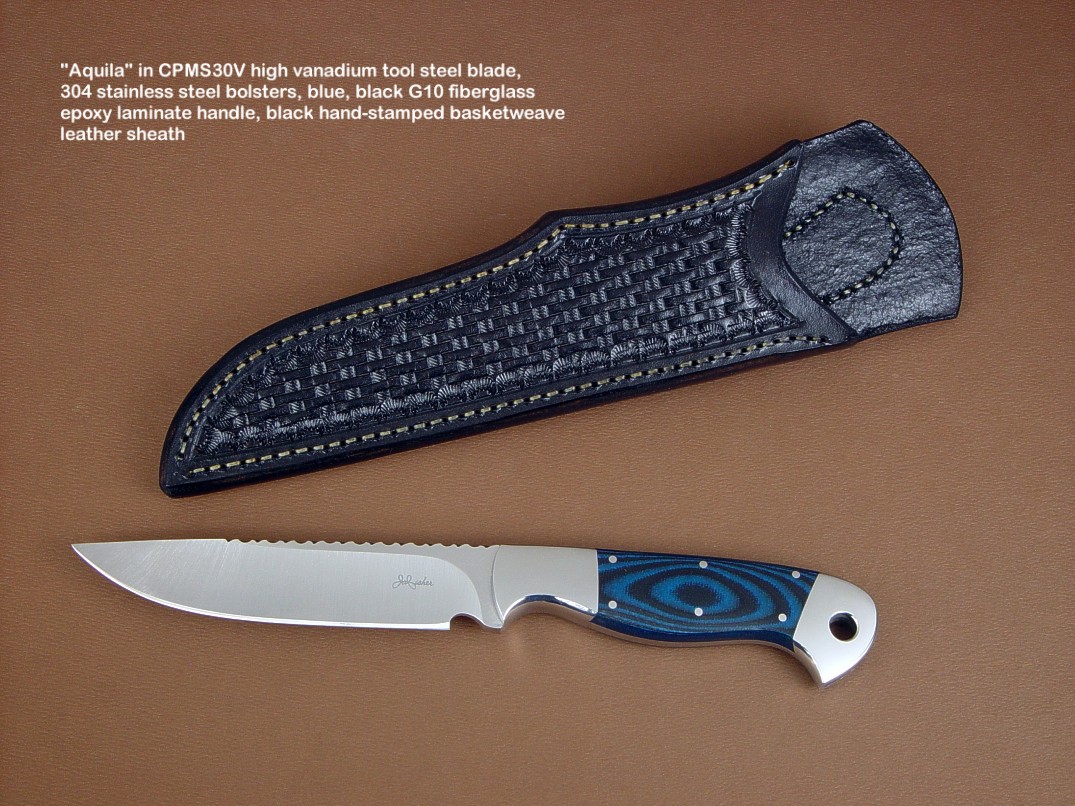
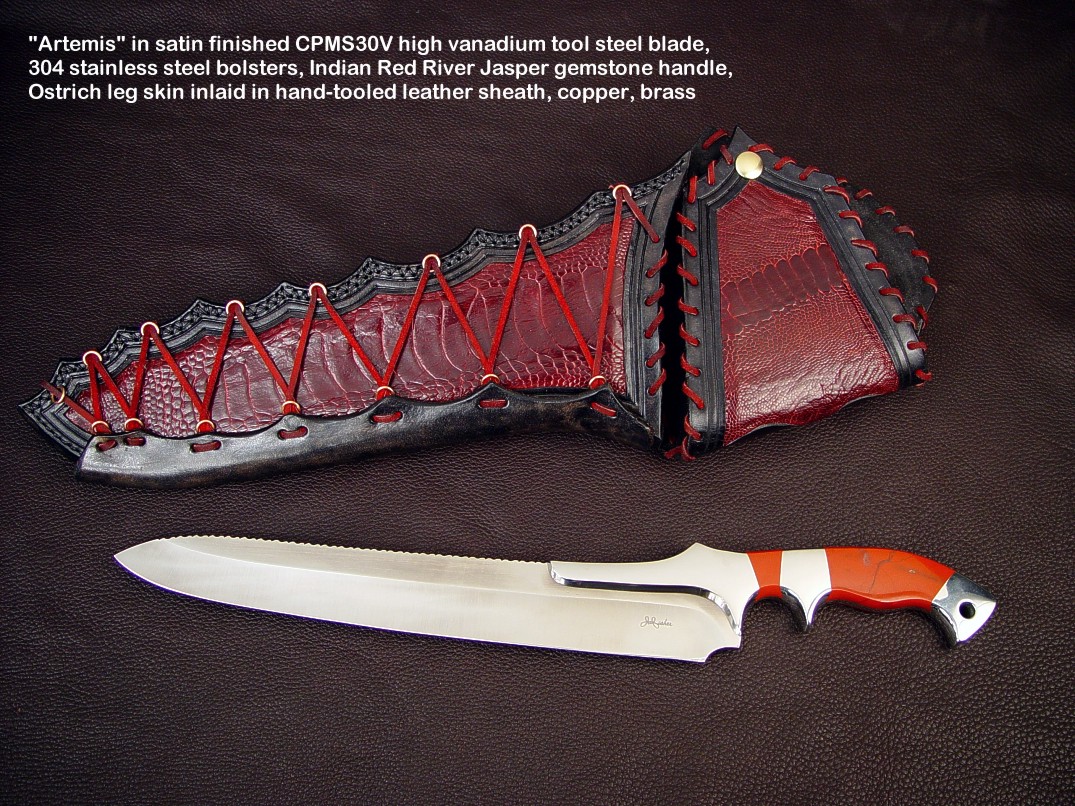
Mainly I use CPMS30V
and CPMS90V: Mostly used in industry
for plastics injection molding dies, these crucible powder
technology tool steels are formed as a powder under
tremendous heat and pressure for more uniform and
concentrated alloy elements. The advantage of this in
both of these steels is high vanadium content,
approximately 3% for the CPMS30V and 9% for the CPMS90V.
This forms an even distribution of vanadium carbides
when properly heat treated, leading to an incredibly
wear-resistant cutting edge. Unfortunately, they are
almost impossible to sharpen in the field, and may take
motorized equipment to sharpen. This is fine if you go
to the field with a sharp knife, but every knife
eventually dulls, so it's important to make sure it's
sharp before the excursion. Though CPMS30V has a higher
corrosion resistance on paper, it is not so in reality,
as it can not be mirror finished to any effective
degree, and a rougher surface simply corrodes more
easily by having increased surface area and tooth to
hold debris and corrosives like blood and moisture. So,
in practice, a mirror finish on 440C, ATS-34, and
CPM154CM is more corrosion resistant overall.
- Other steels I use in hunting and
fishing knives: I've used and will use M2,
BG42, A1,
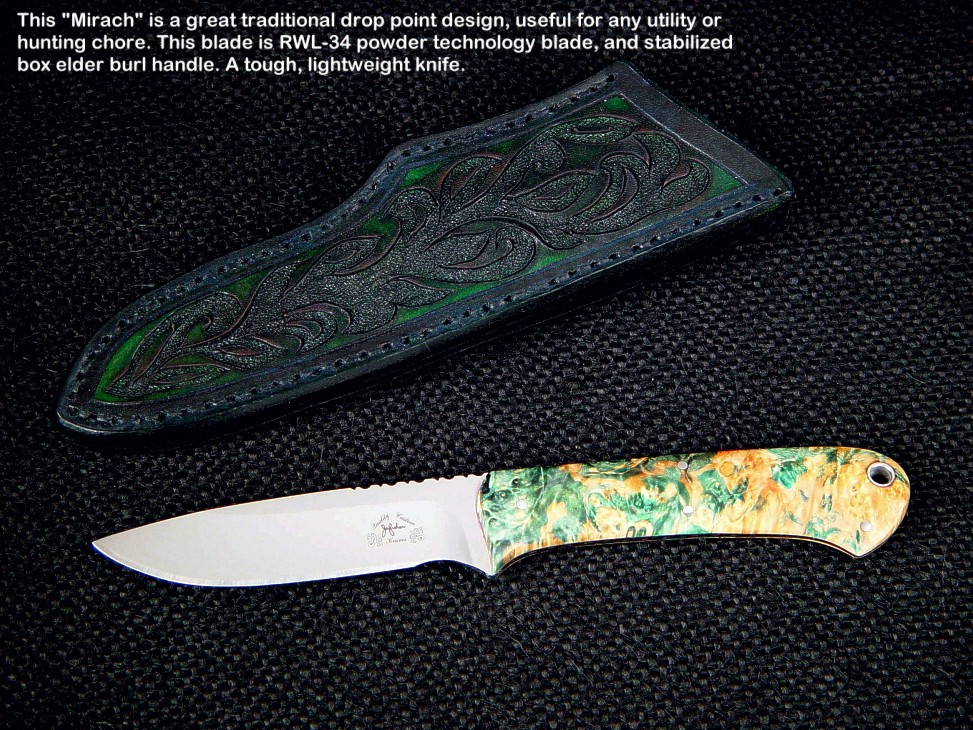
CPMS60V, RWL-34, pattern-welded stainless and
carbon steel damascus, only by special order and request. Each of these has
specific applications, limitations and benefits.
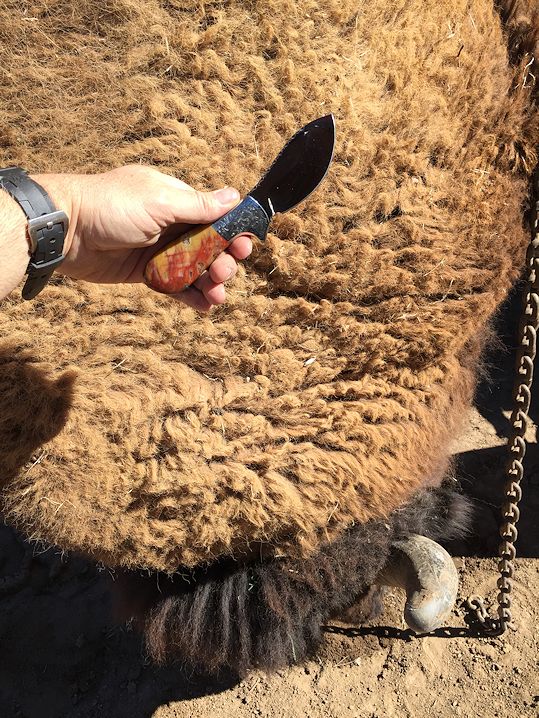
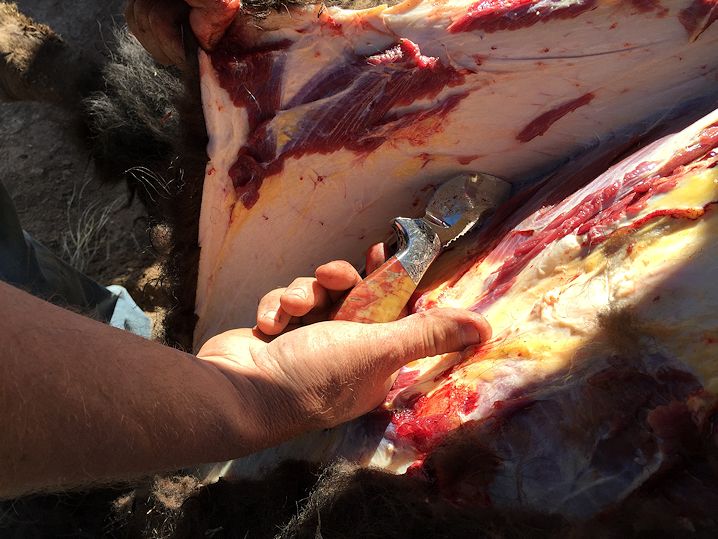
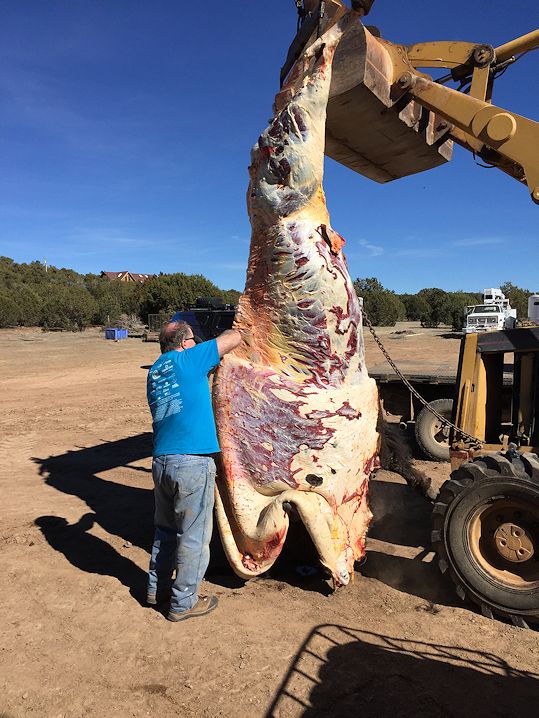
Skinning an American Bison (Buffalo)
You often hear that fine custom and handmade knives are just too pretty to use. Here's an example of how beauty and function work
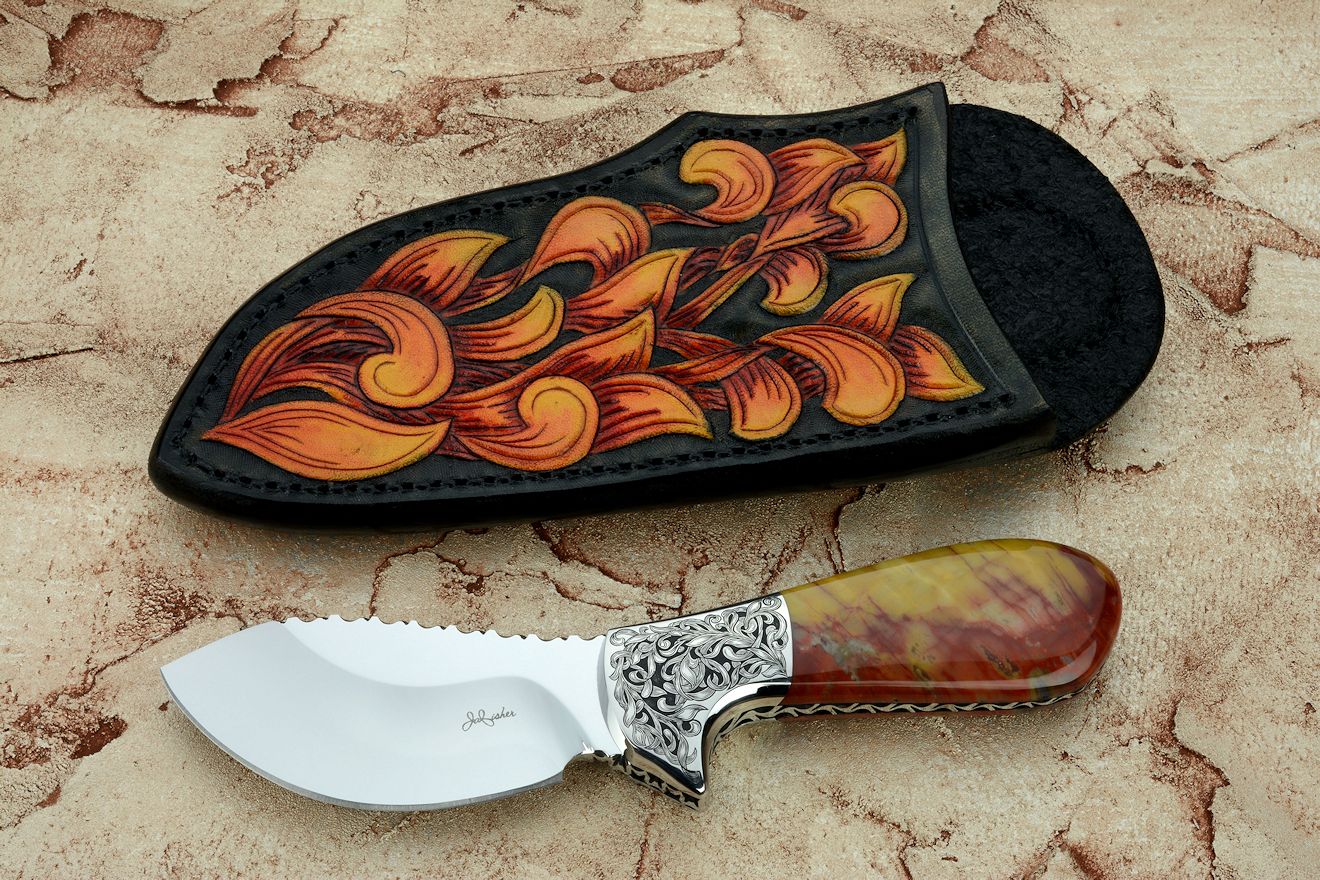
together on one of the most demanding skinning knife chores, skinning an American Bison (Buffalo). This huge beast has one of the thickest,
toughest hides of any animal, and the Nunavut skinning knife (440C mirror polished blade, hand-engraved stainless steel bolsters, and gemstone handle)
makes short and elegant work of the process. Pretty? Yes, and highly functional!
Thanks, S. H. and P. S.!
Blade Geometry and Knife Examples
Blade geometry is more than important
on hunting knives: it's critical. How thin a custom knife is
ground depends upon the intended use, the cross-sectional
thickness supporting the edge, the profile (shape) of the
blade, and the steel type, hardness, and temper. No where is
this so apparent as in hunting and fishing knives, as so
much is usually asked of them. They must usually be thin and
sharp enough to open tough hides and skins without snagging
or ripping, and that might mean cutting through dirty and
abrasive hair, mud, and scales. These materials are abrasive
on a cutting edge, so high hardness and a medium temper is
usually required. The blade must be thin enough to have a
low sharpening angle for the finest cut. See more about
these angles on my
Blades page.
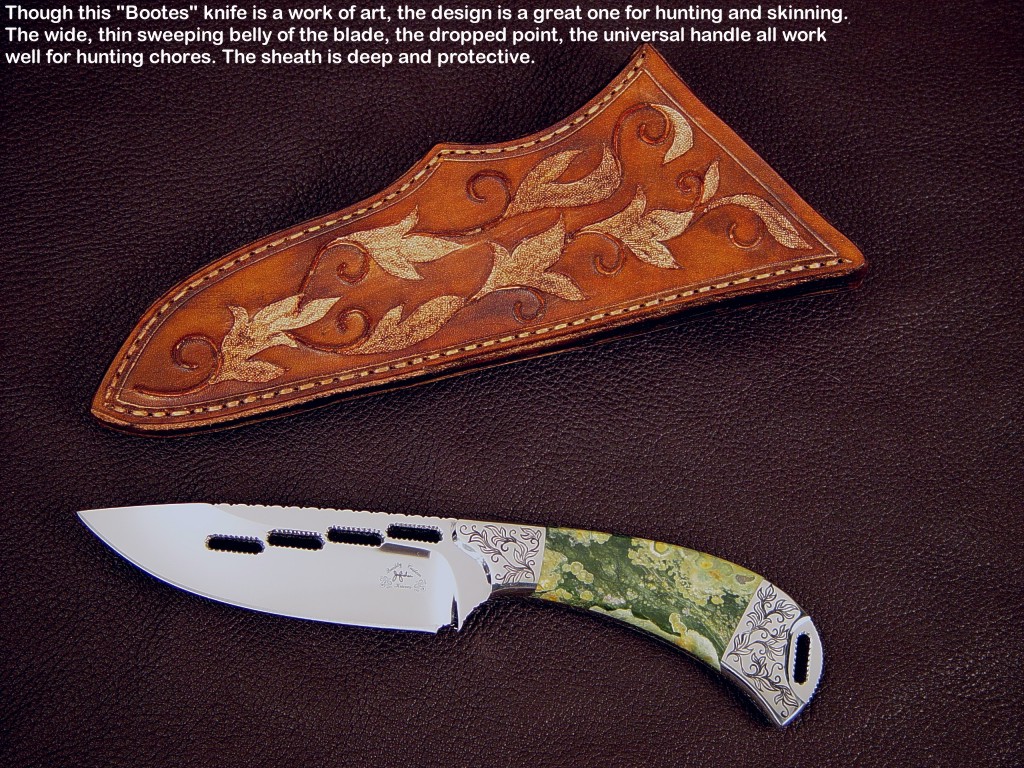
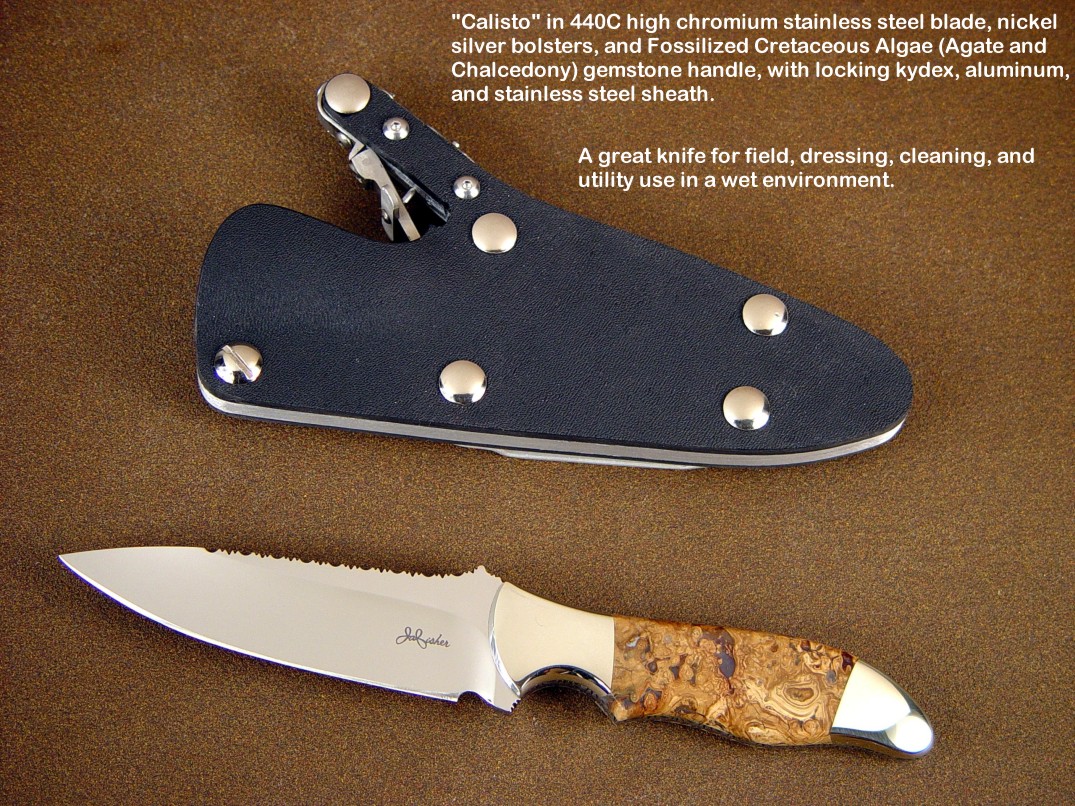
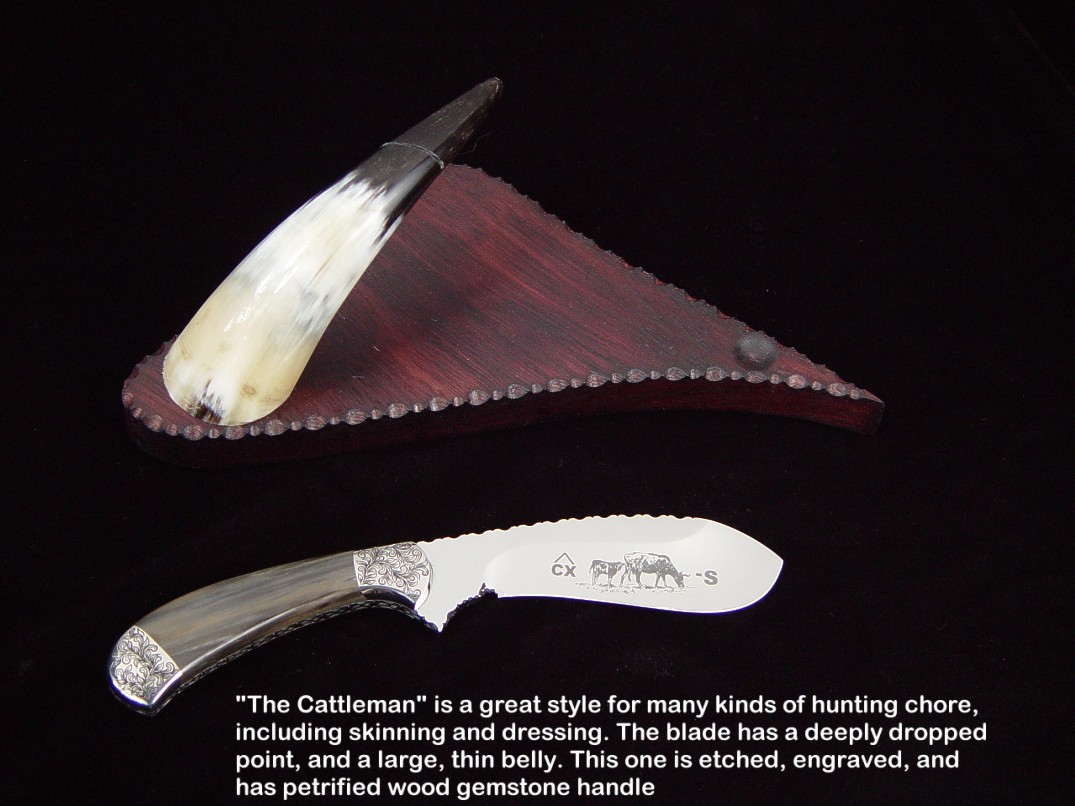
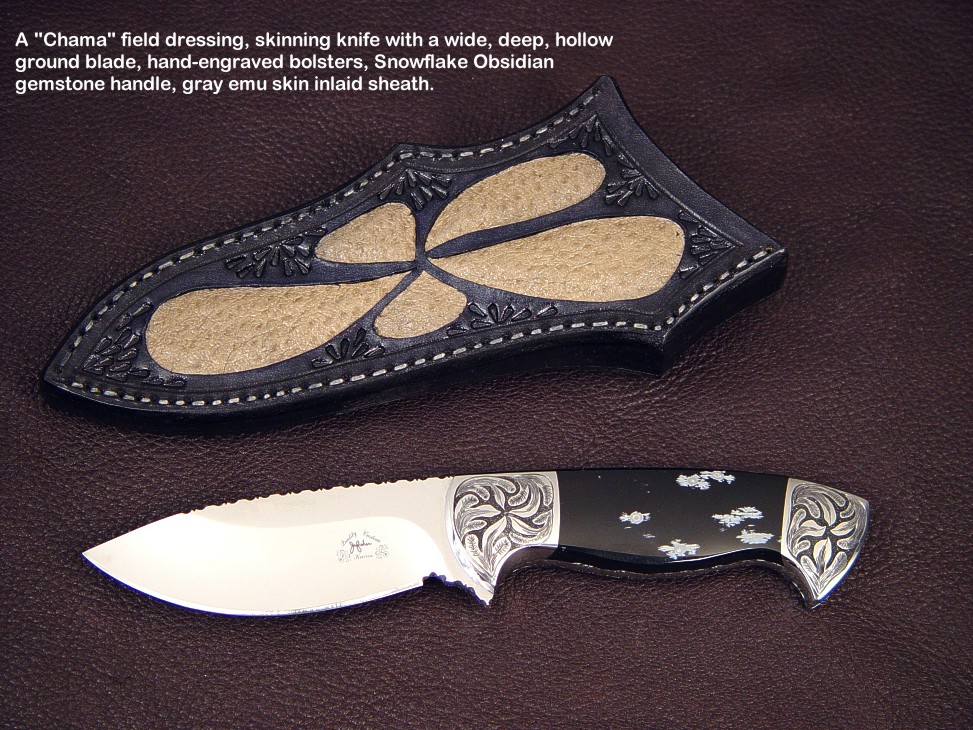
The shape of the blade has a lot to do
with how a hunting knife is used, carried, and whether or not
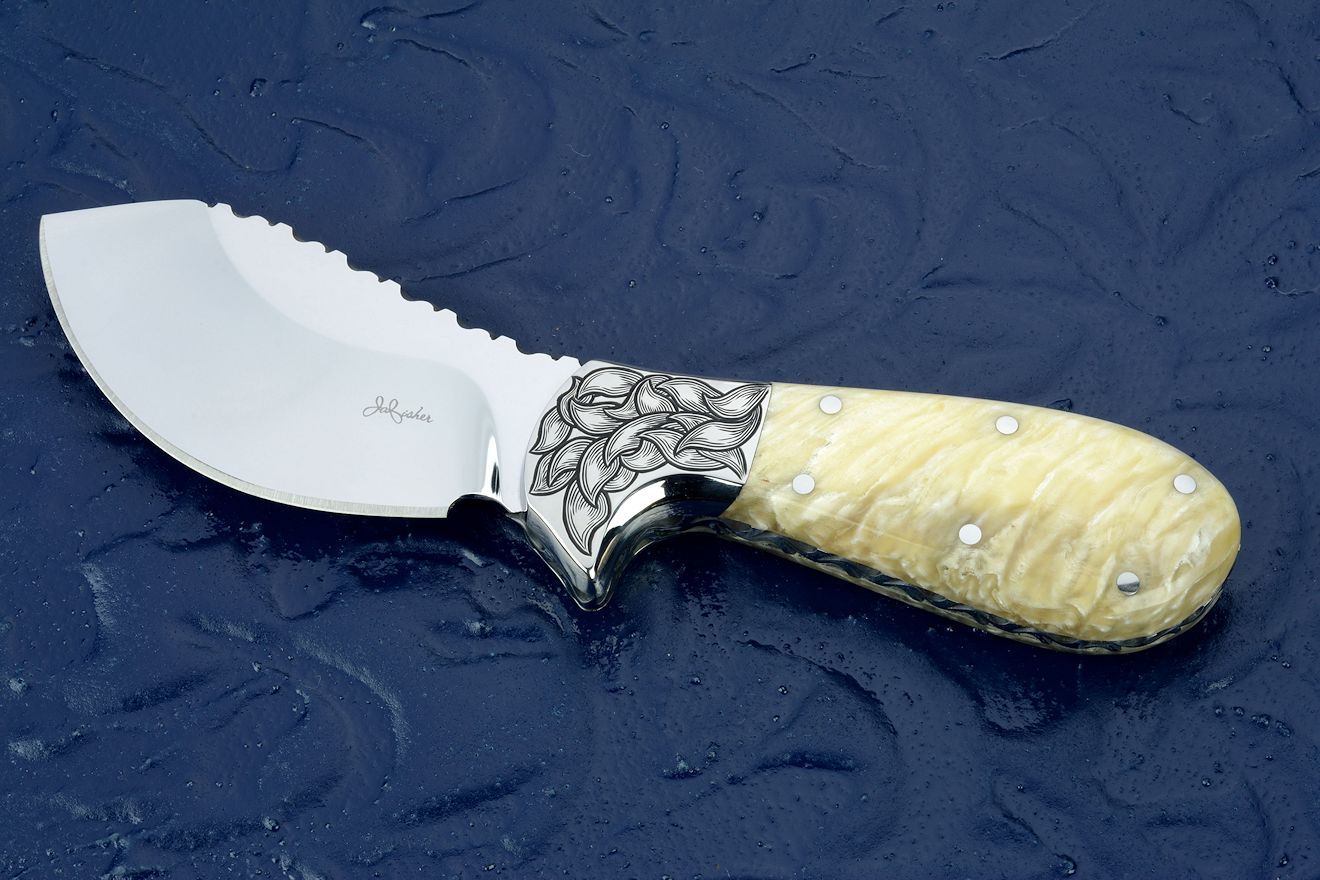
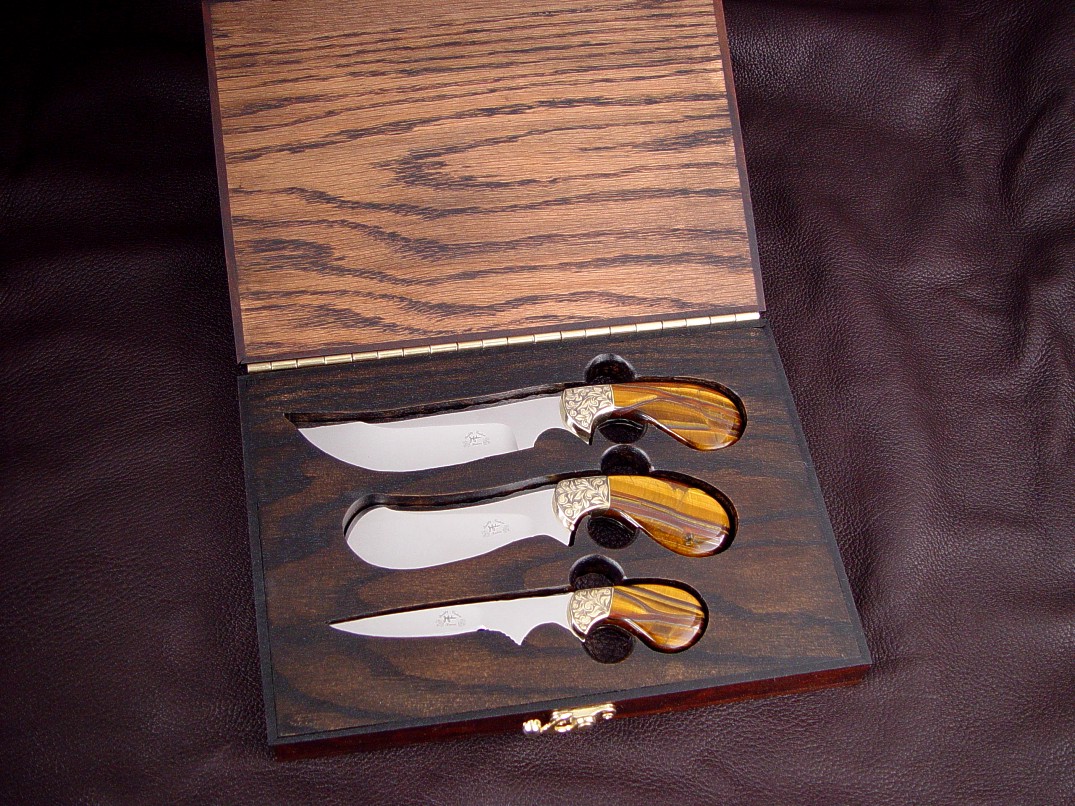
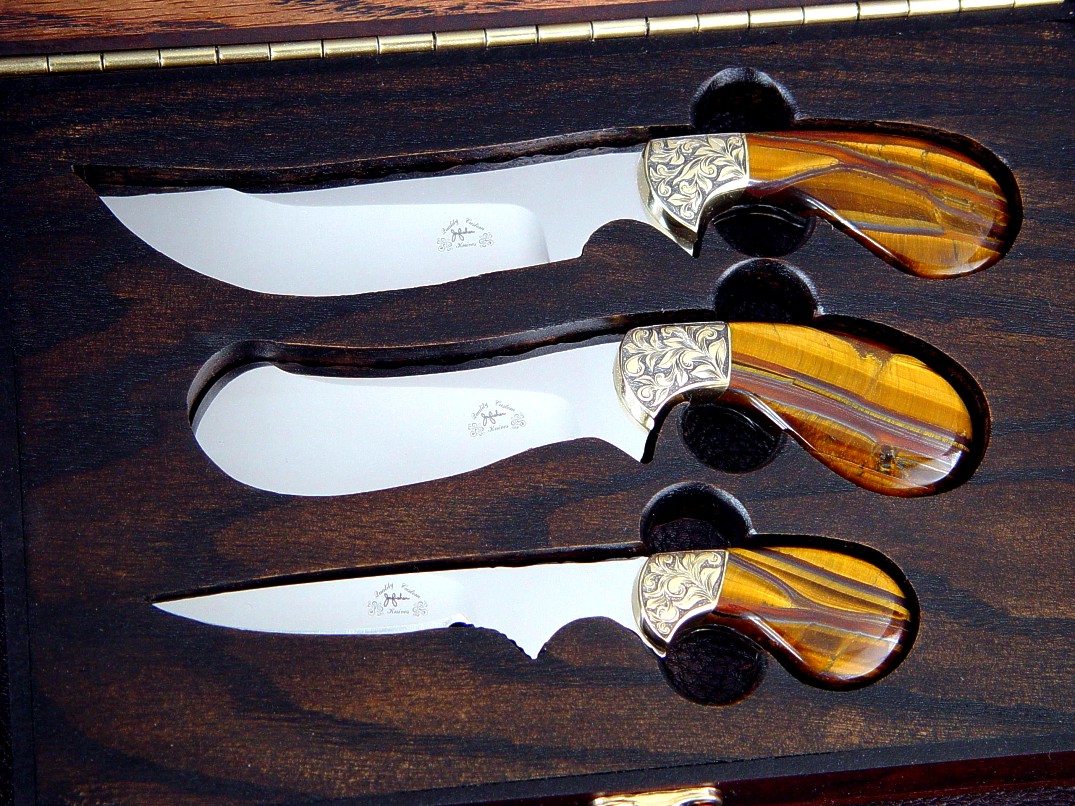
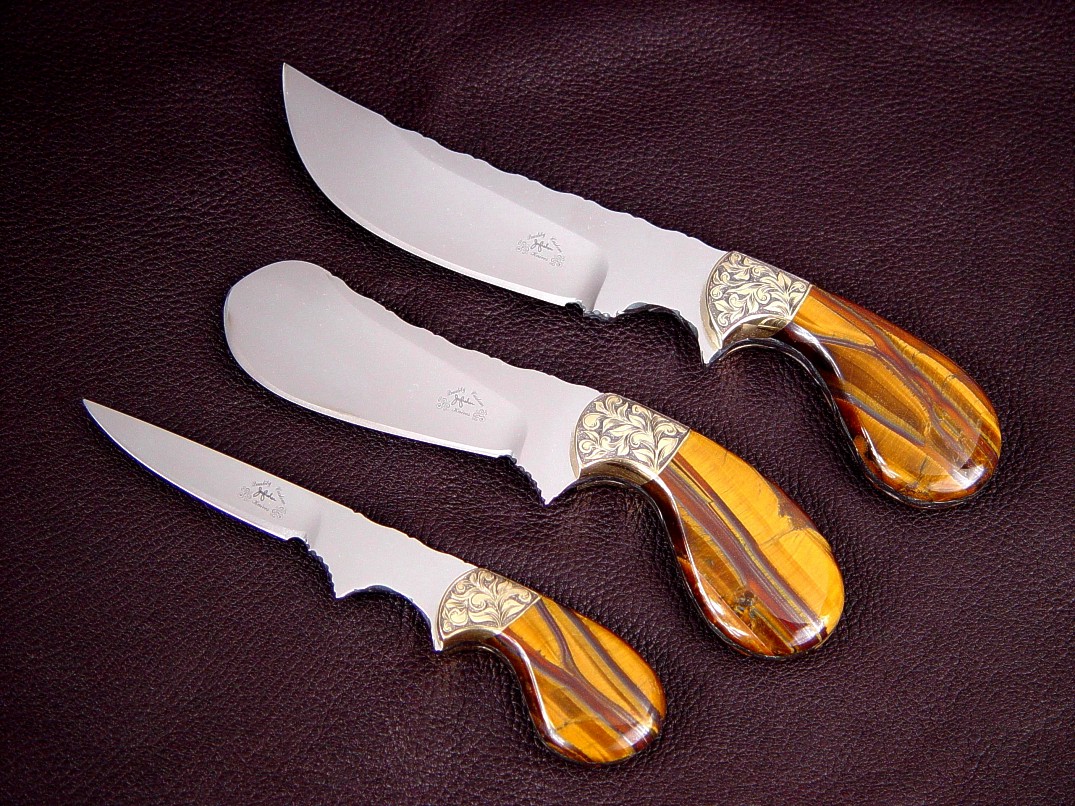
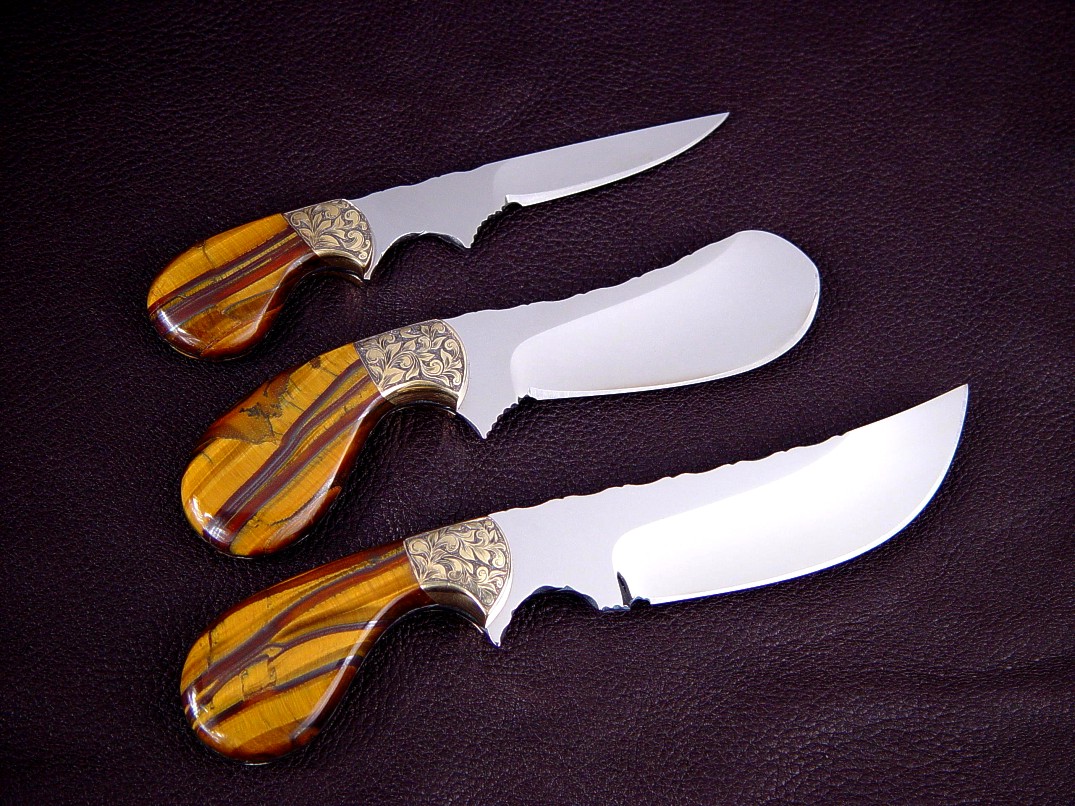
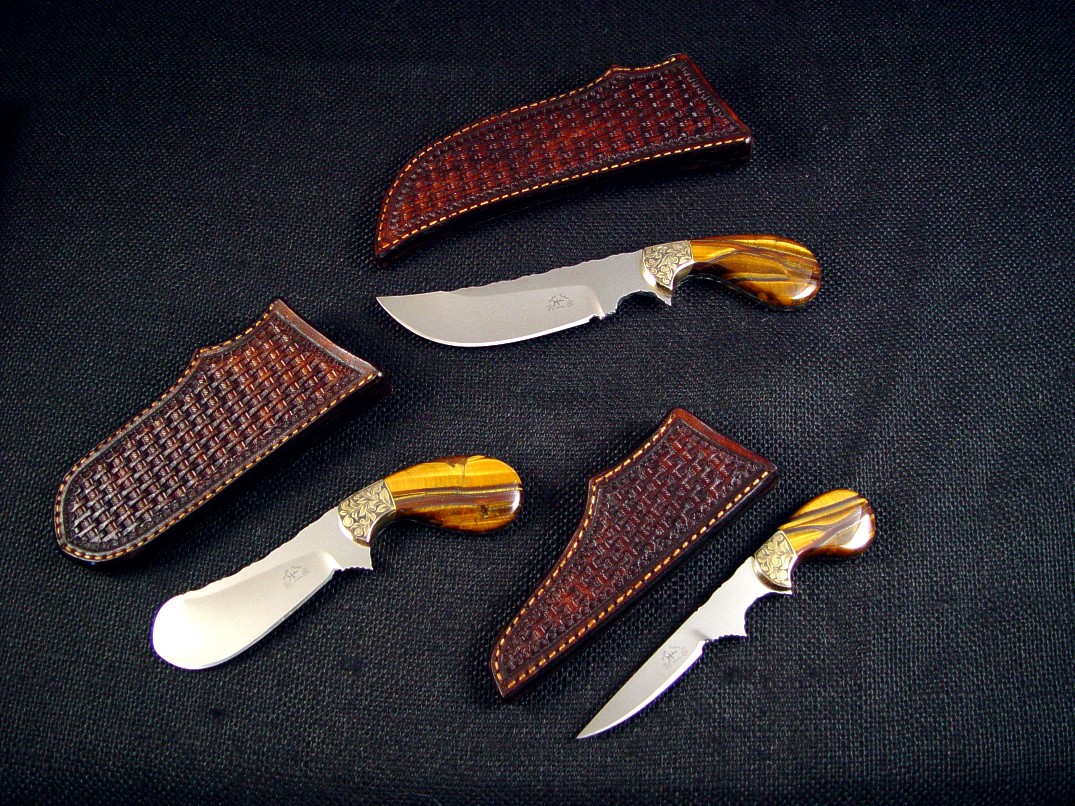
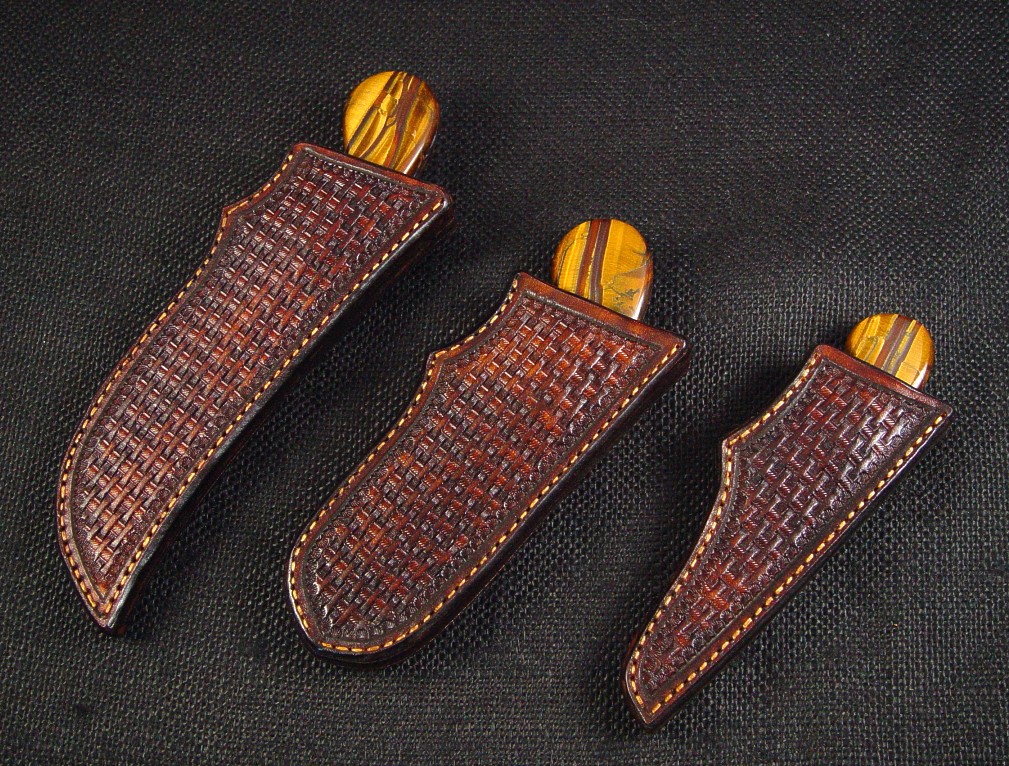
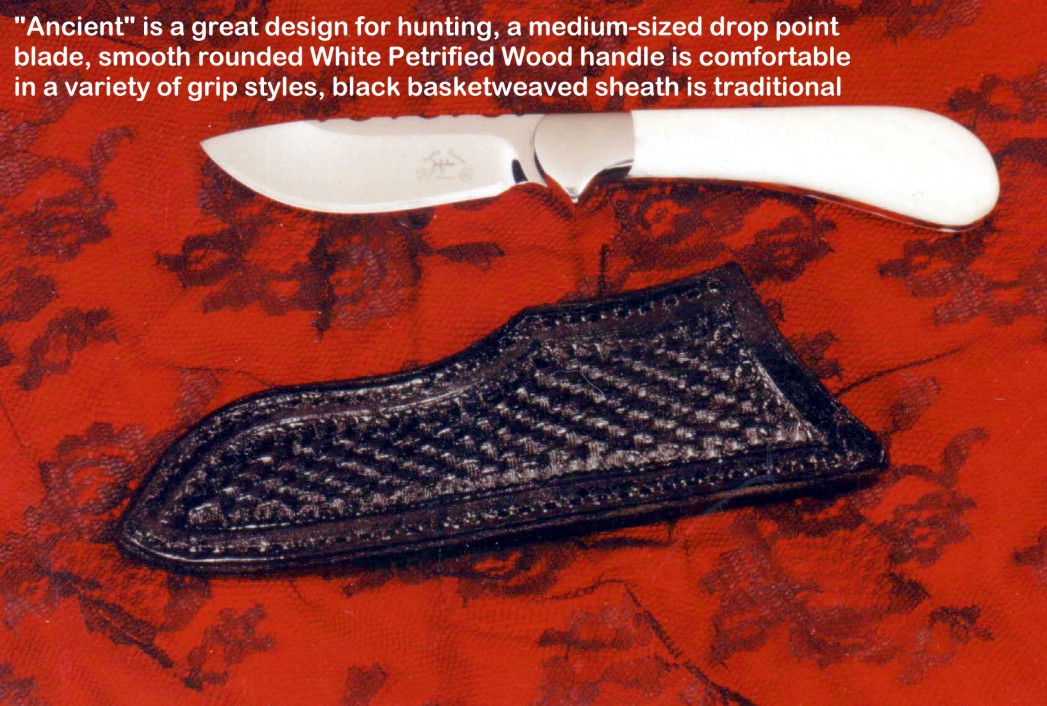
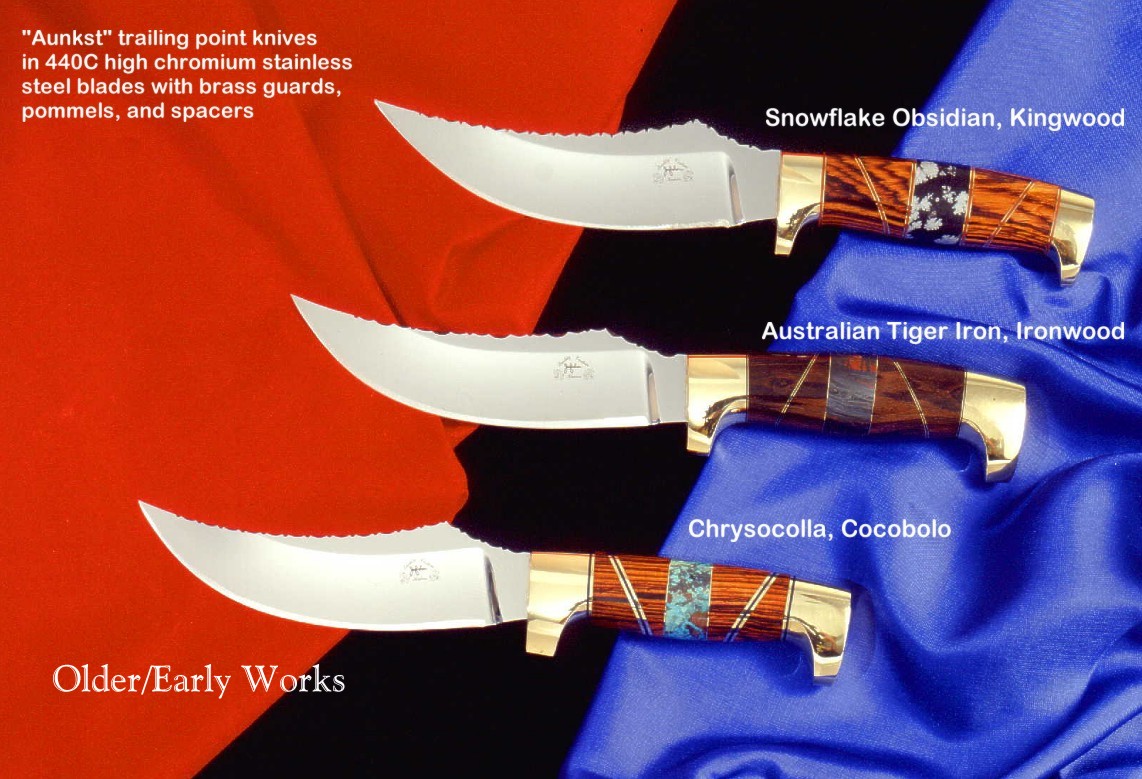
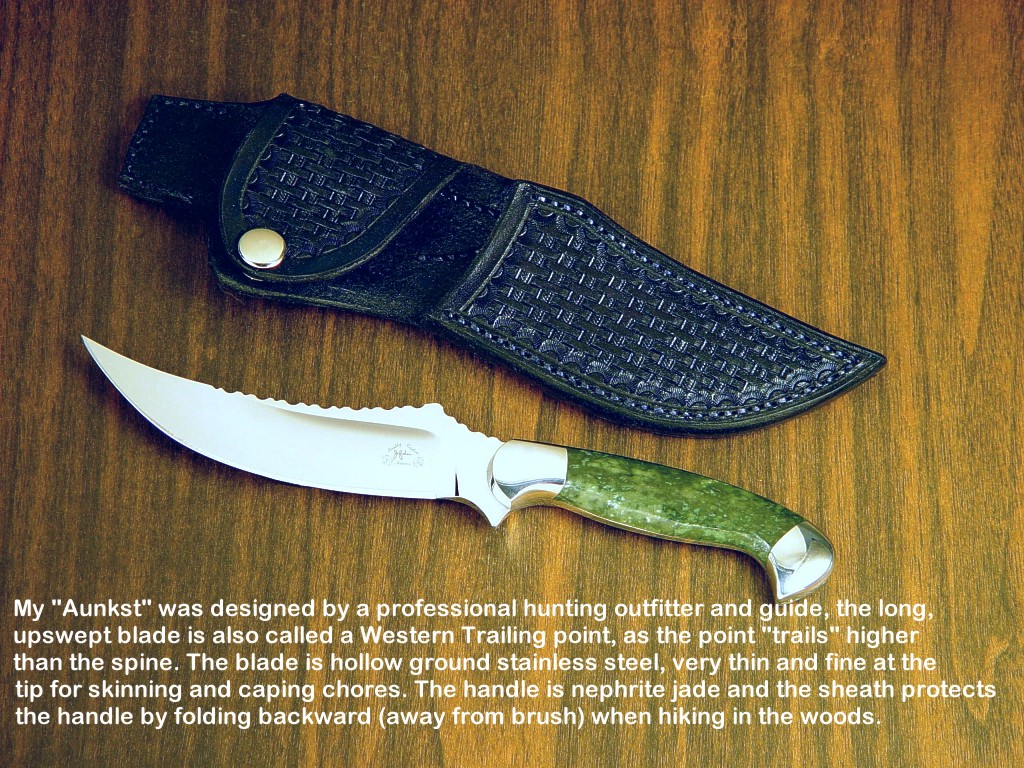
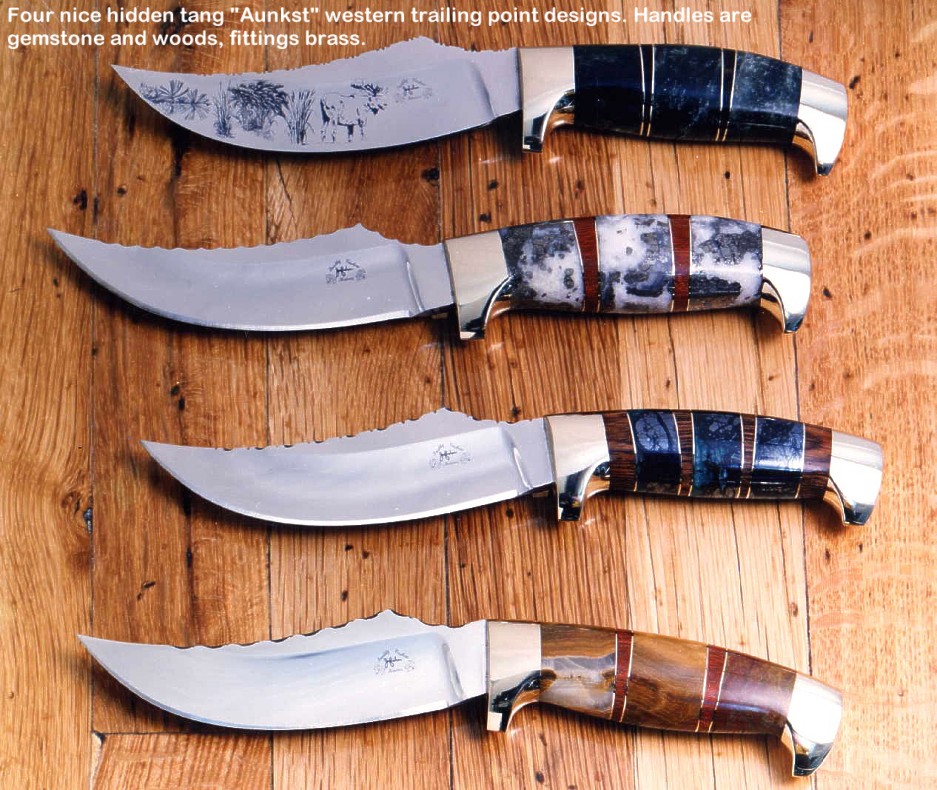
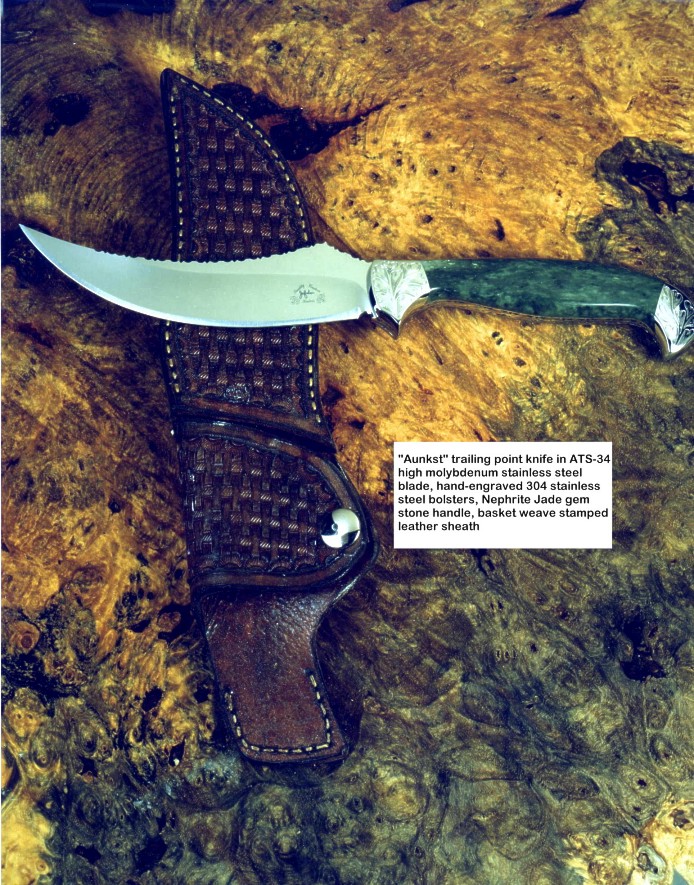
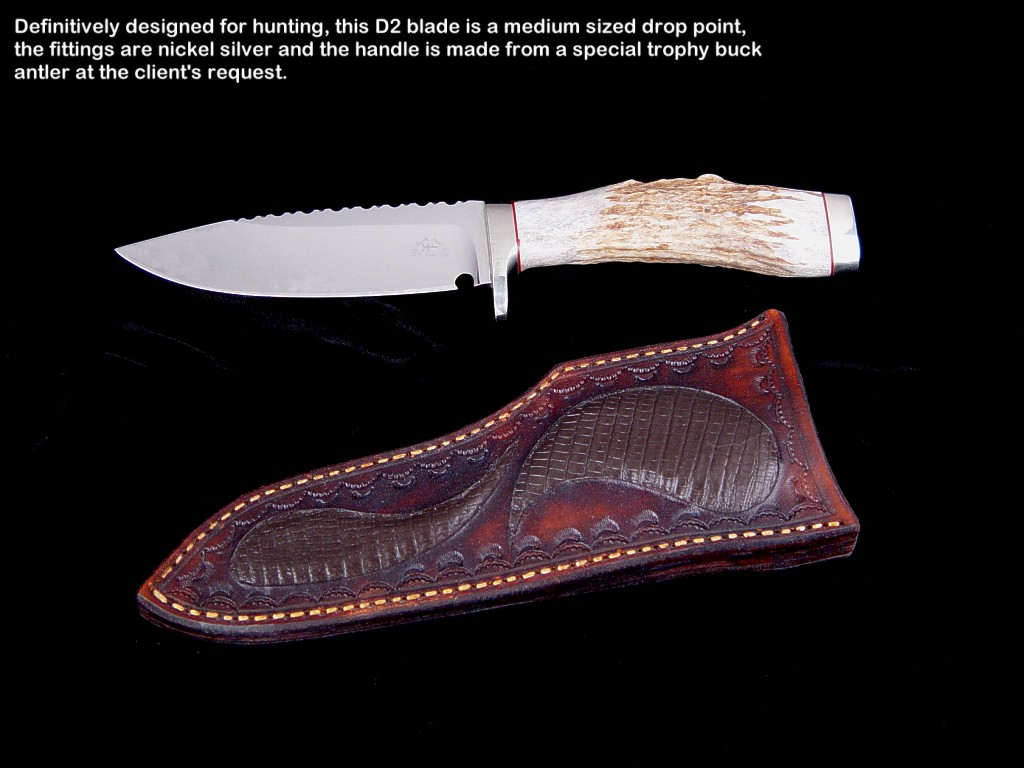
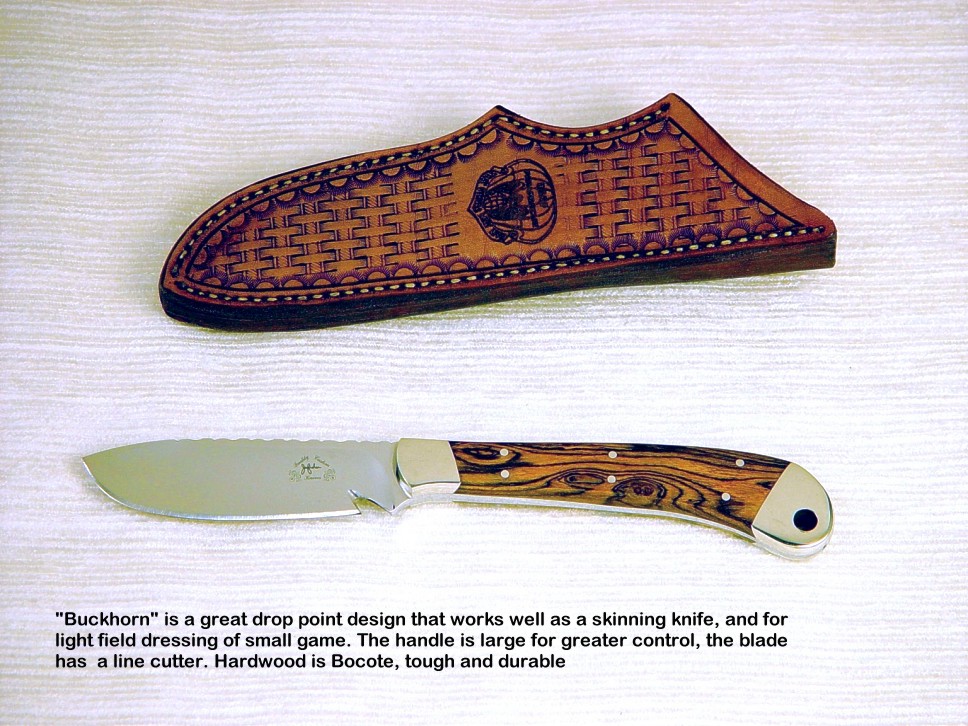
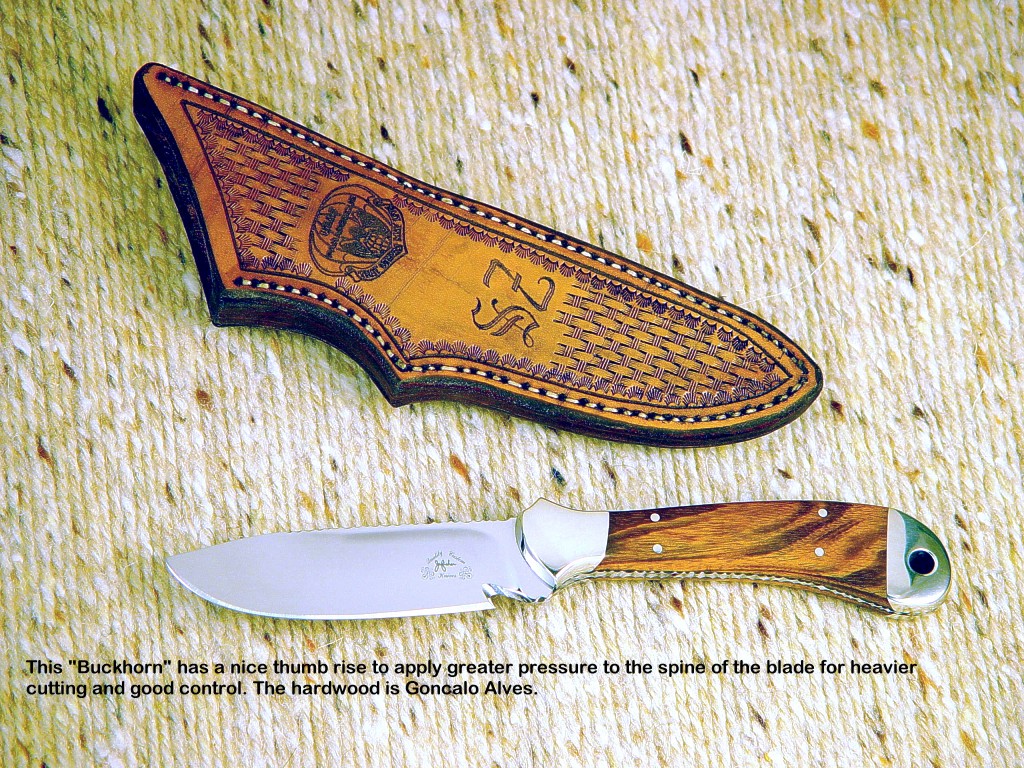
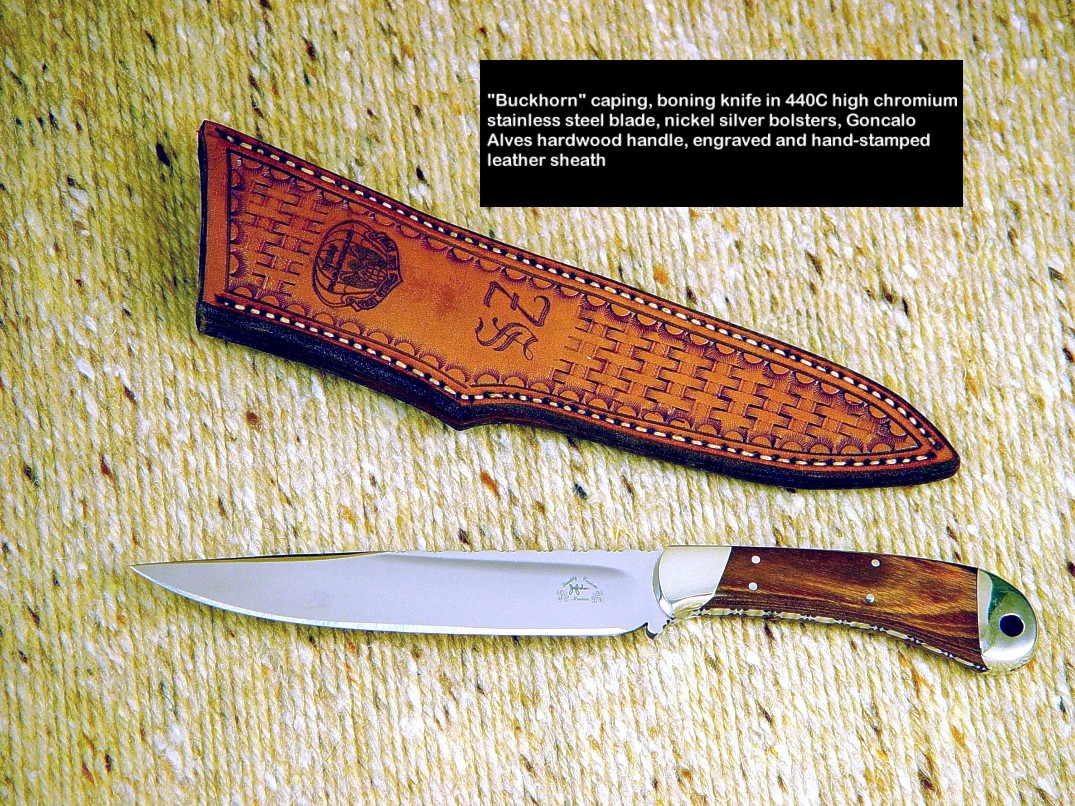
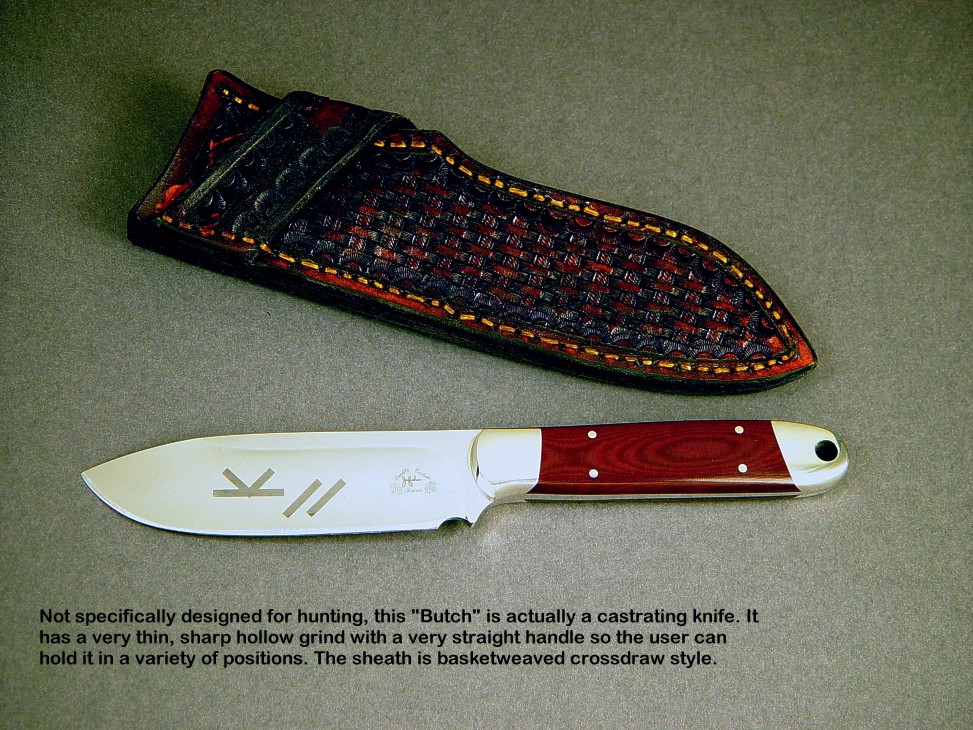
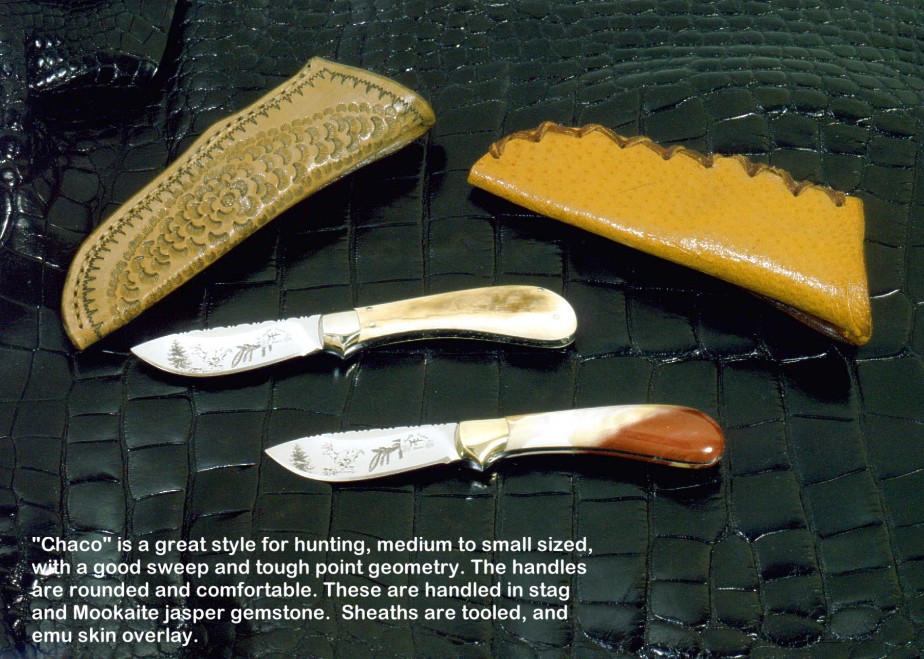
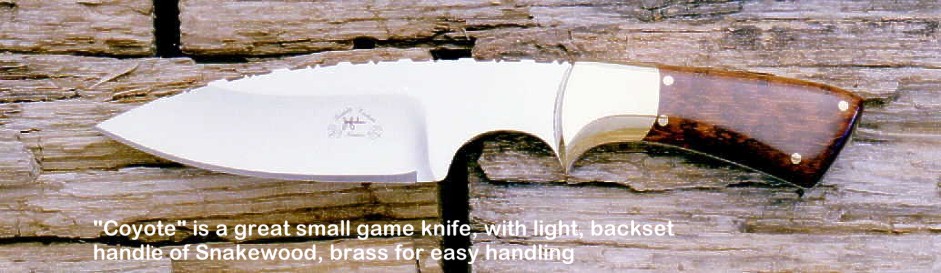
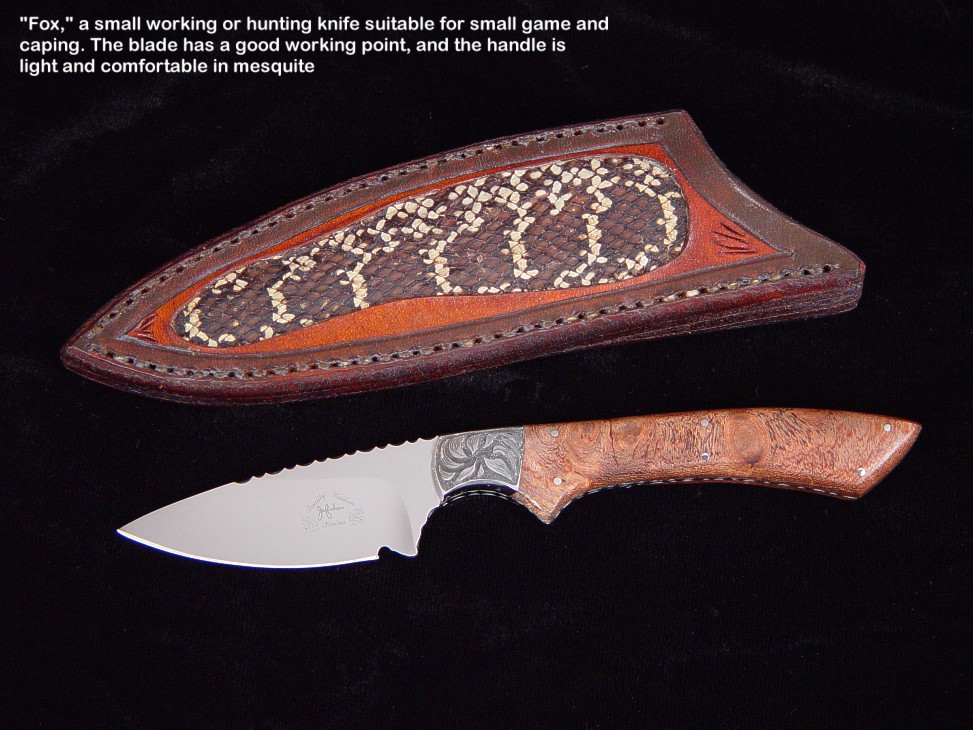
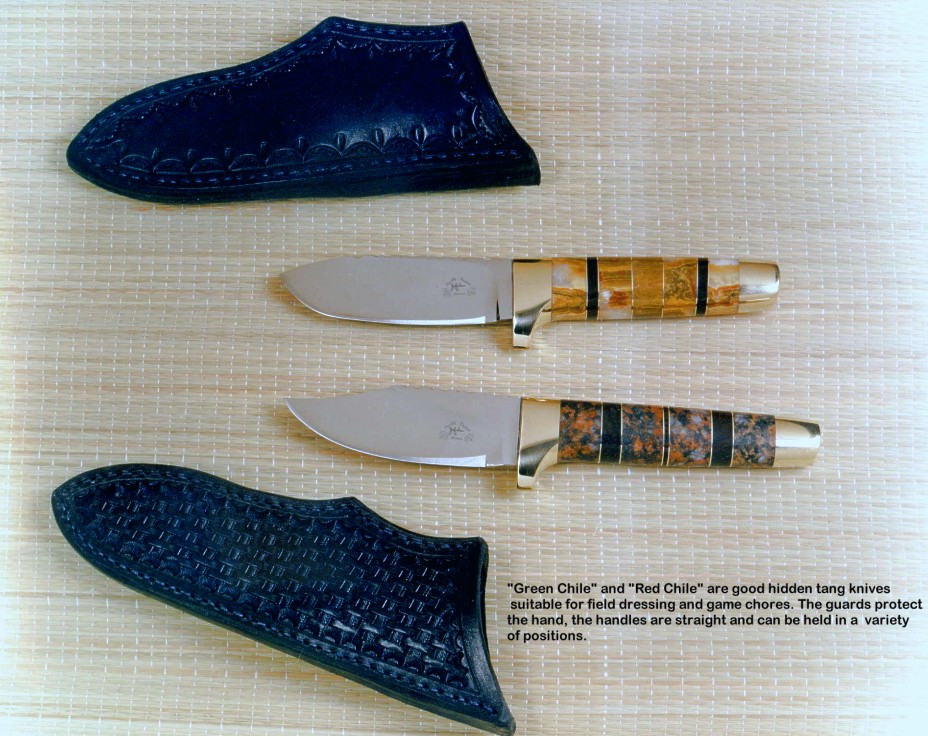
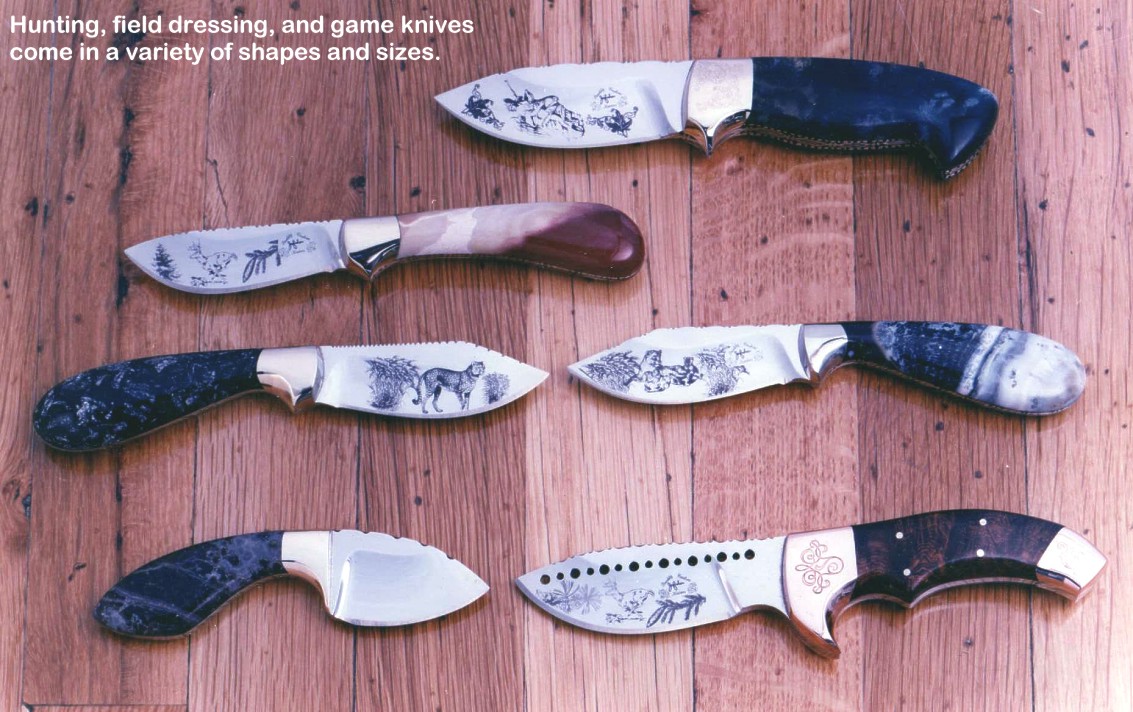
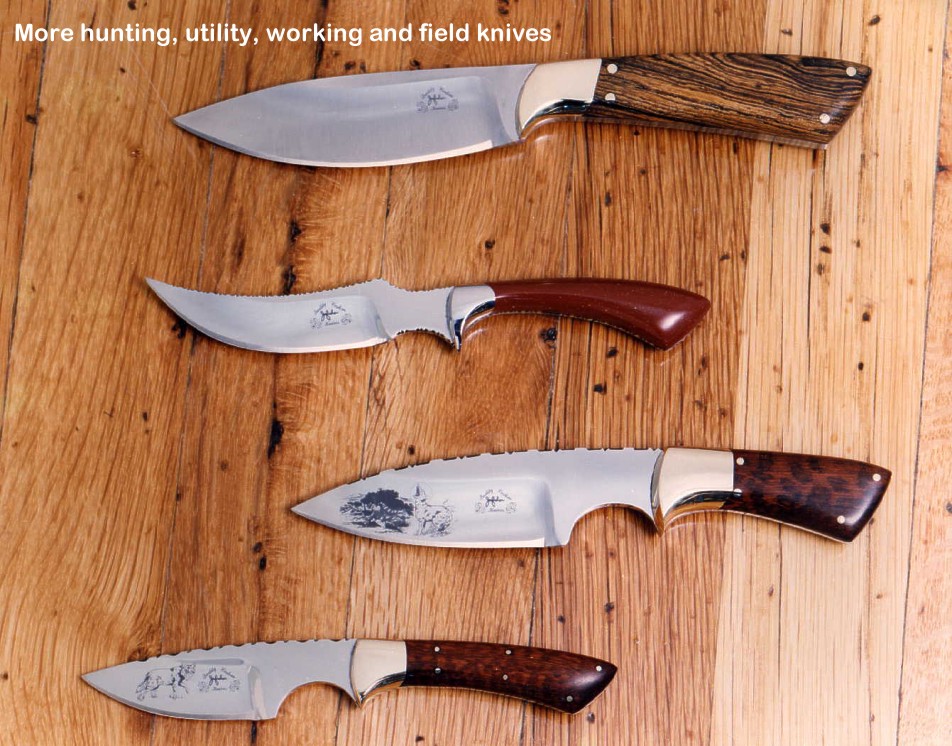
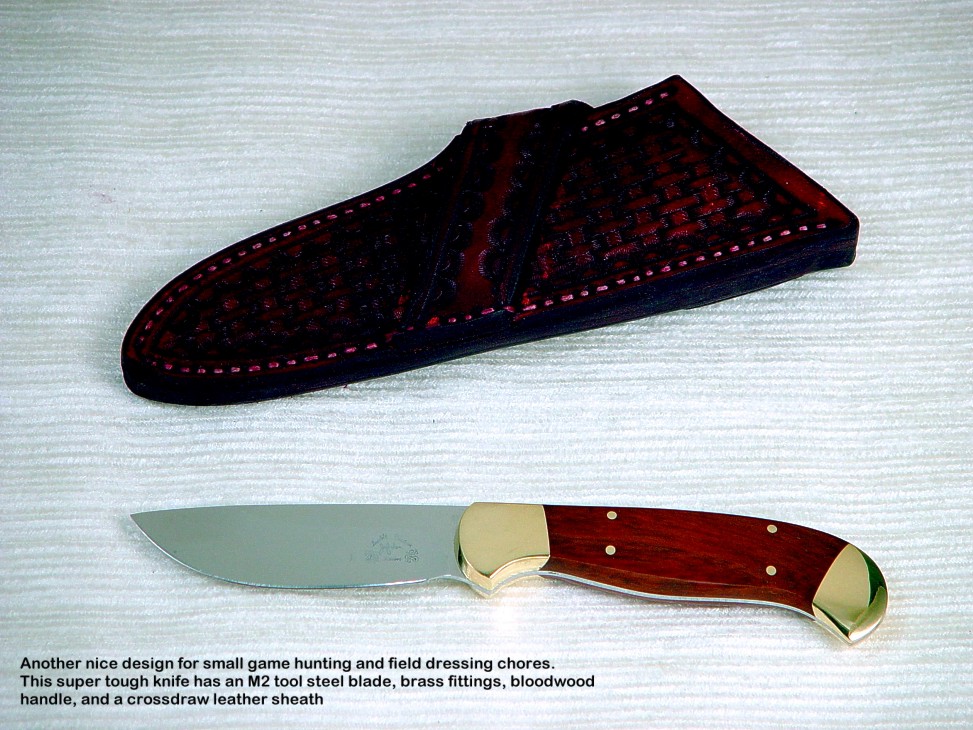
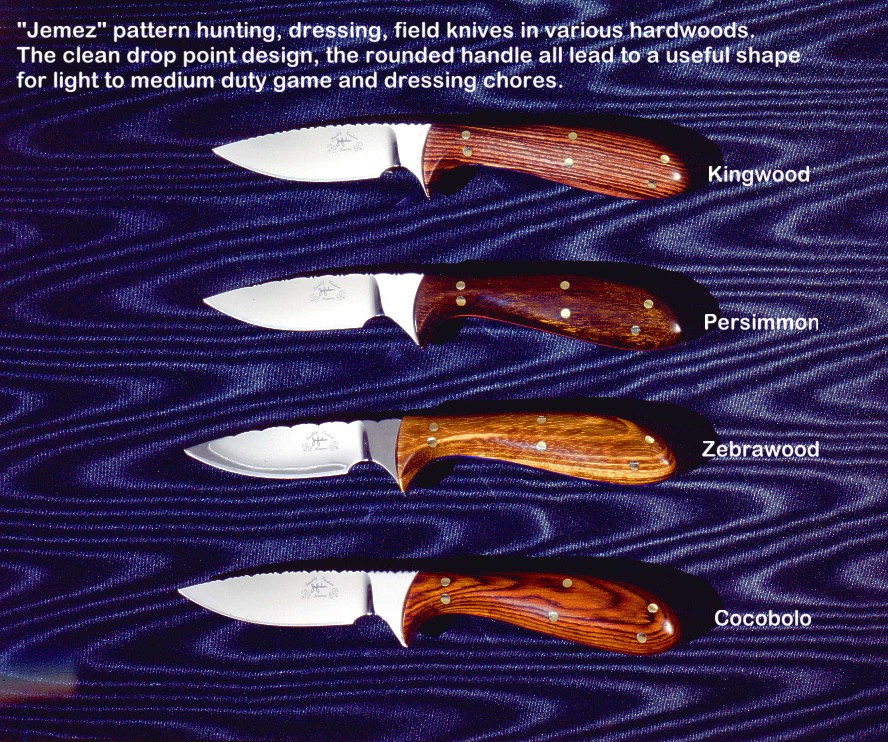
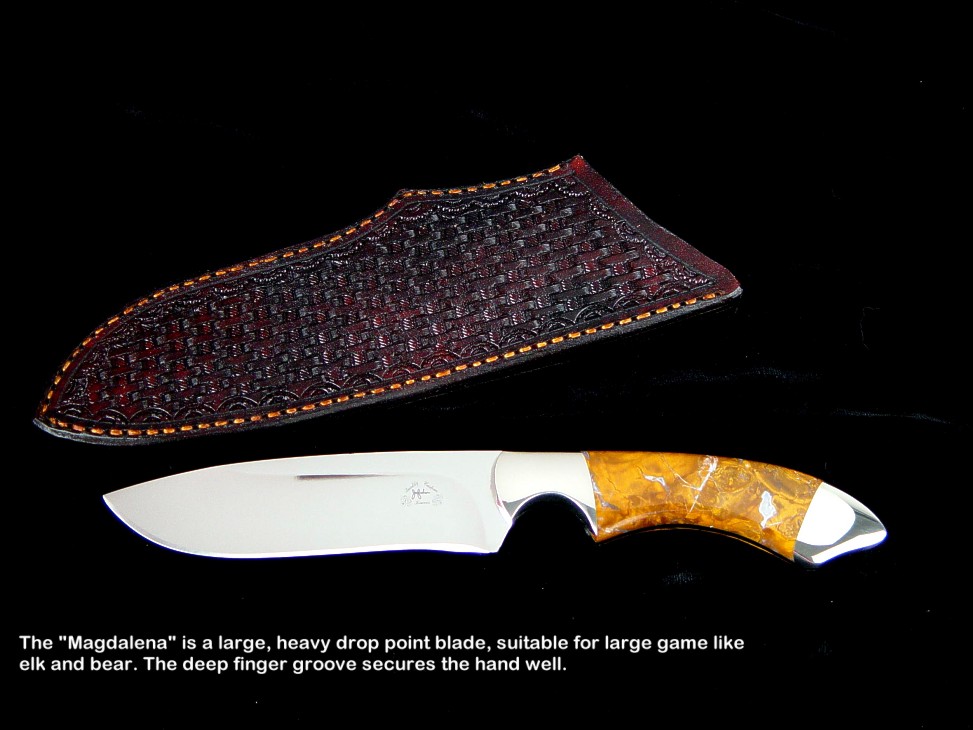
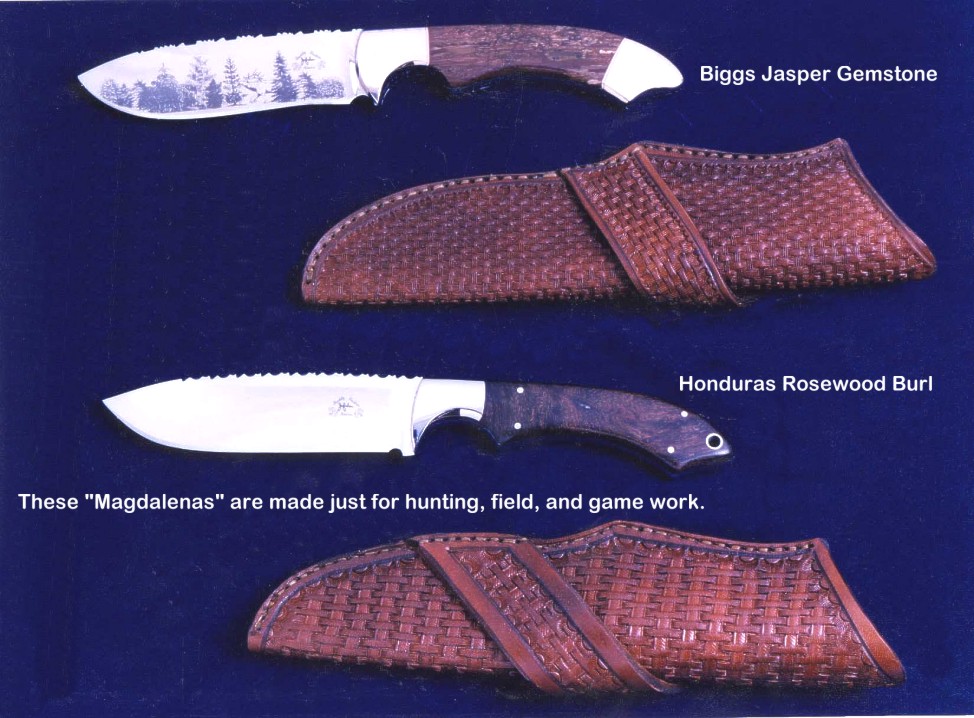
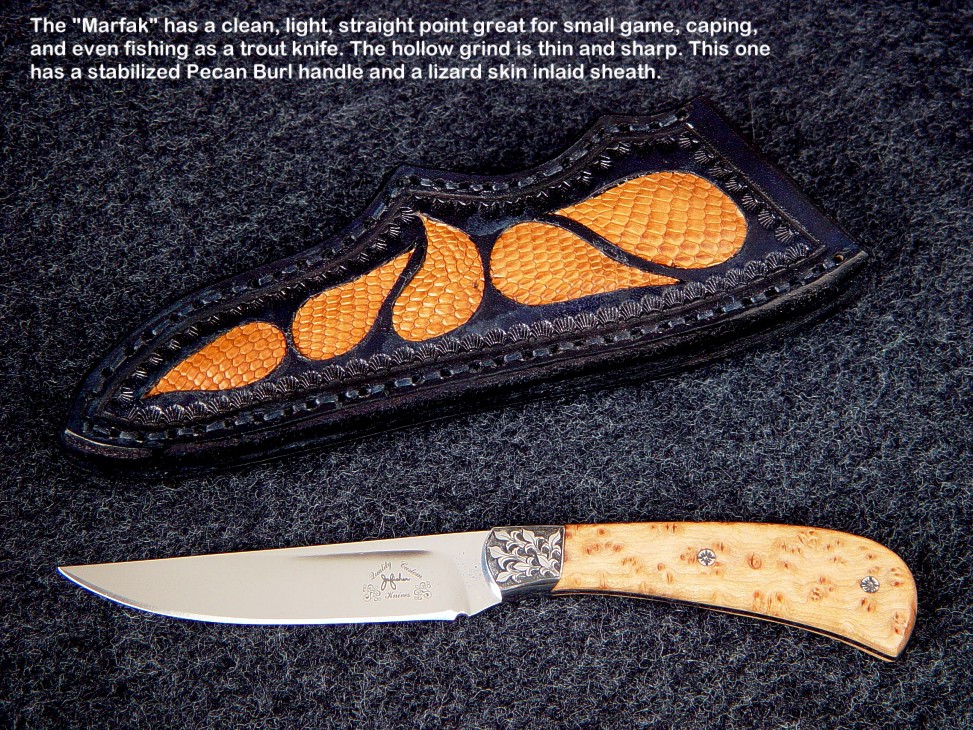
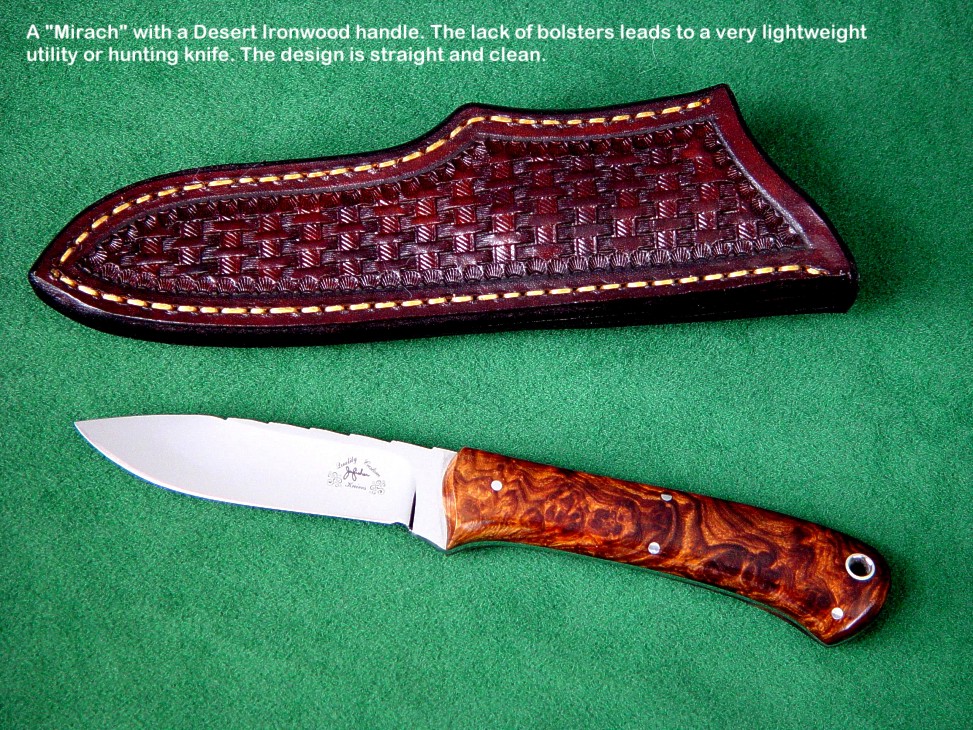
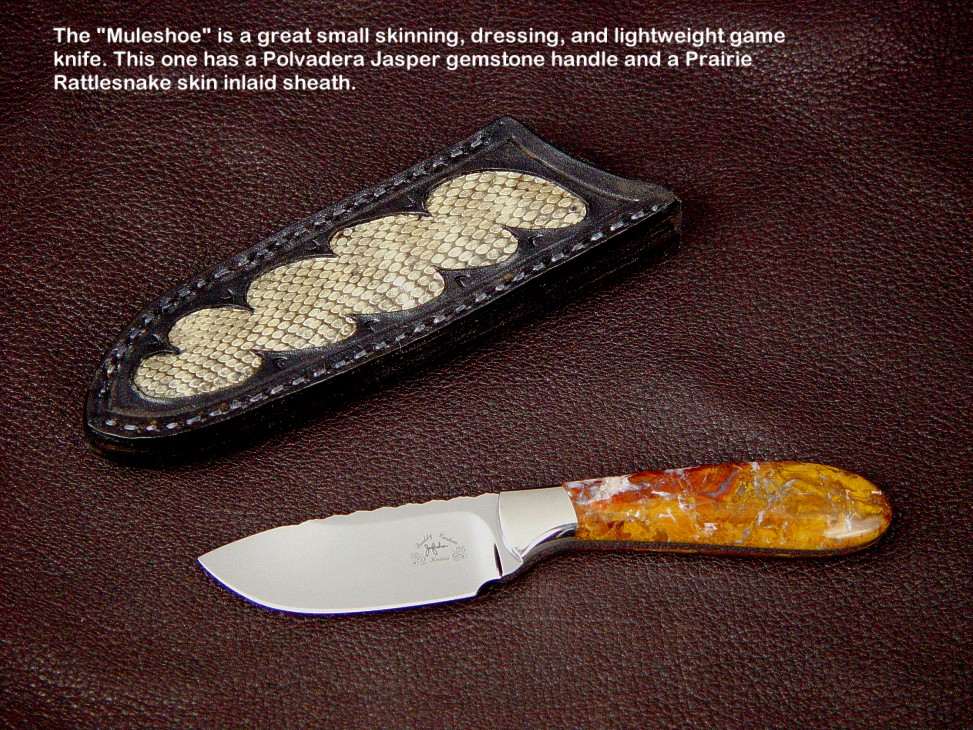
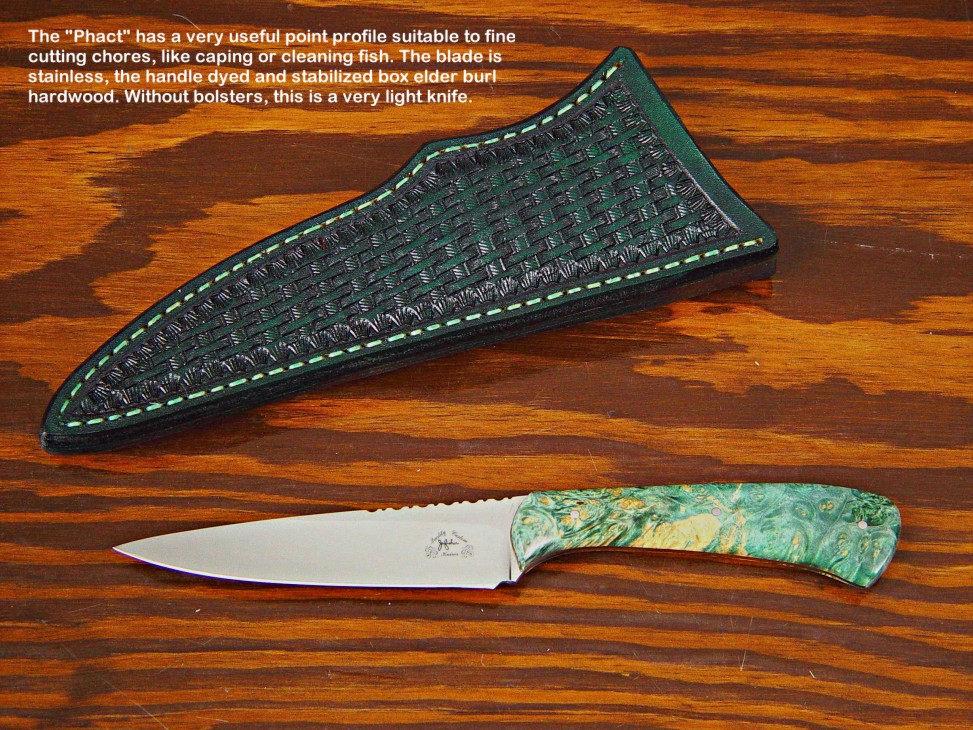
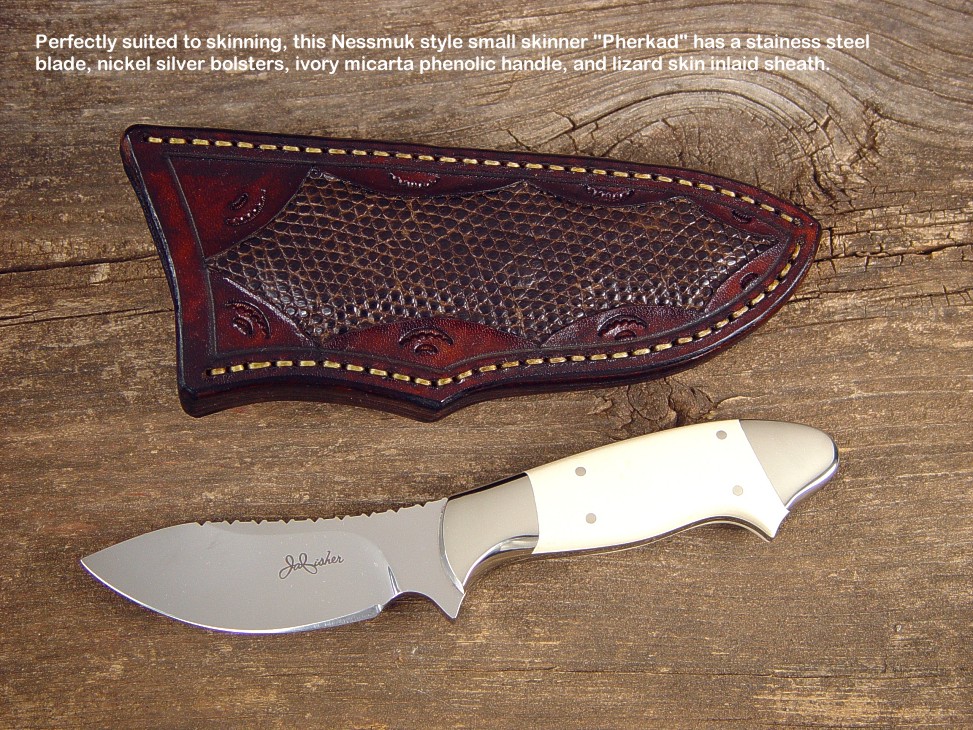
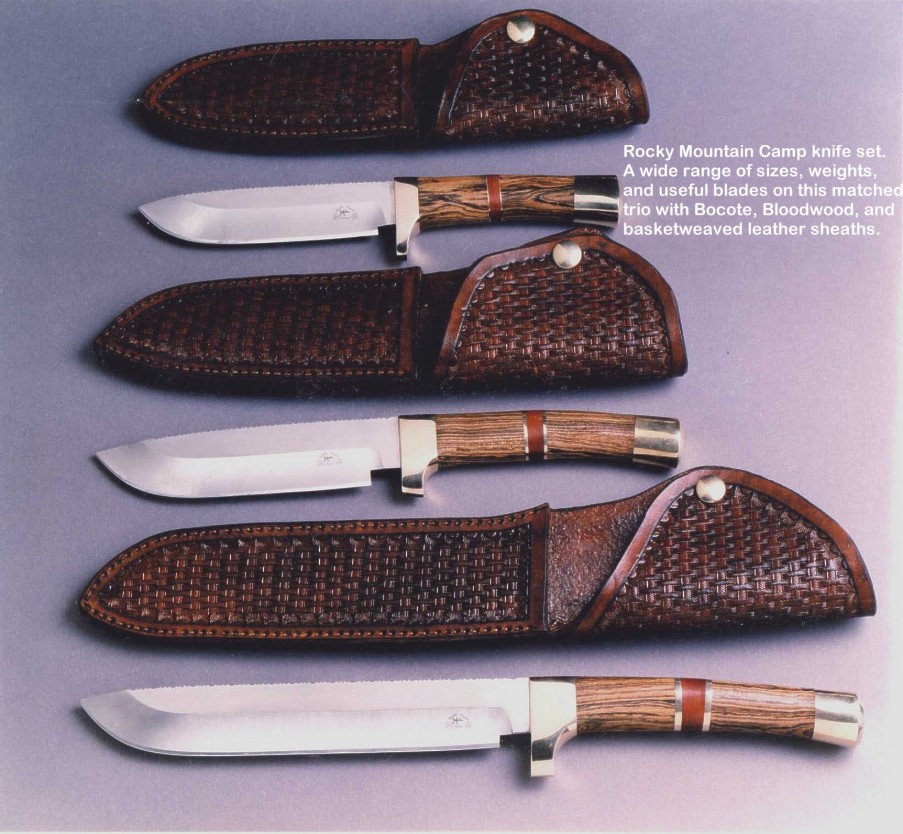
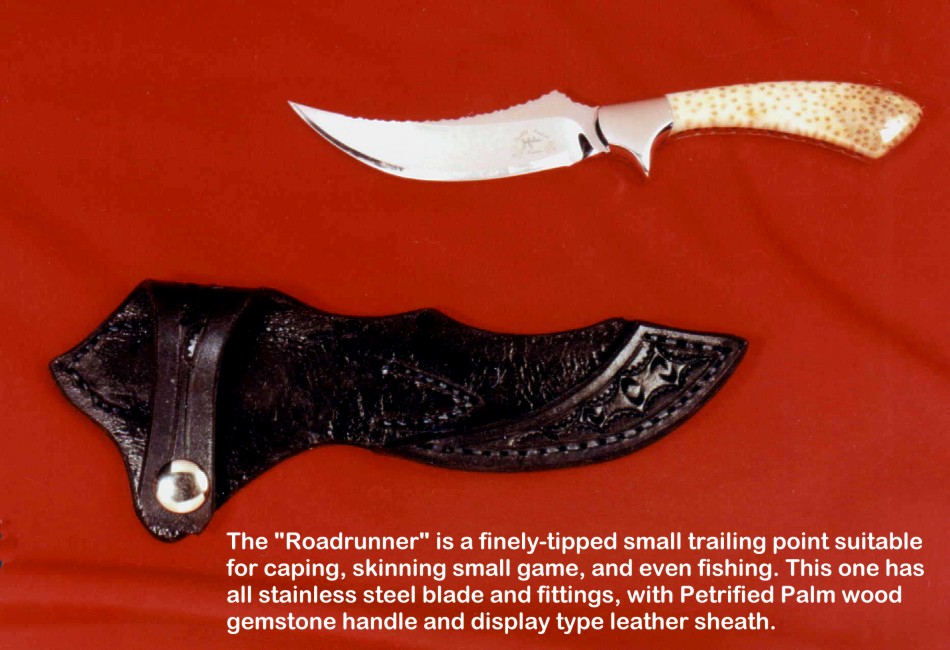
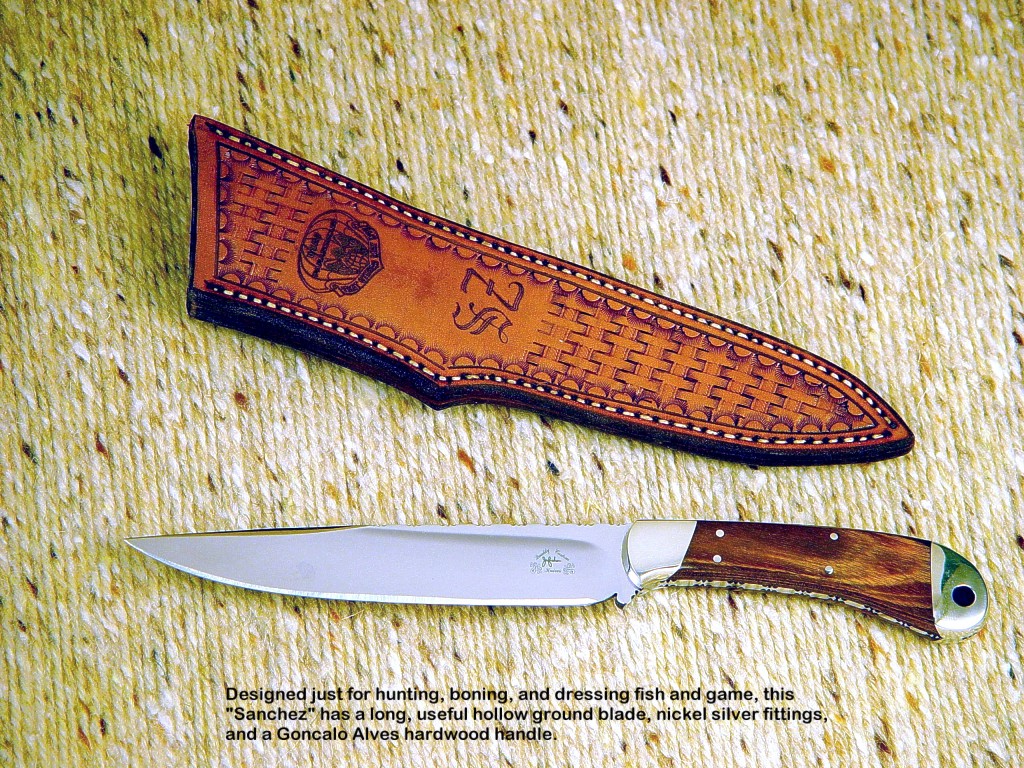
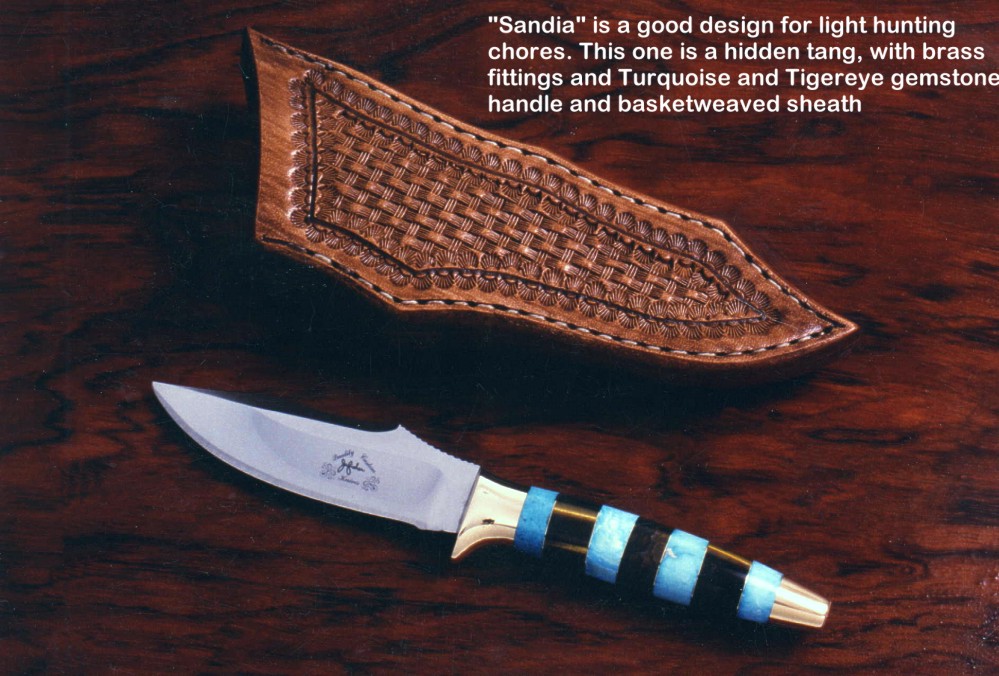
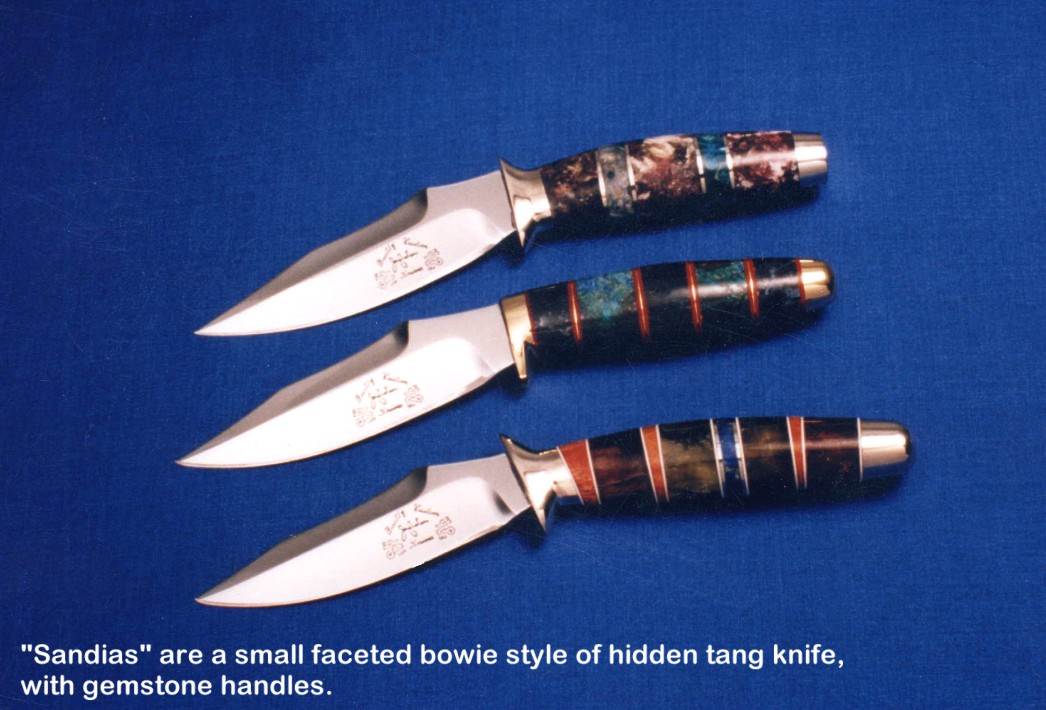
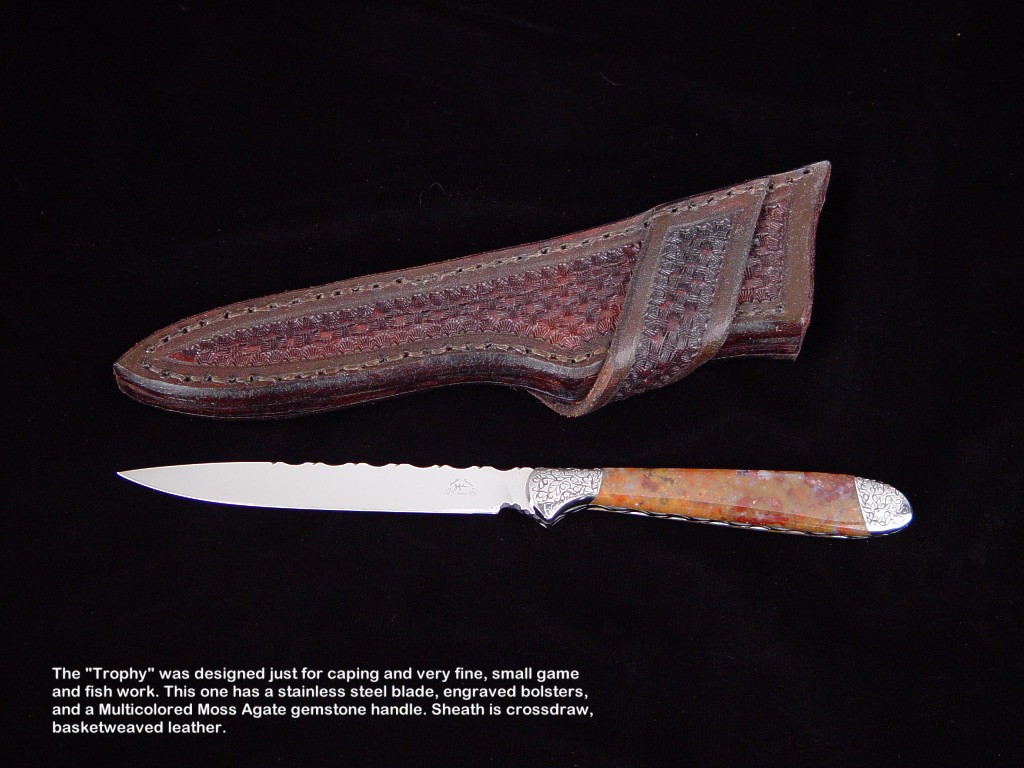
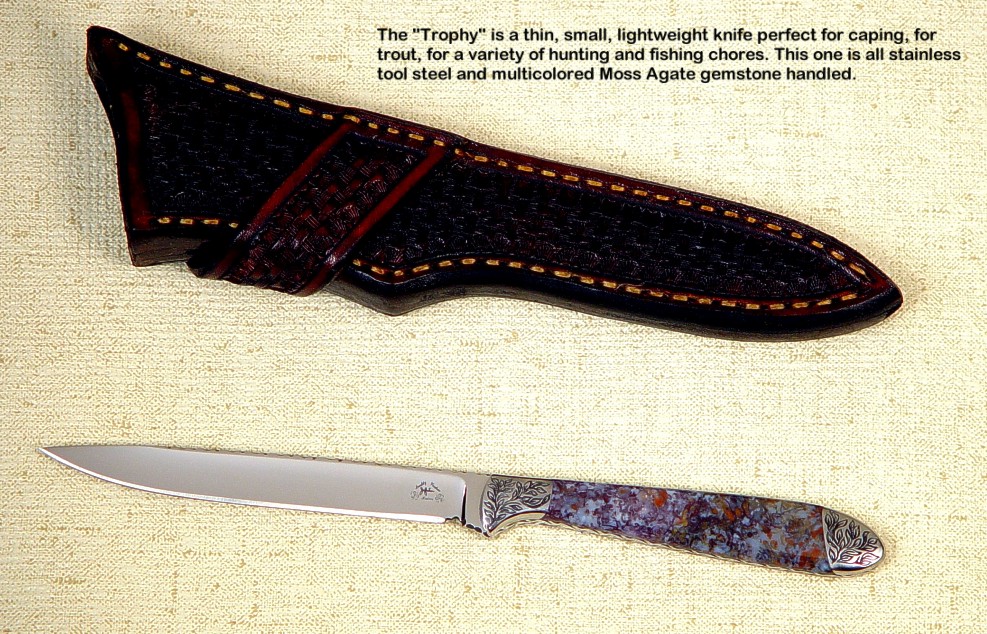
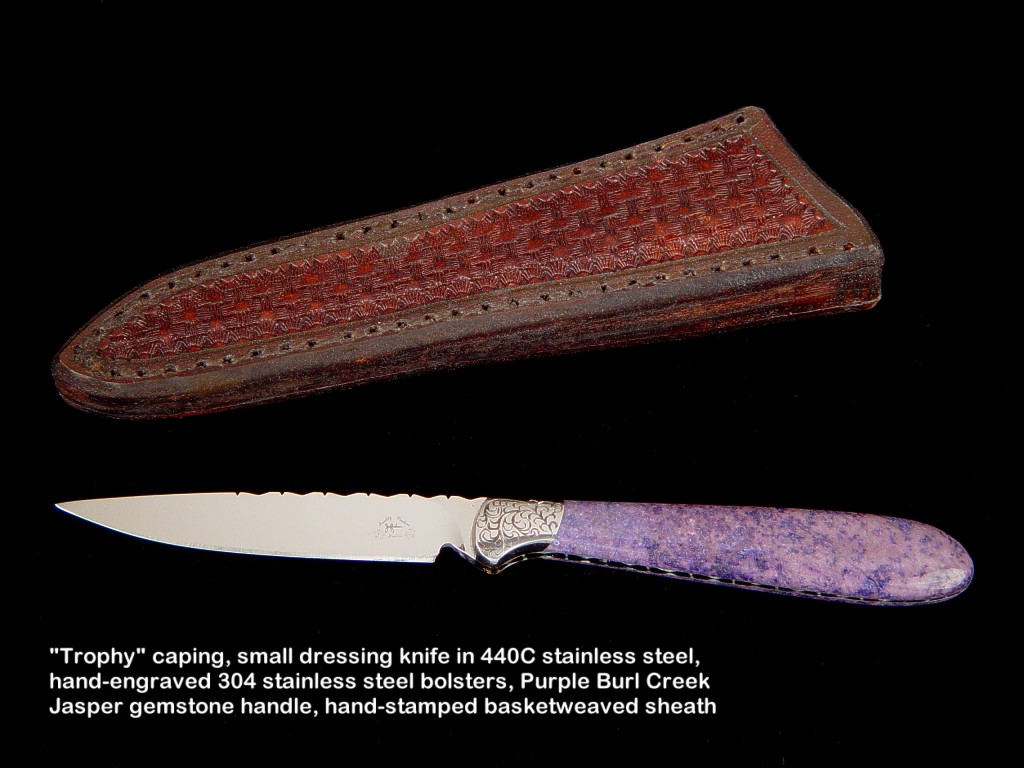
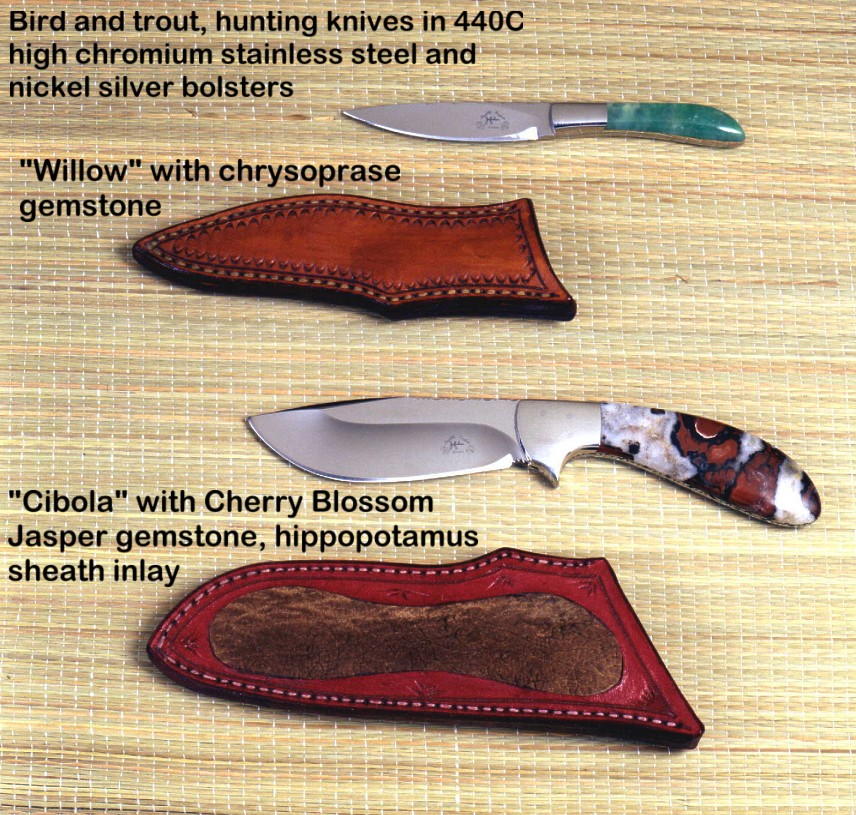
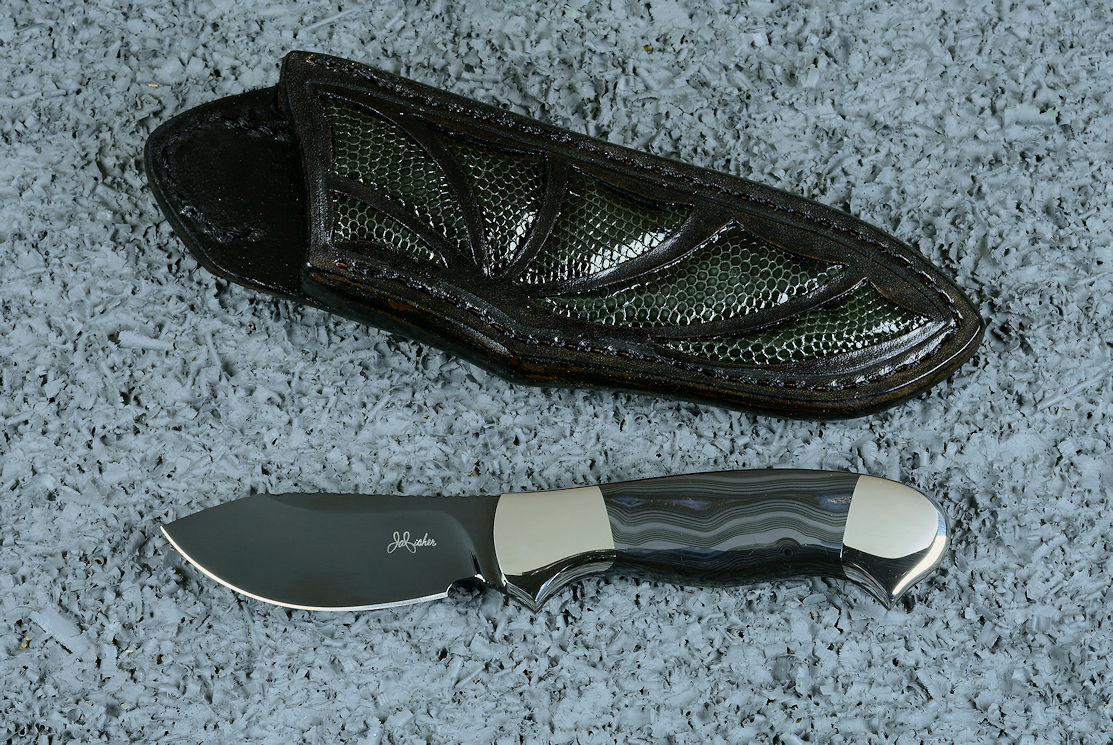
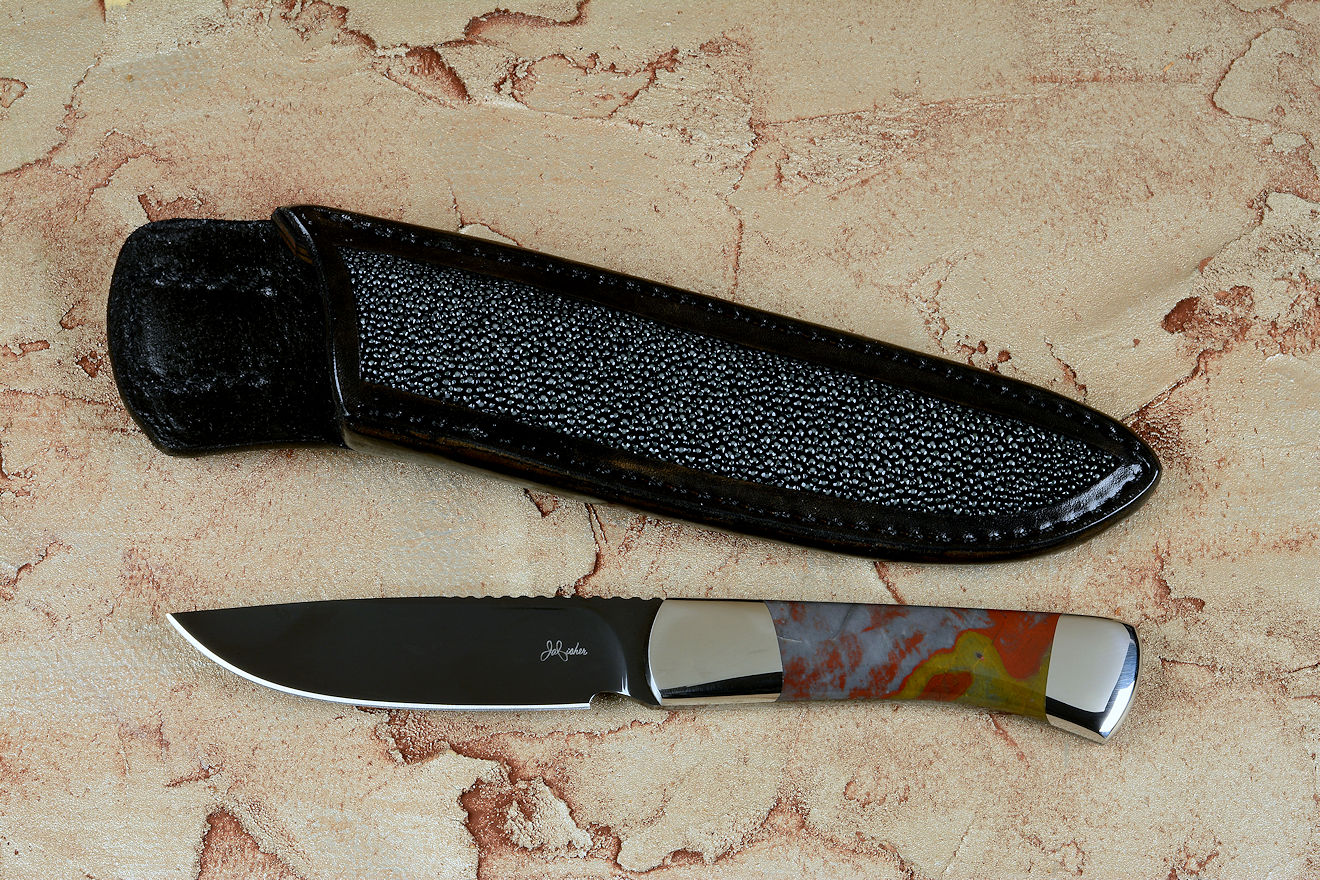
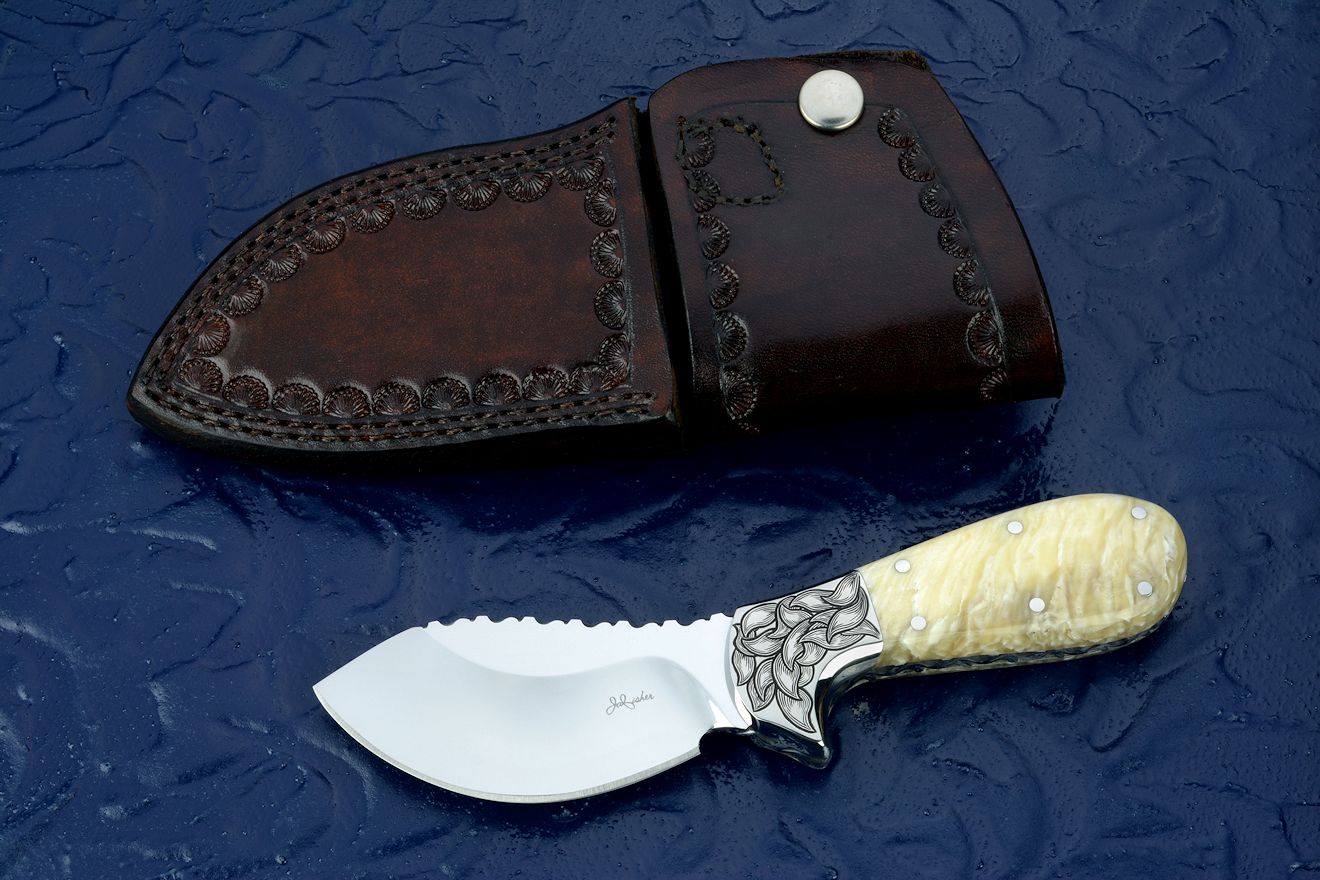
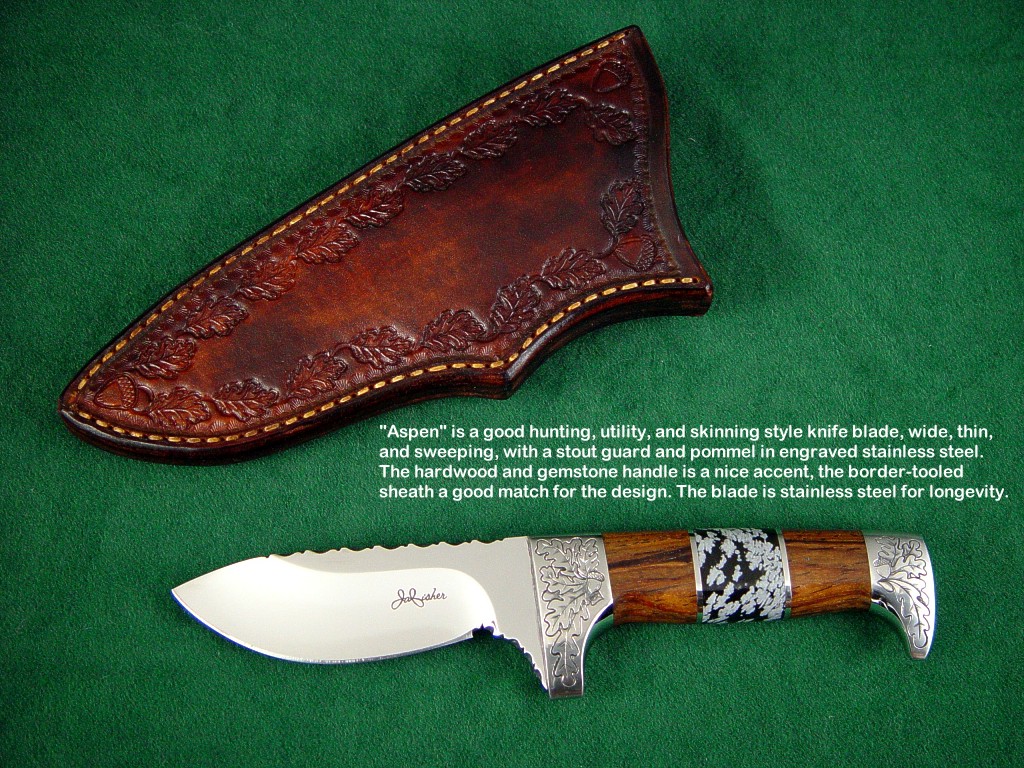
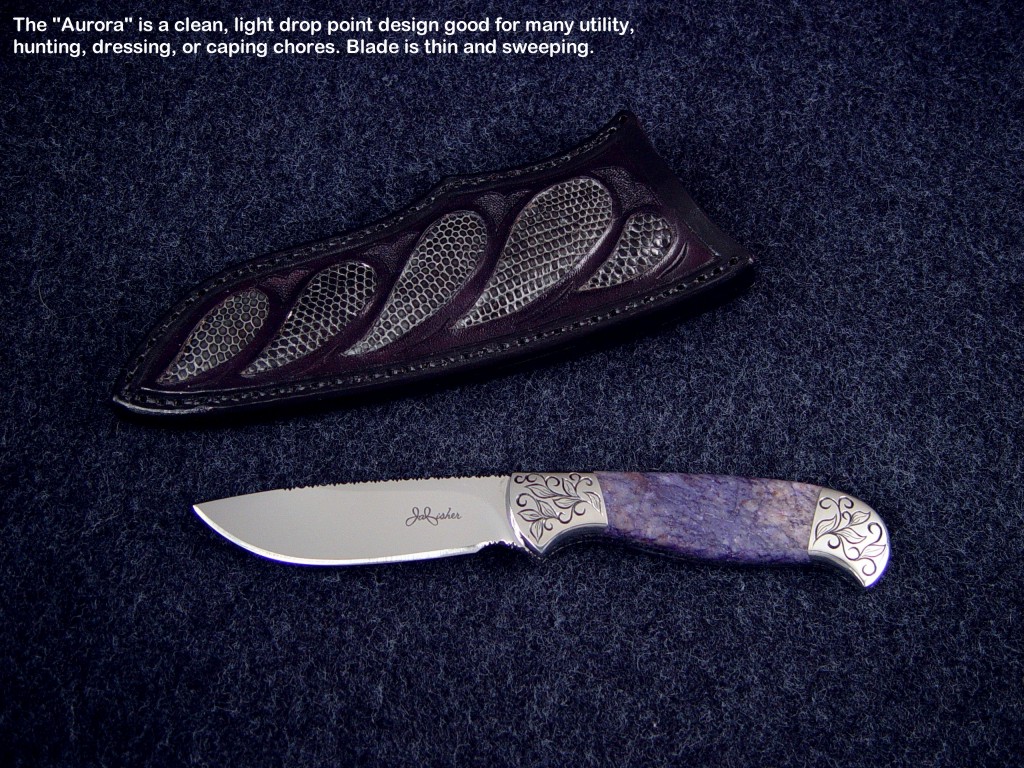
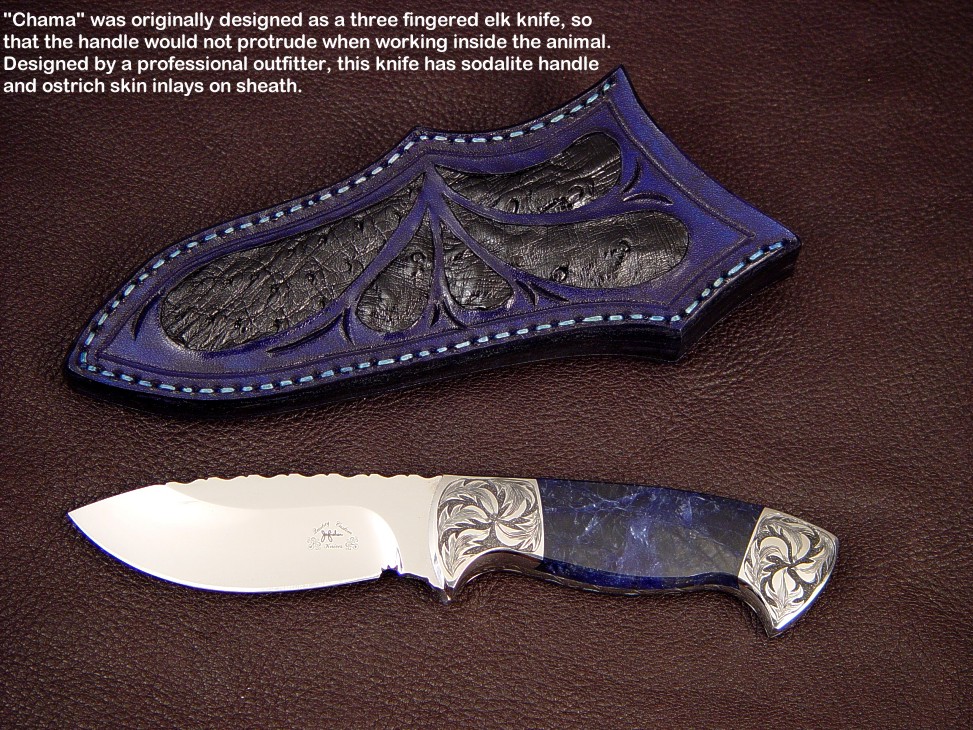
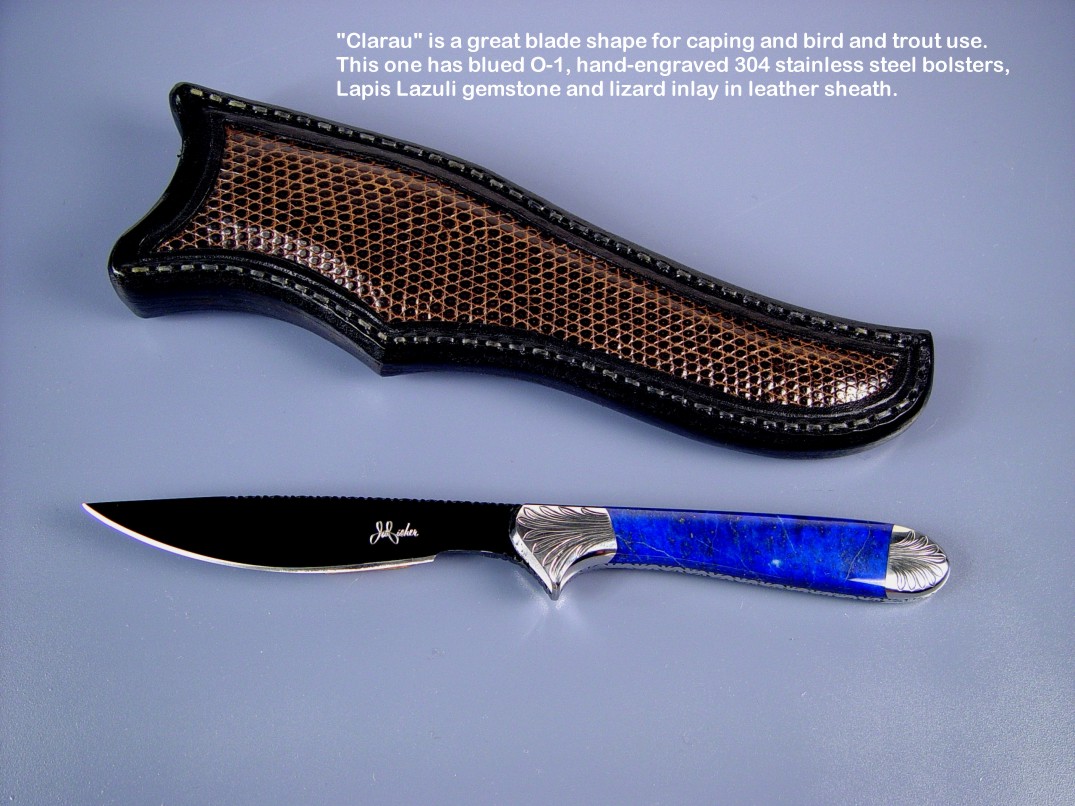
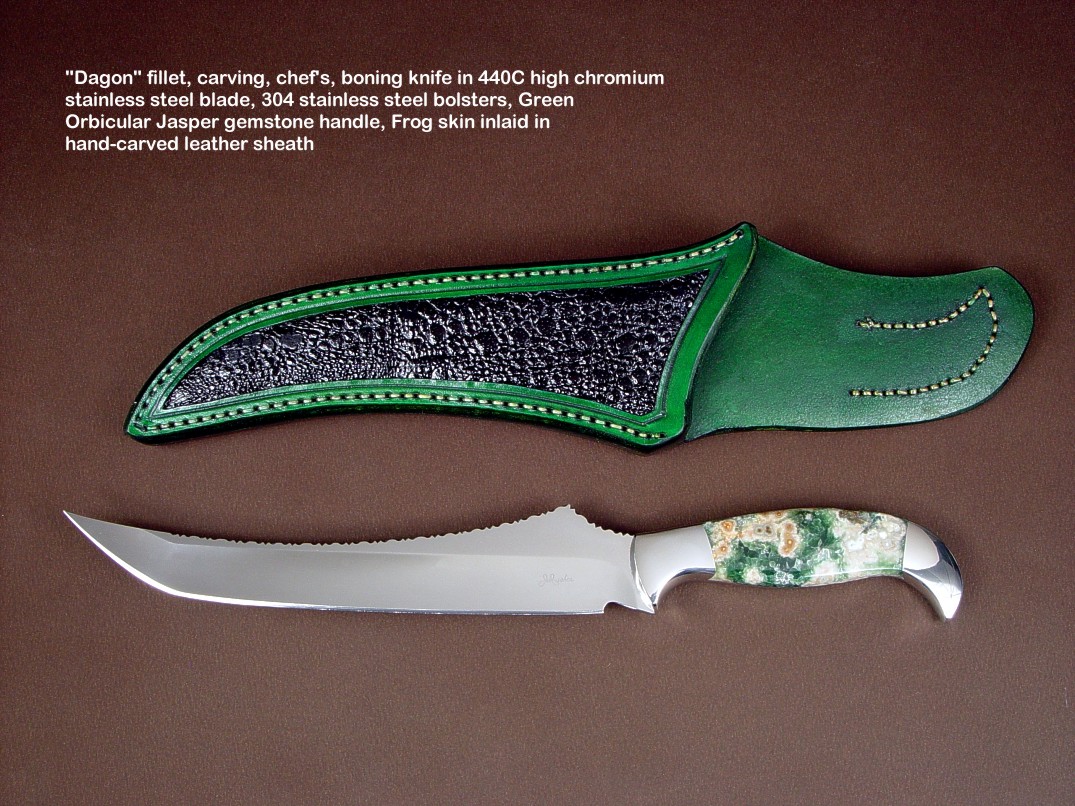
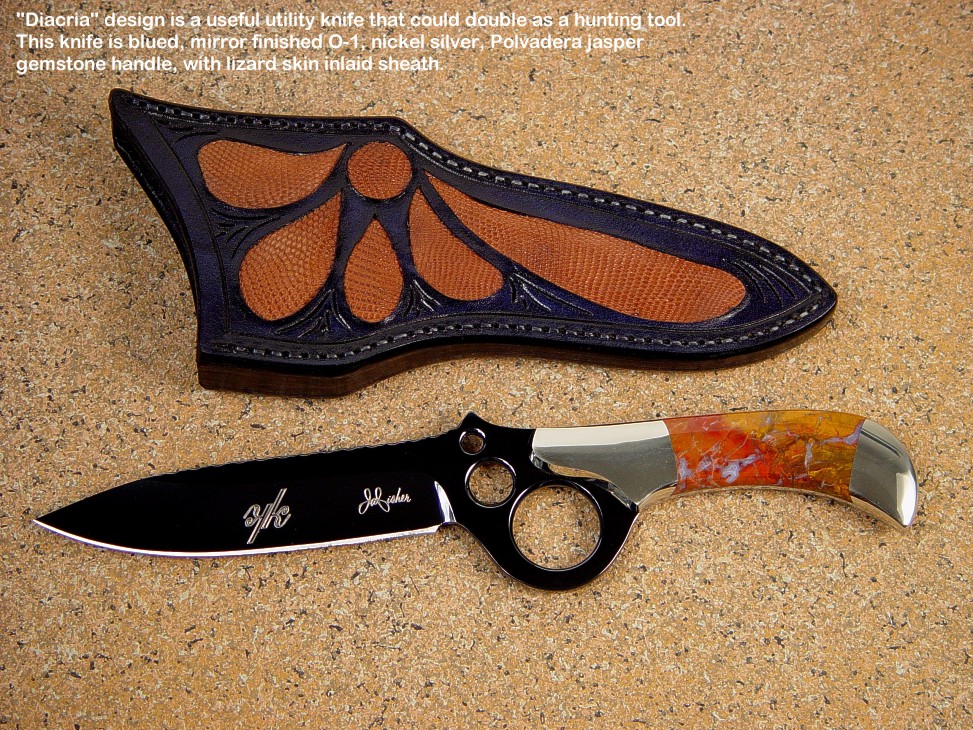
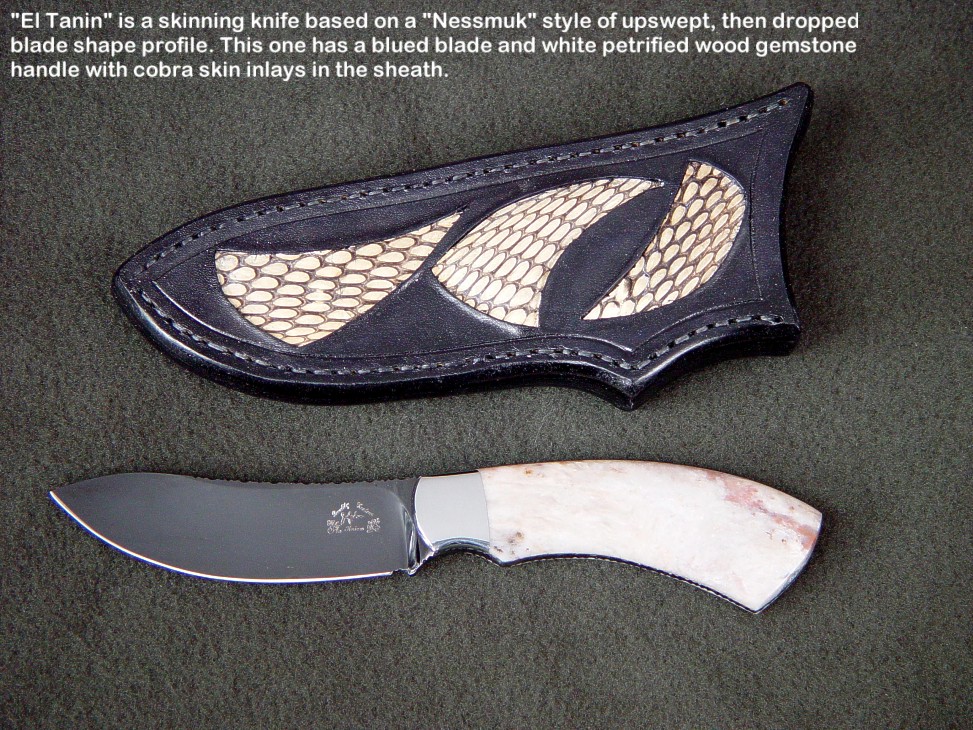
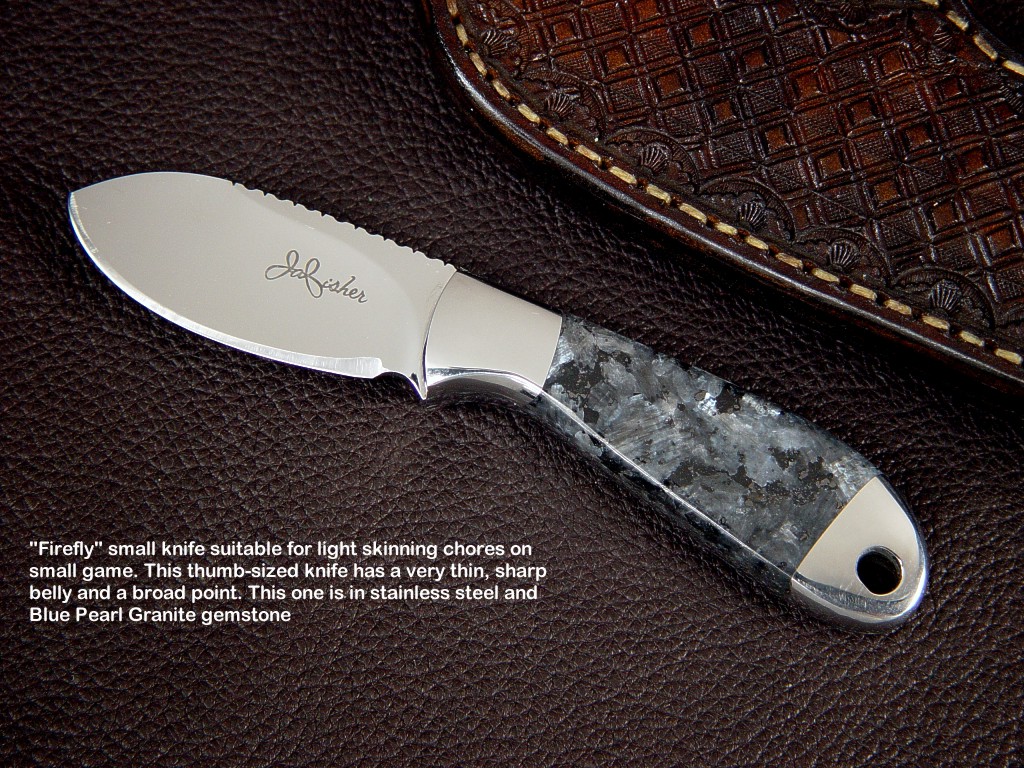
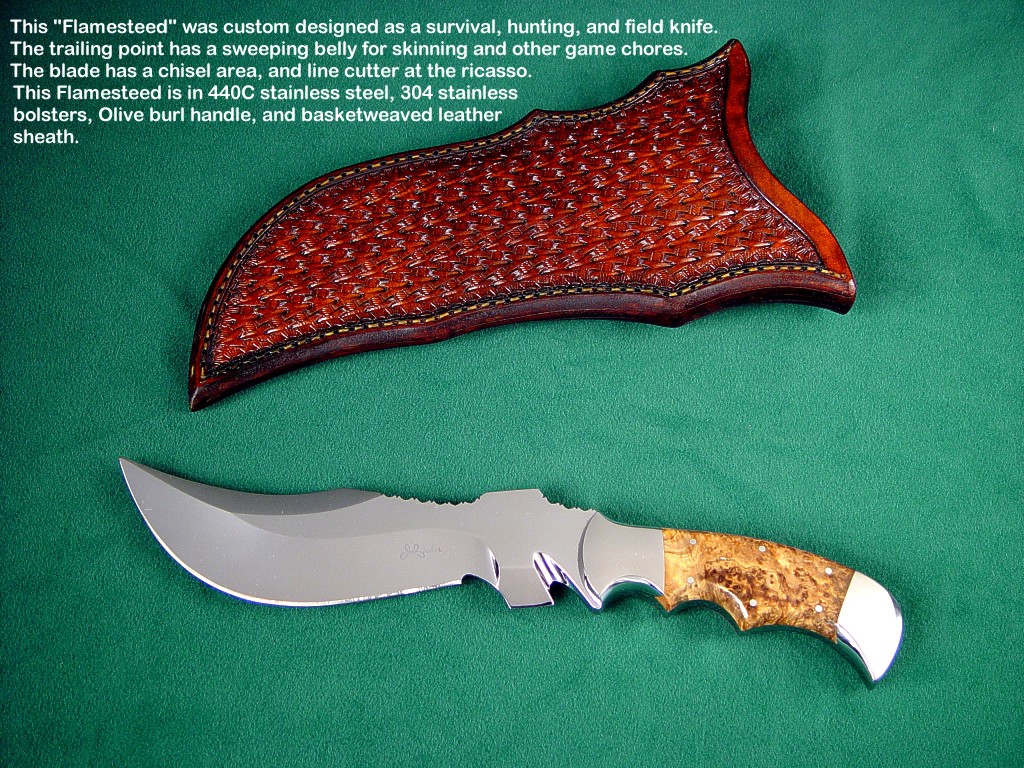
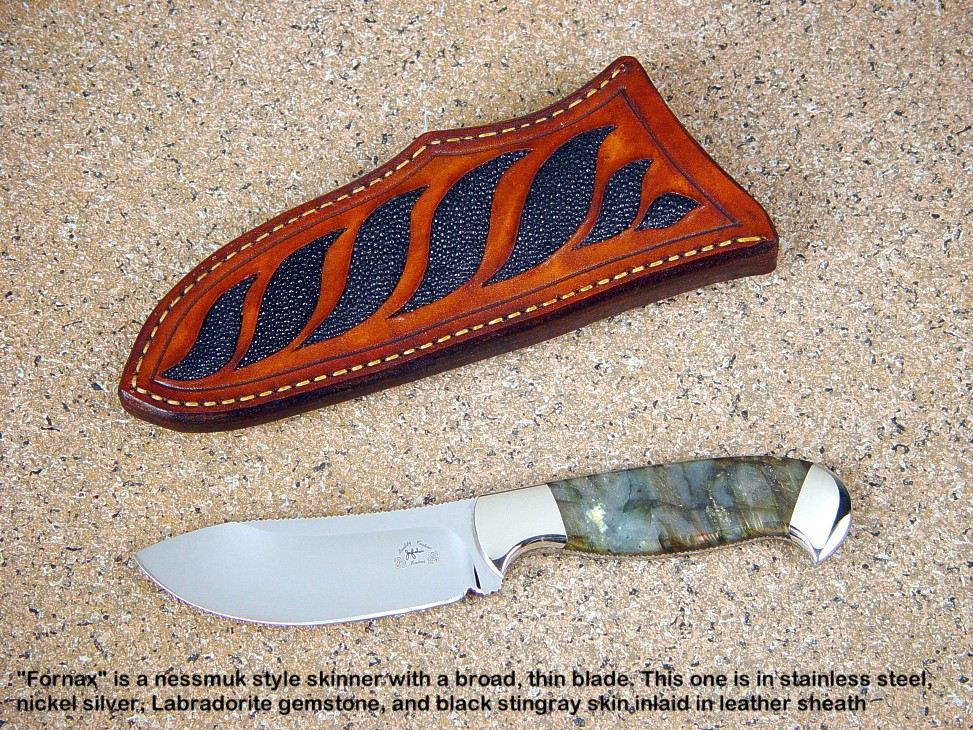
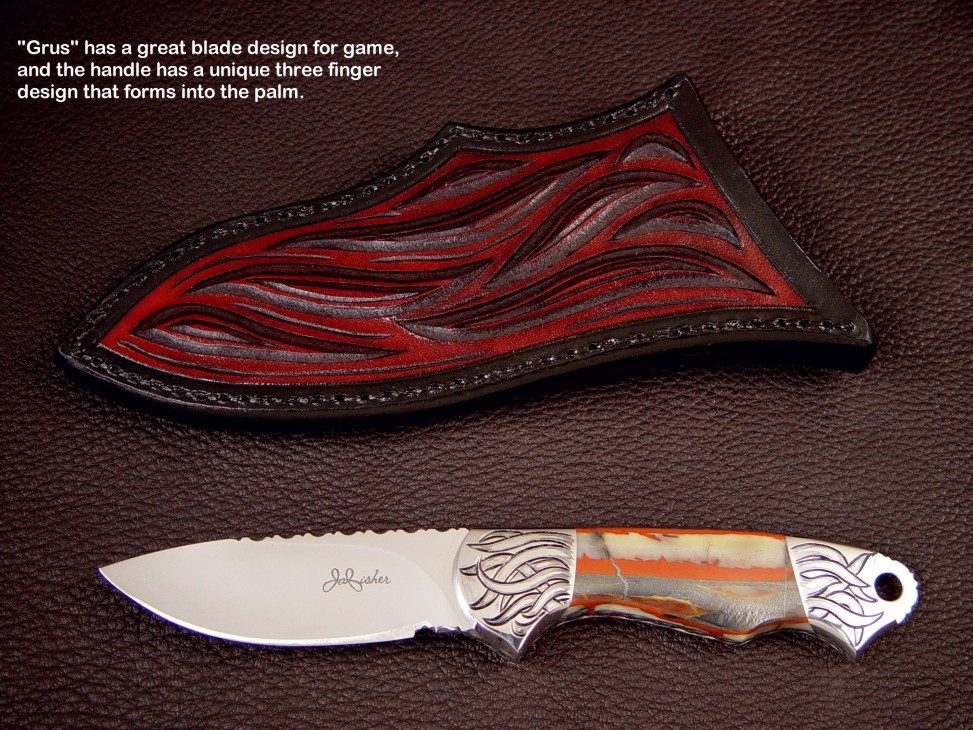
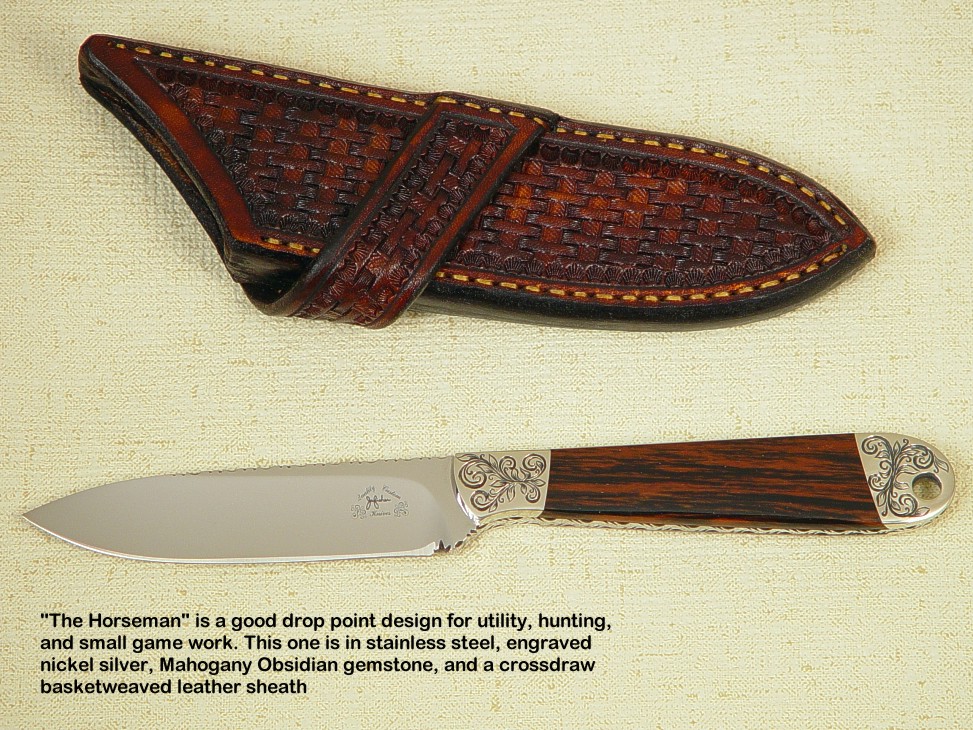
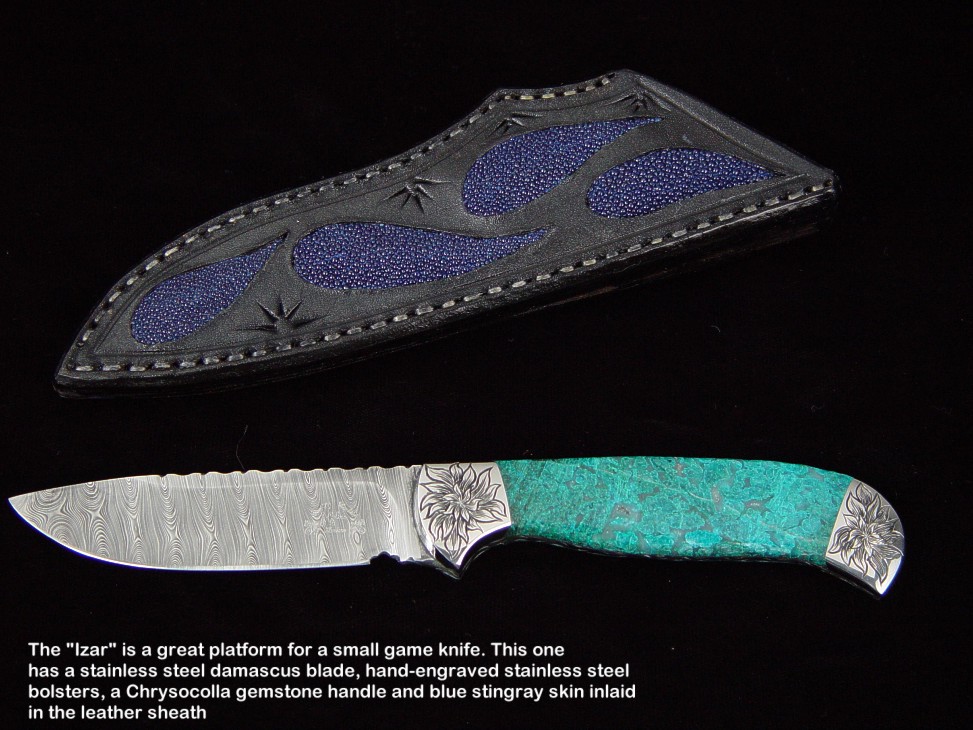
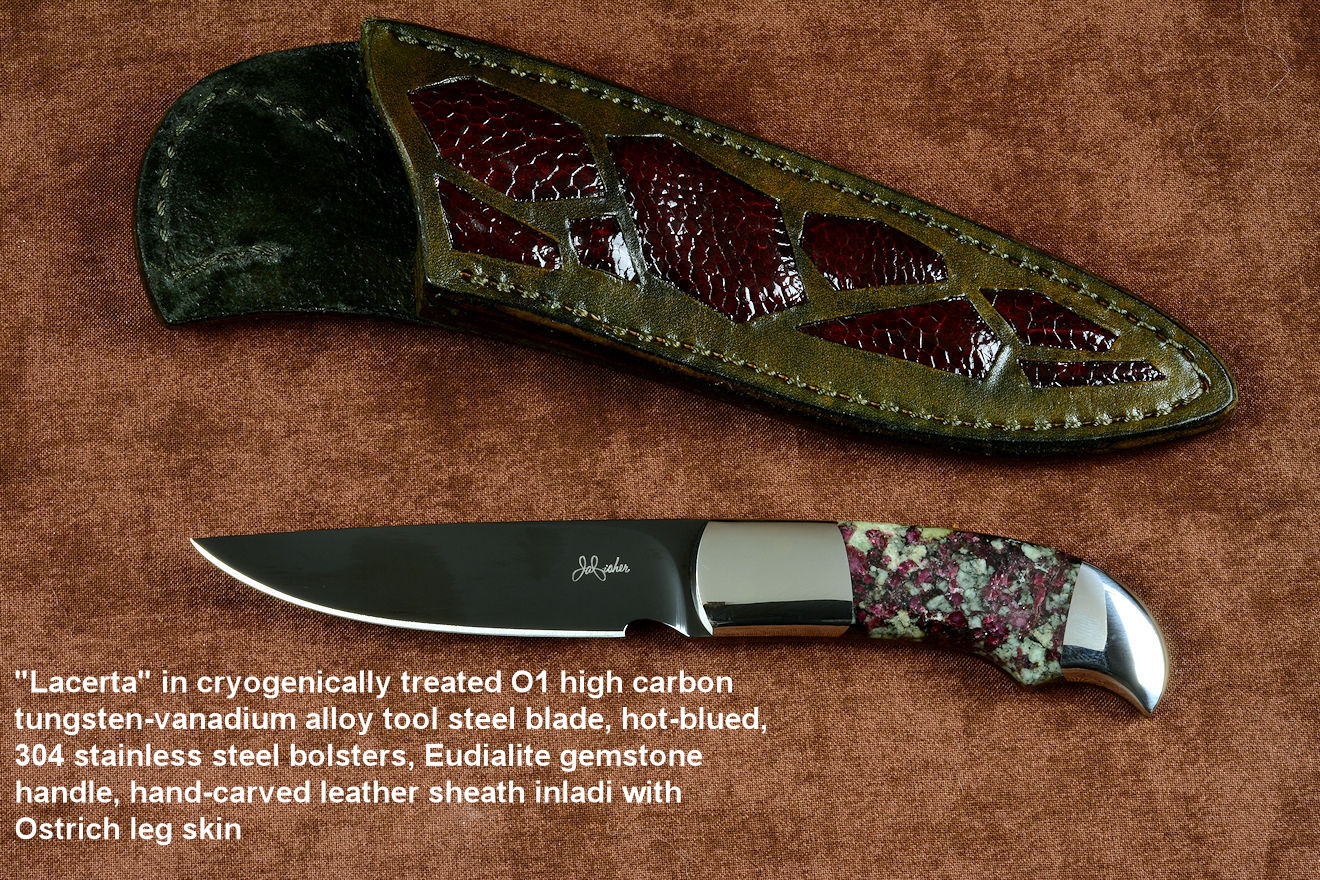
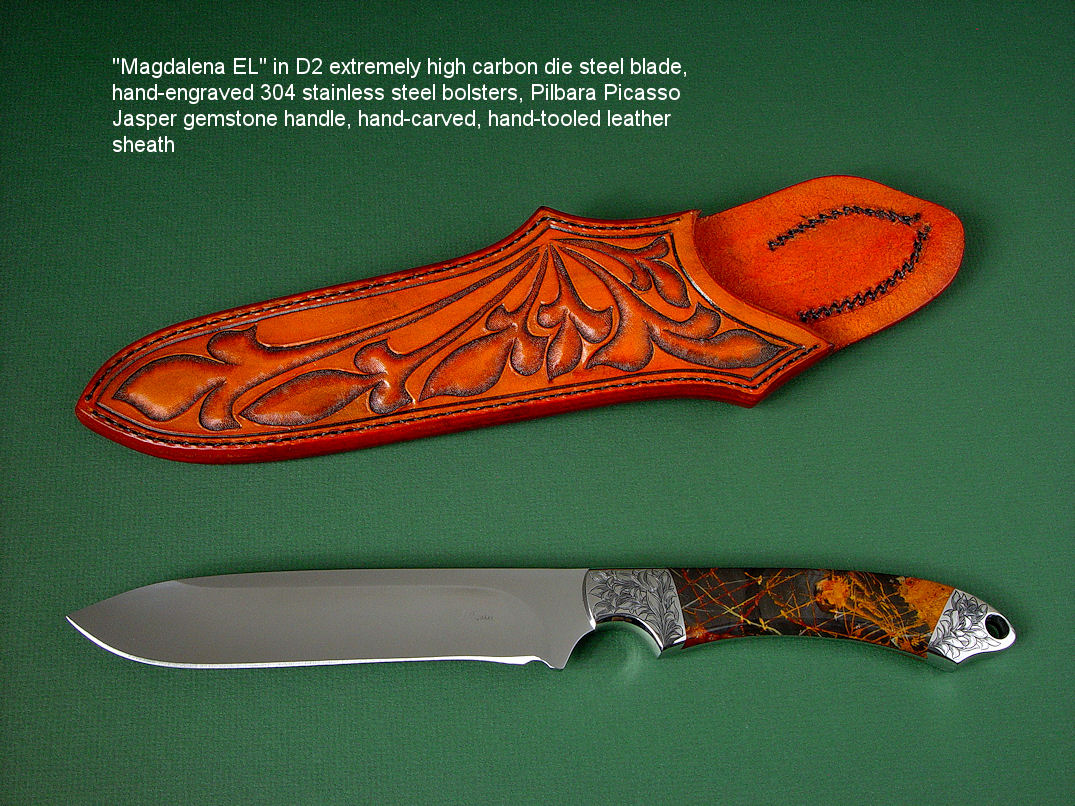
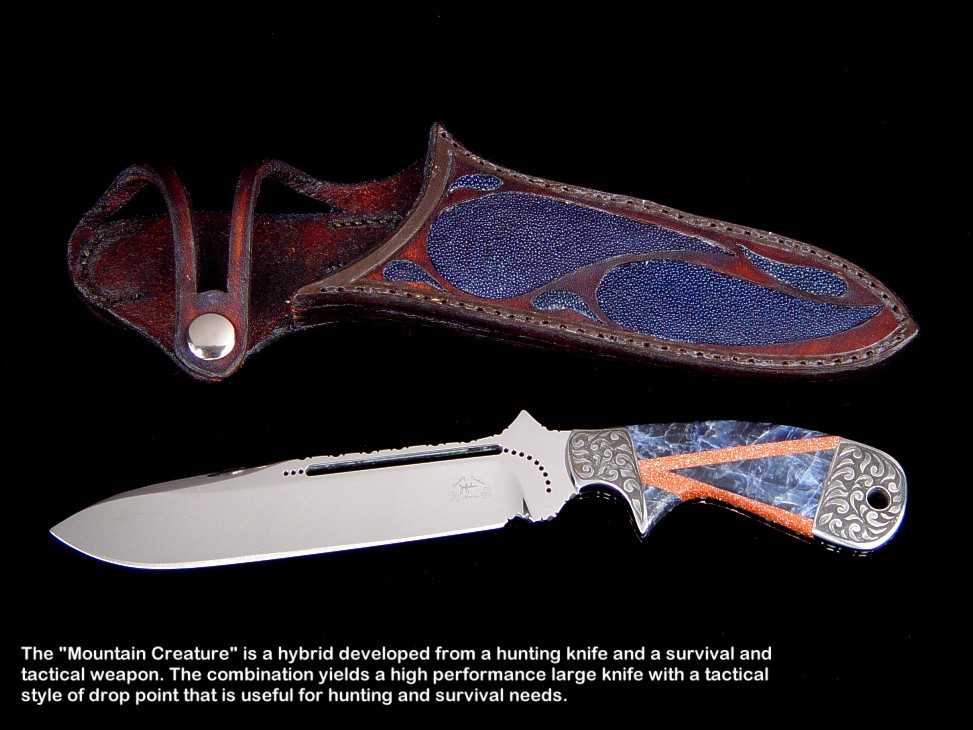
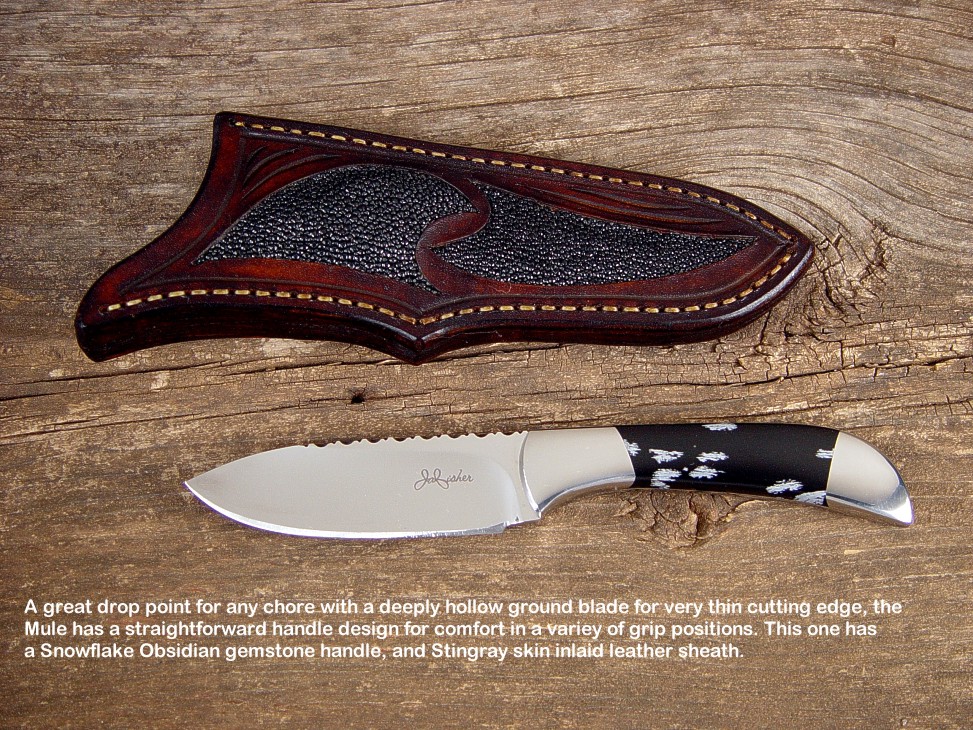
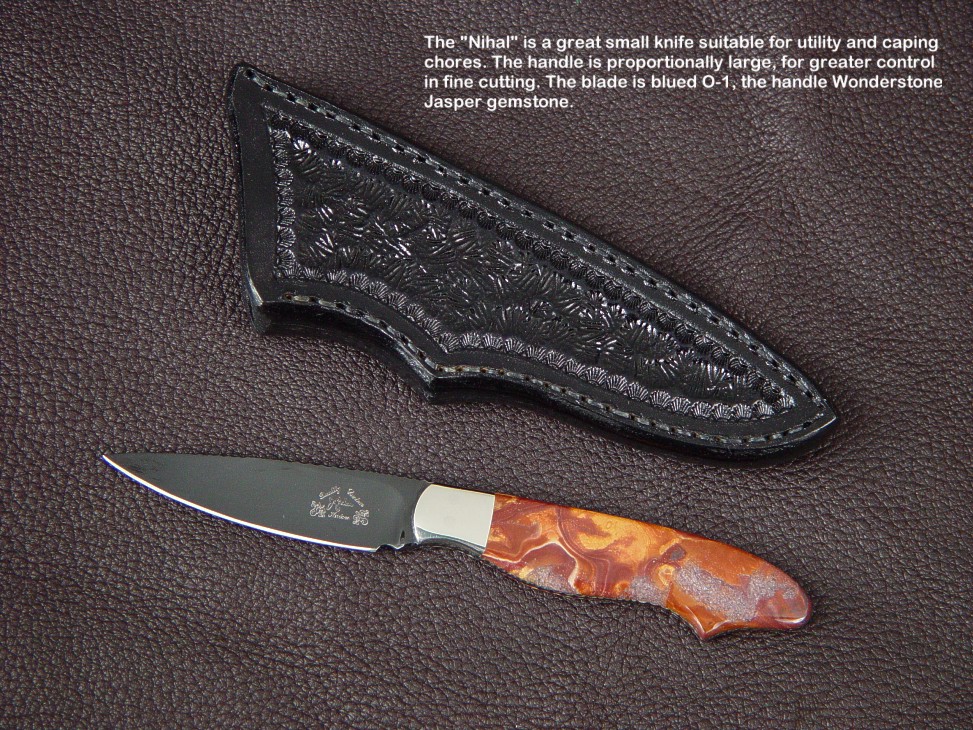
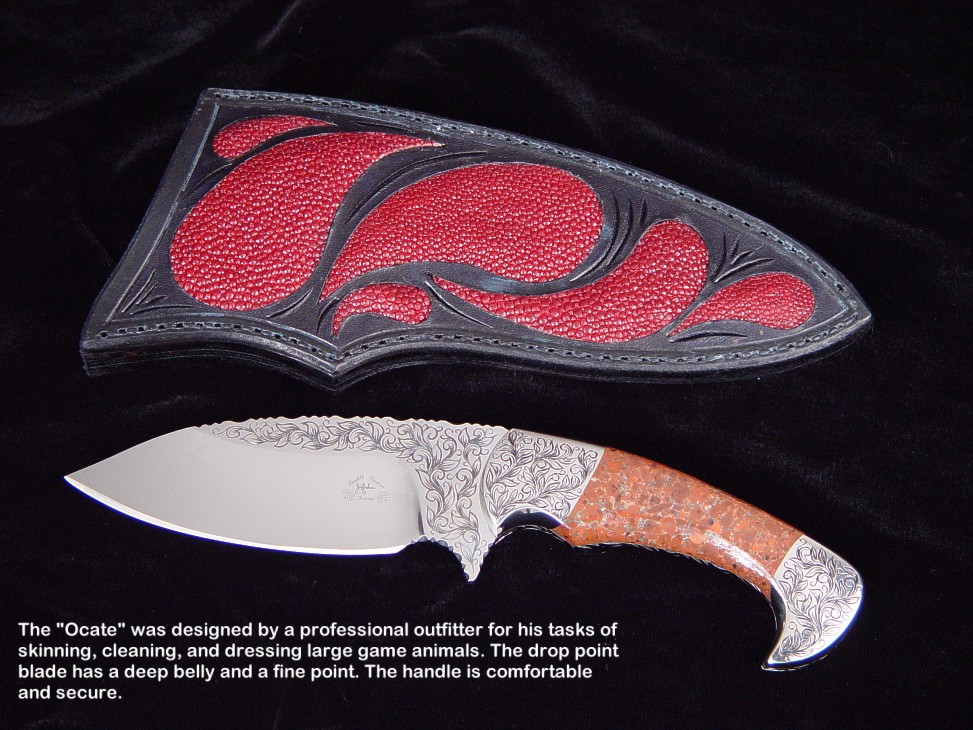
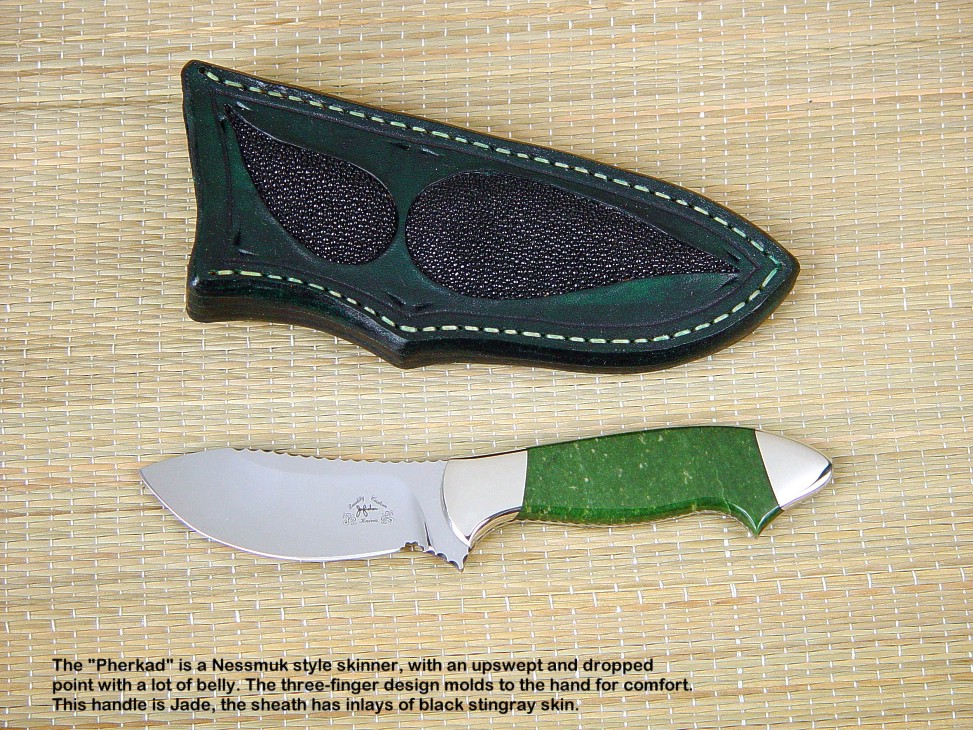
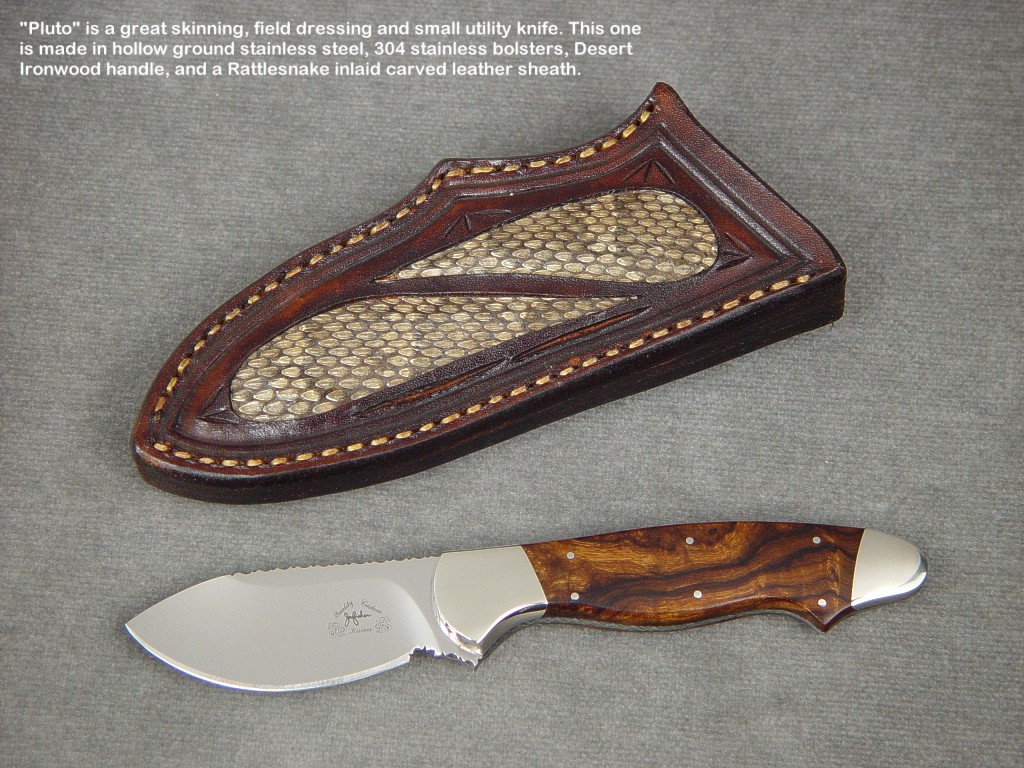
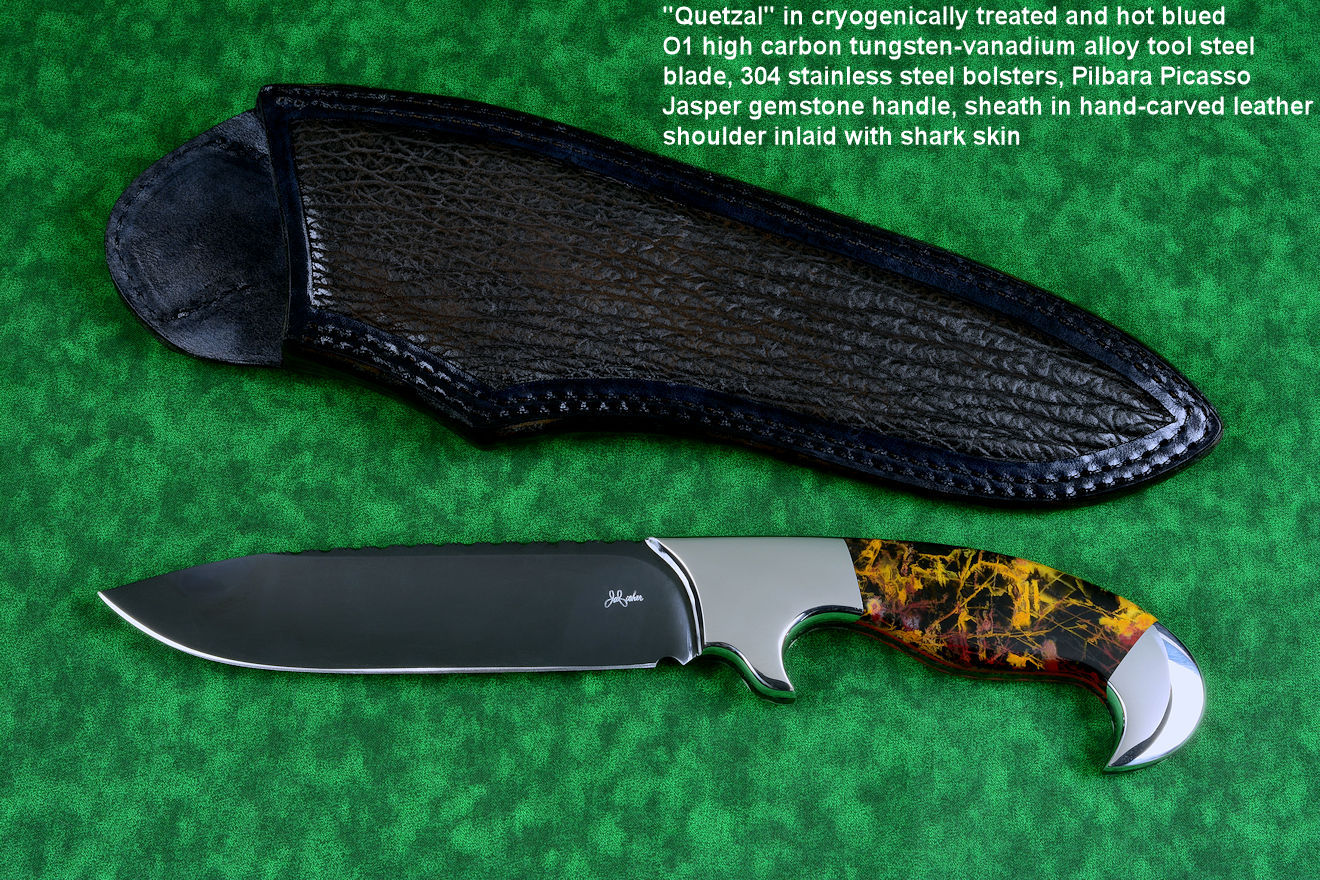
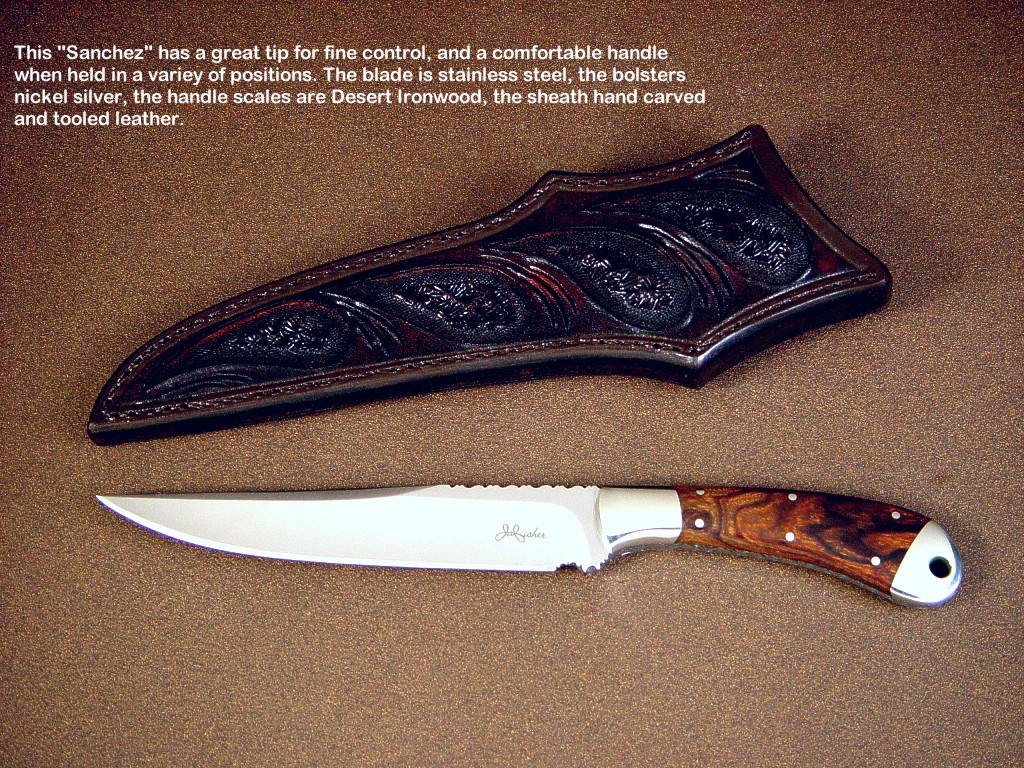
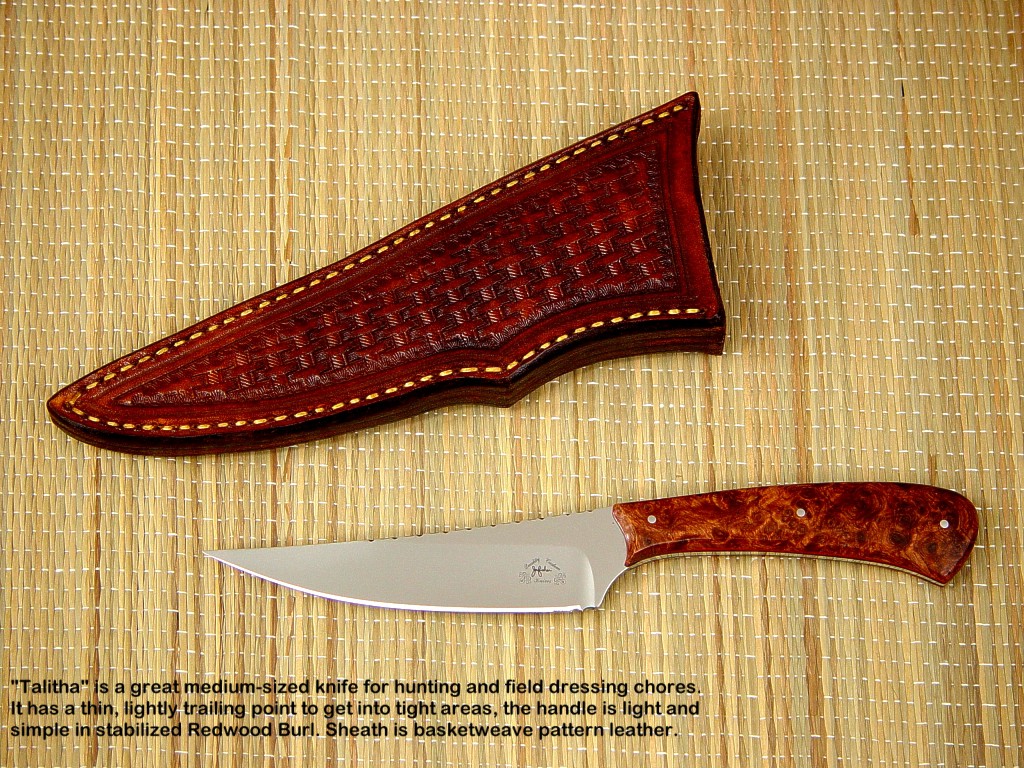
it's successful and reliable. Below are some of my most popular hunting
knives. If you're familiar with hunting or game and field
knives, you'll recognize trailing point skinners, drop point
skinners, field dressing knives, gut hooks, line cutters,
sweeping bellies, capers, and field pairs. Many of these knives
double as survival knives, some even serve double duty as
tactical knives. There is no rigid classification of a knife by
its shape, indeed a kitchen knife could make a hunting tool.
What I've included here are knives that are generally used in
hunting, field dressing, survival, game preparation, and
fishing, to give a broad perspective of what is a useful and
valuable tool.
Many of these knives are of collector's or investment
potential. There is no reason a knife carried to the field has
to have a plain, flat blade and a simple wood or antler handle. I
make those too, but I encourage you to enjoy the same lines,
form, finish, and beauty as I do when I look at fine custom and
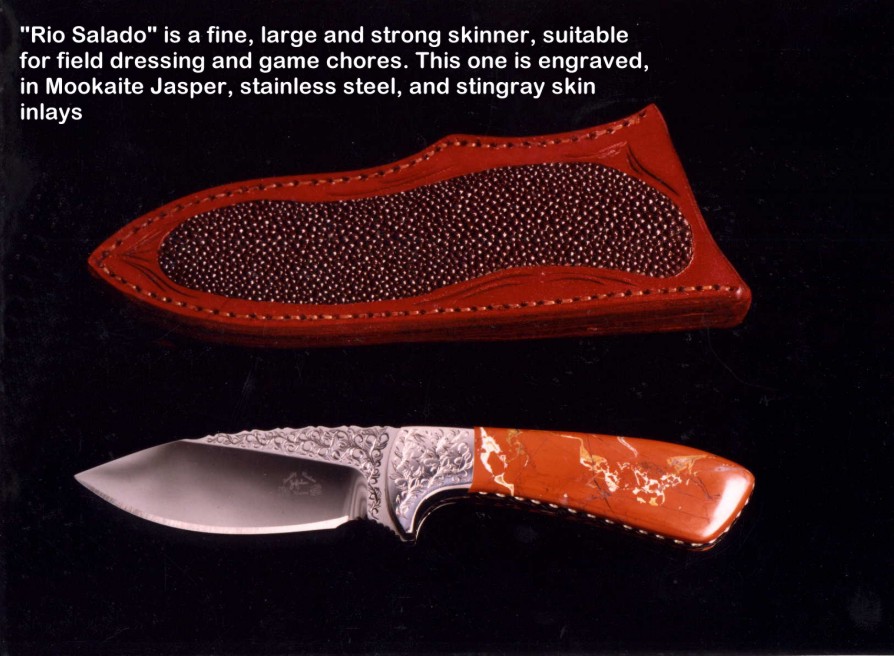
handmade hunting knives. Some of the knives feature gemstone
handles and hand-engraving. Even these fine investment grade
knives may find their way to the field or in useful chores.
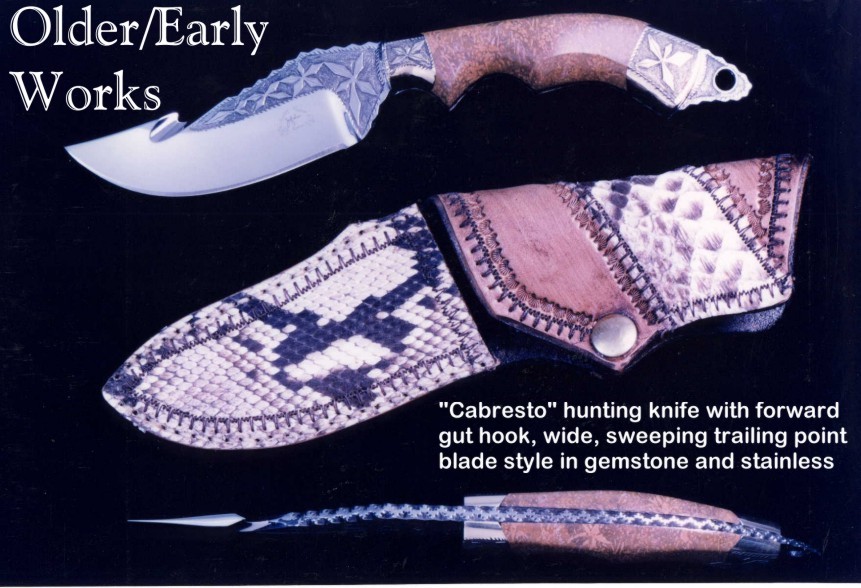
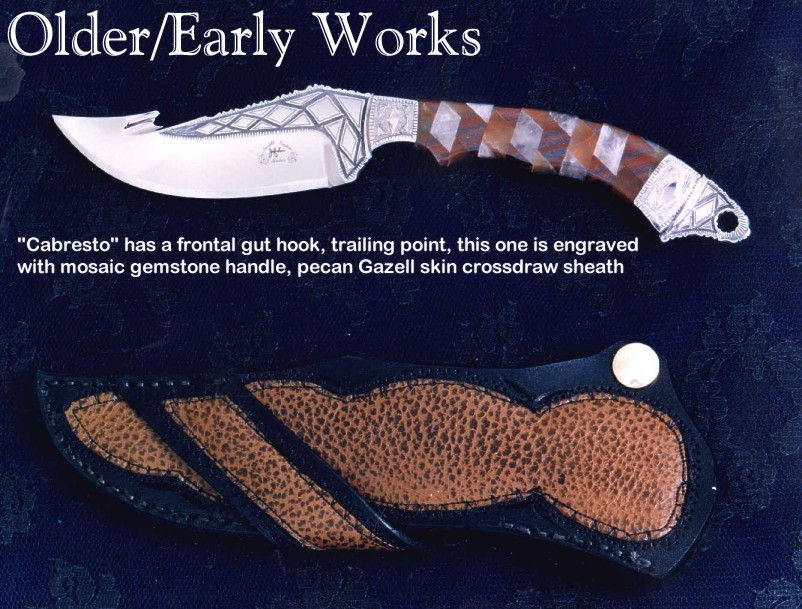
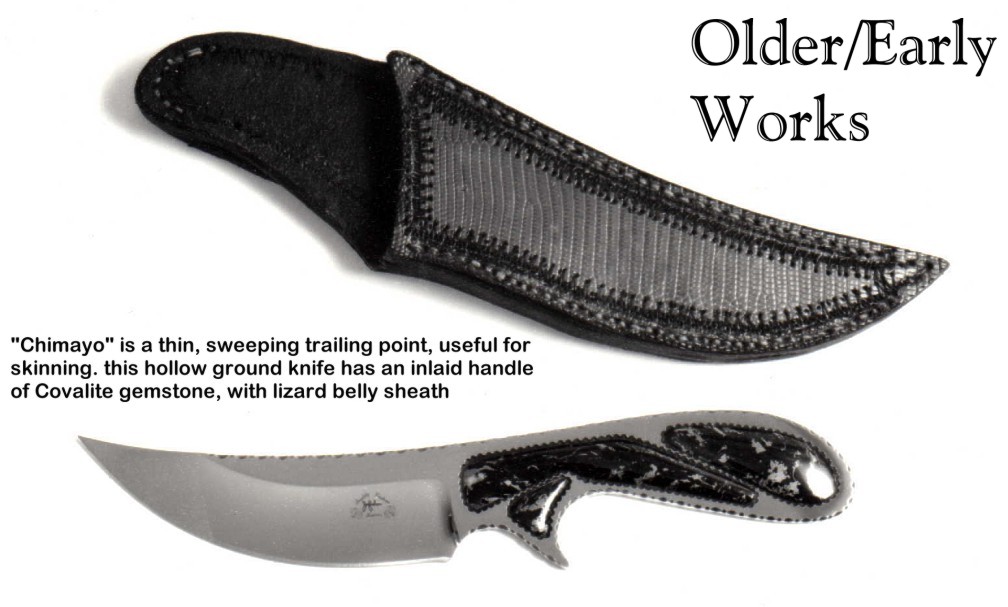
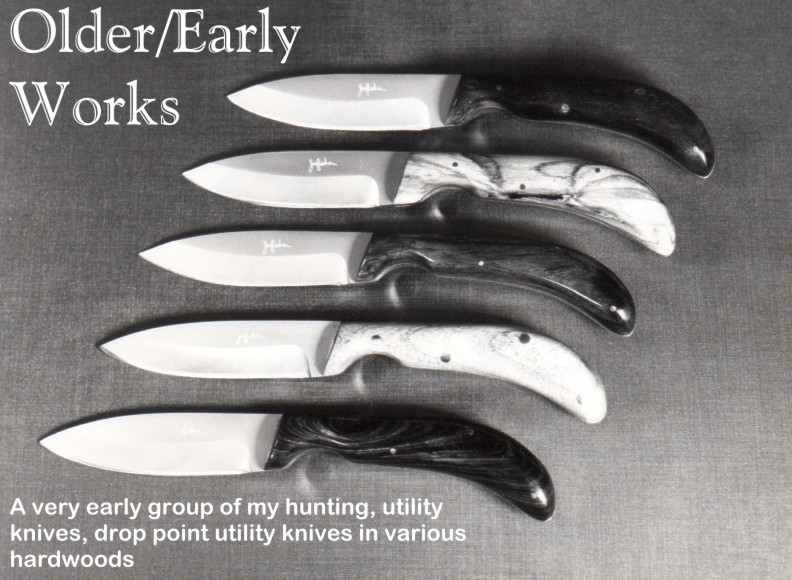
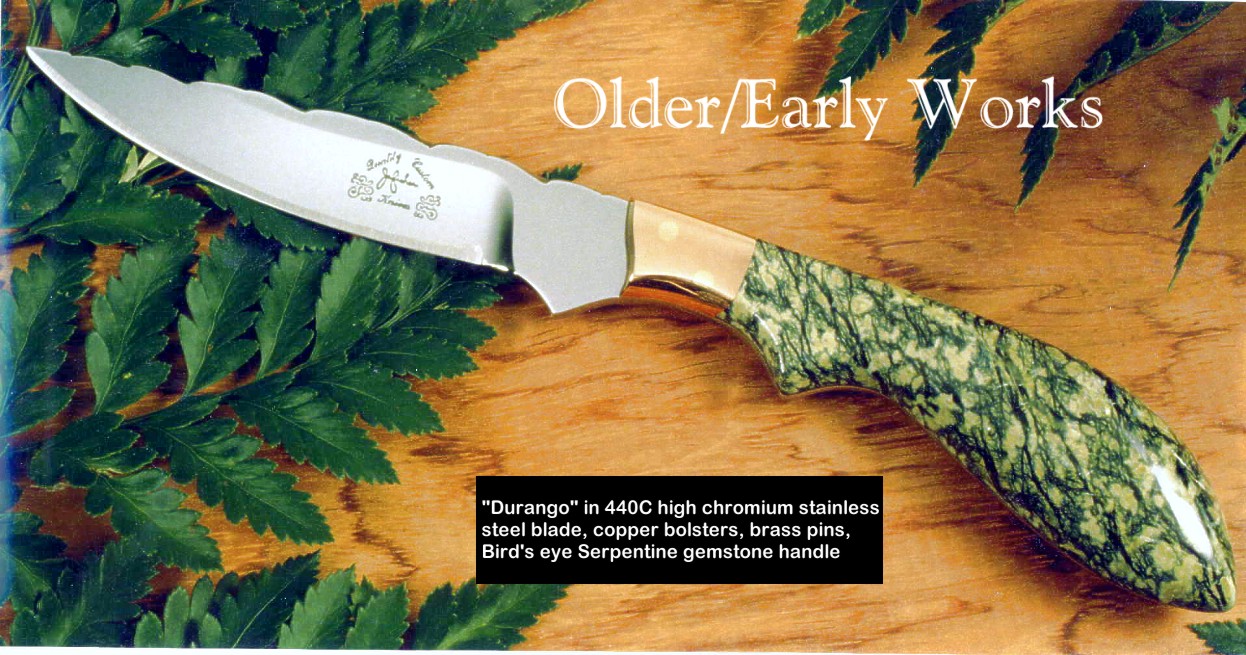
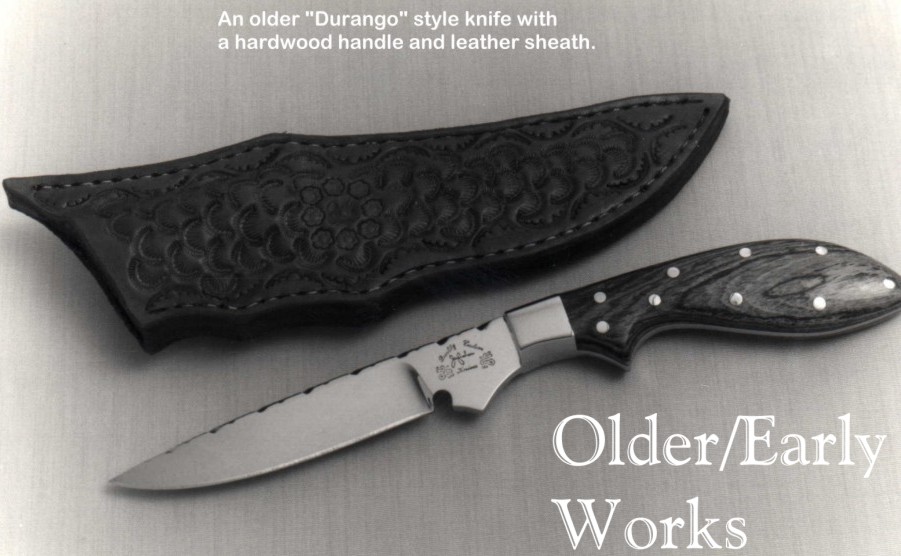
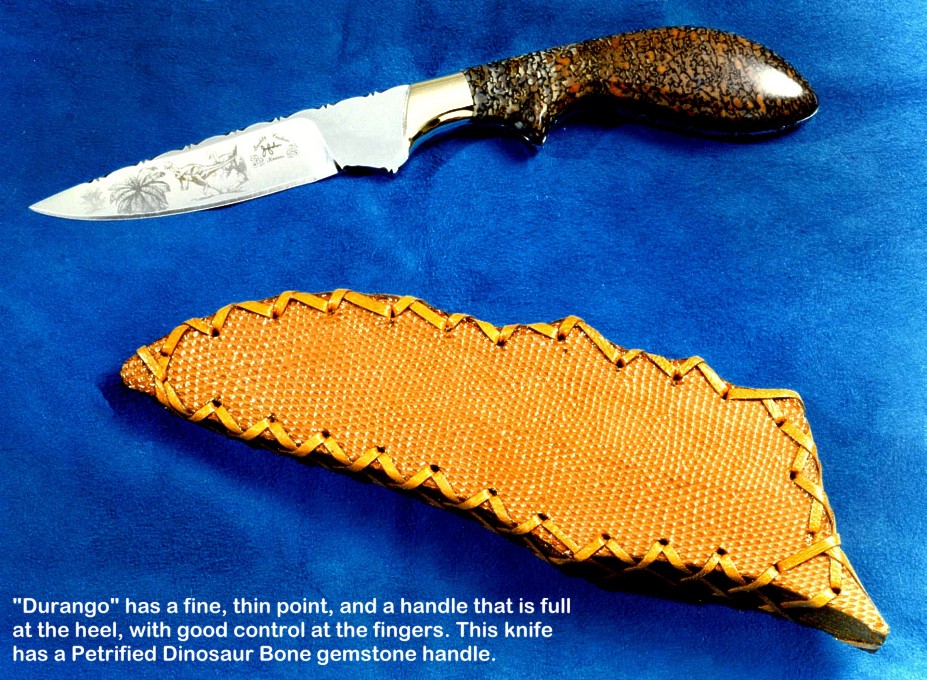
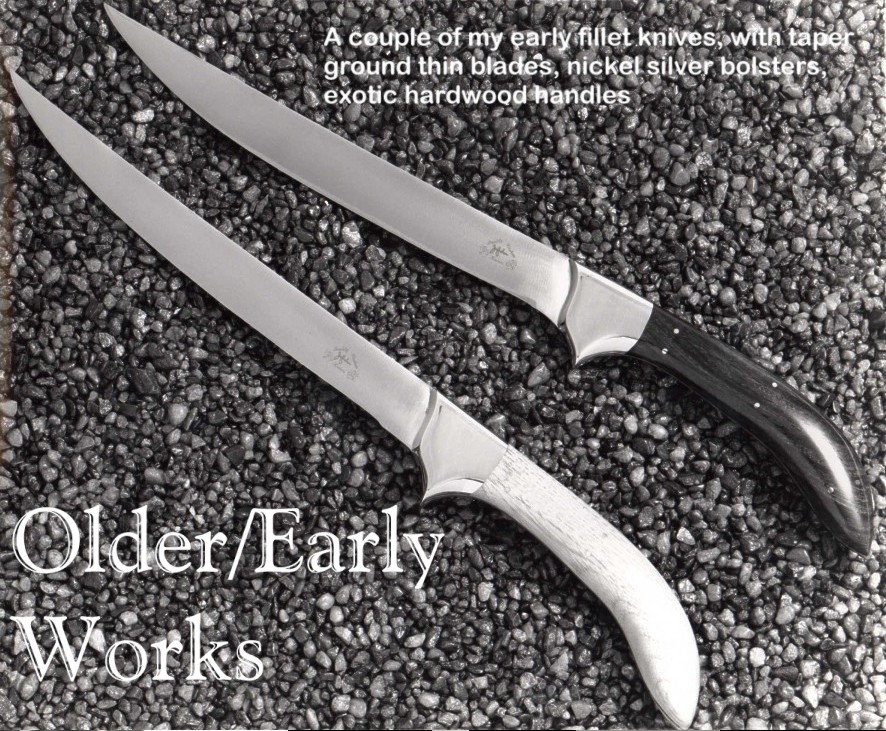
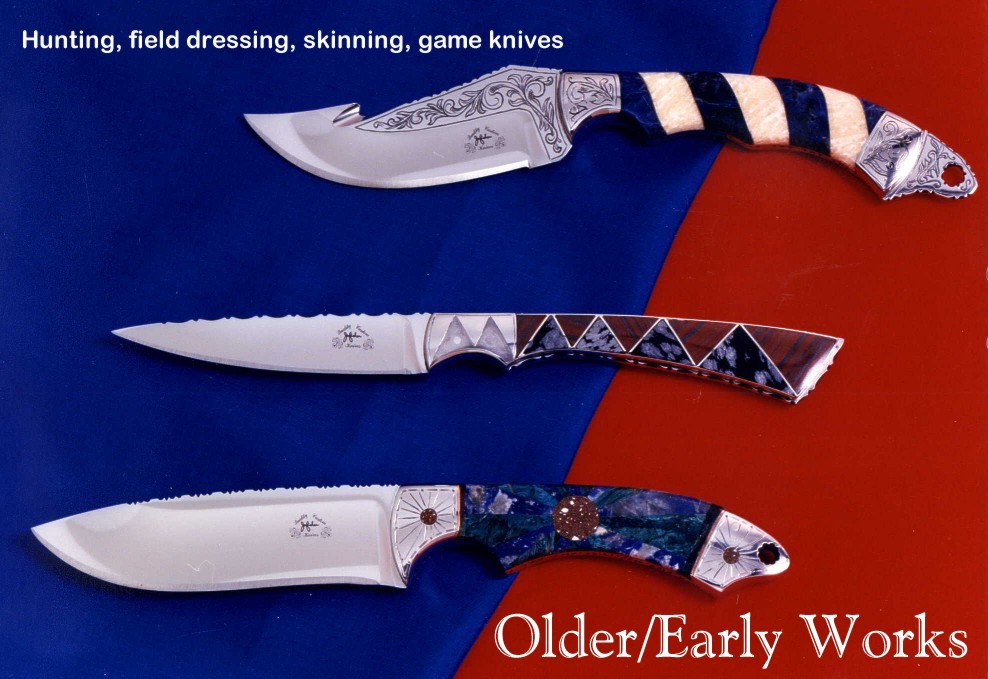
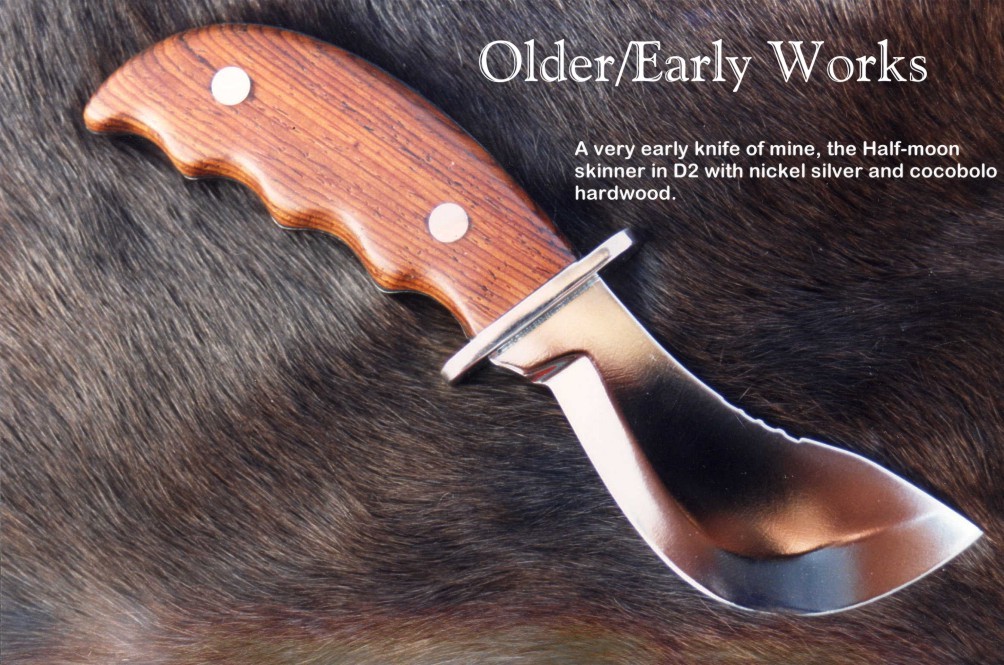
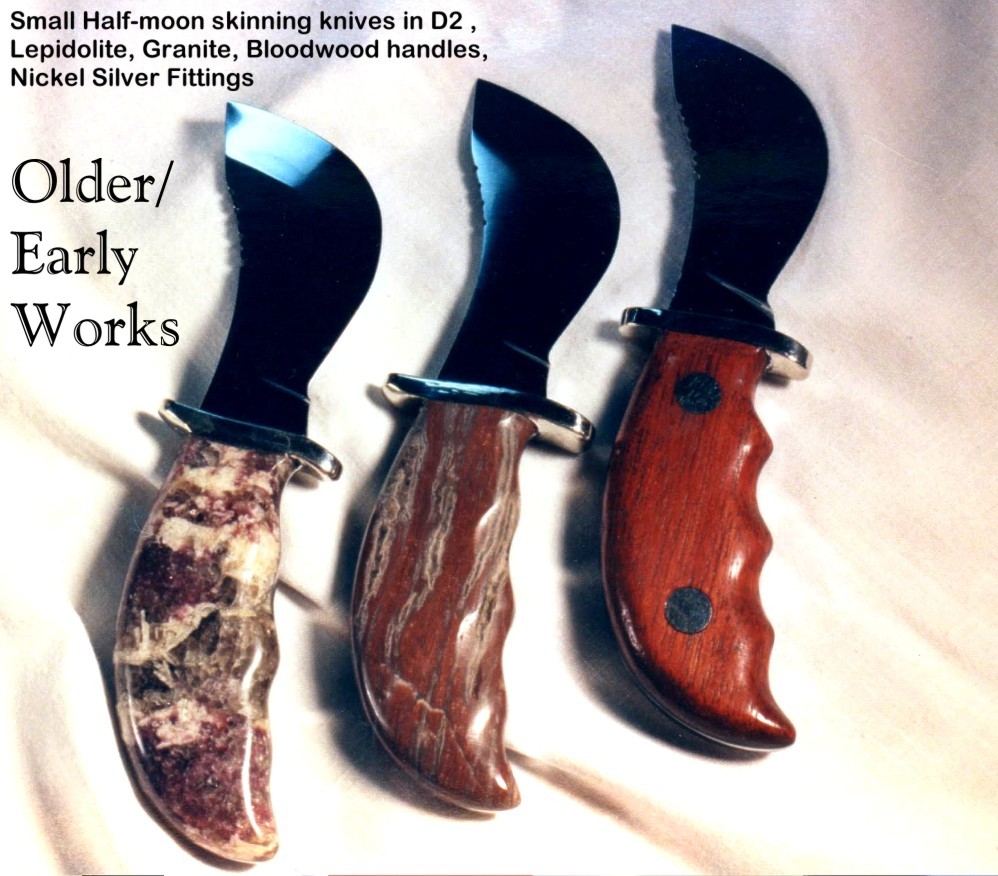
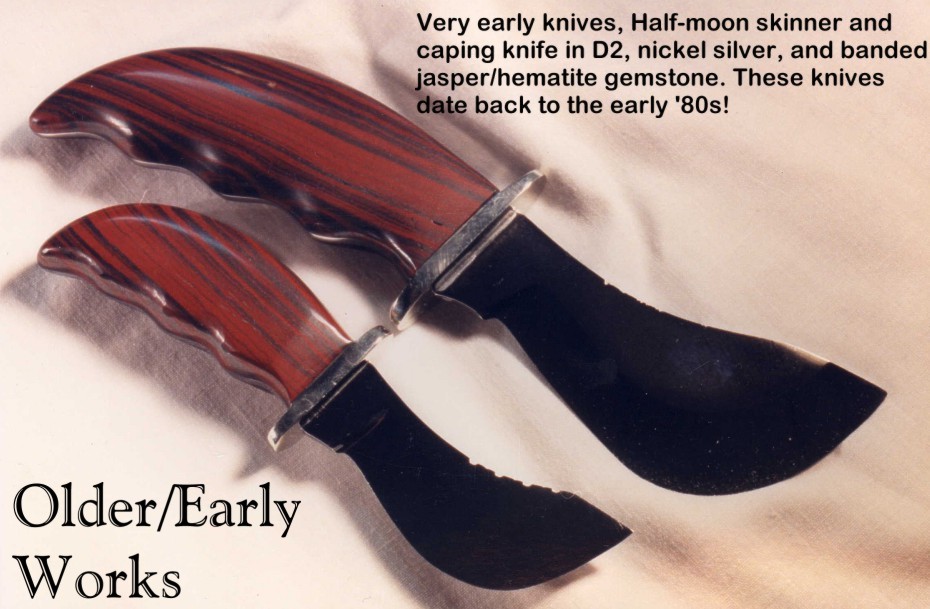
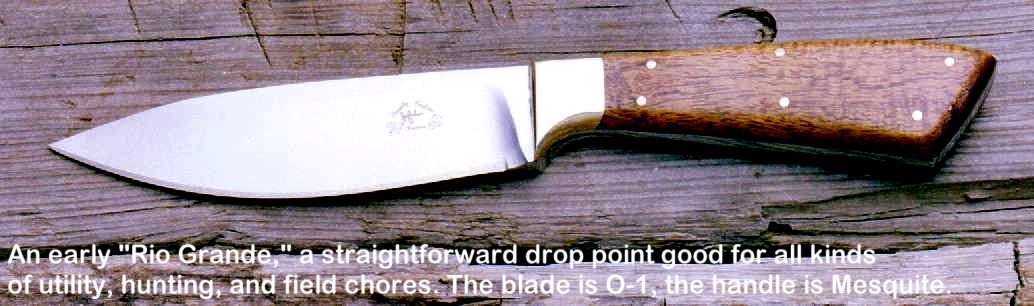
I've included quite a few pictures of my older knives.
Please forgive the low quality of the photographs and my
early workmanship, they were scanned in from chemical photos
from back in the 1980's. I've been making knives a long
time!
Thanks
...for being here. Please check back periodically; I'll add new knives as they are completed and information as time allows!